George Anjay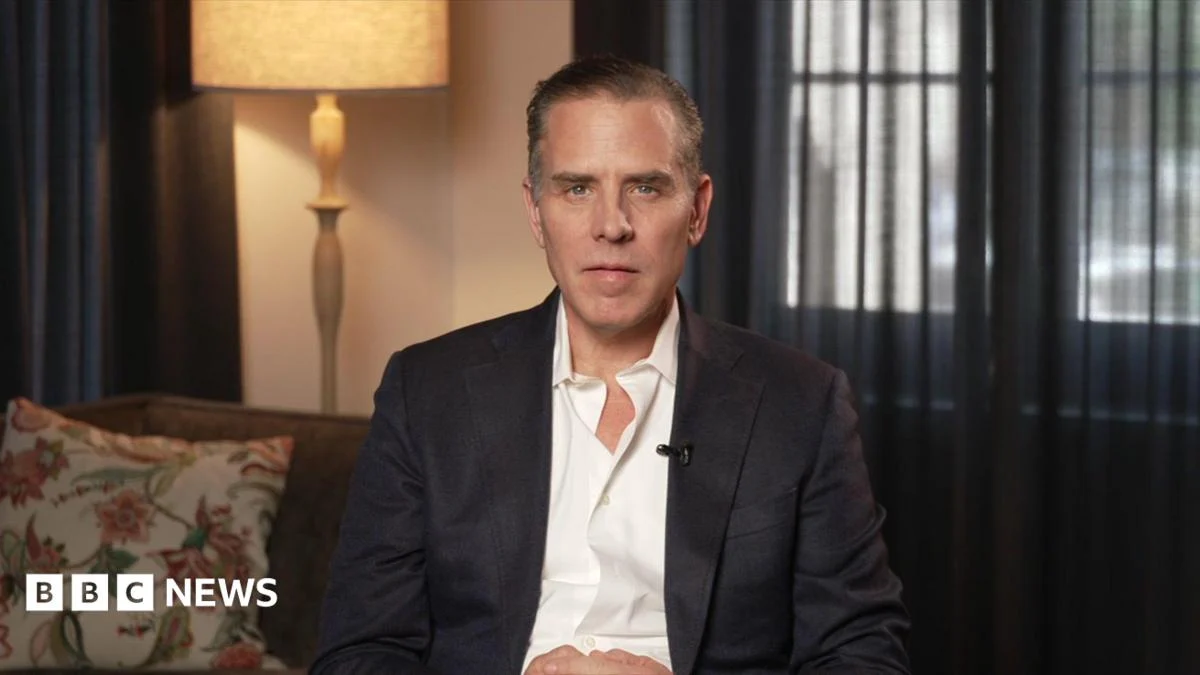
Hunter Biden, the son of former US President Joe Biden, has openly acknowledged the controversial nature of the presidential pardon he received, admitting in a candid interview with the BBC’s Newsnight that the act was "not good" for the United States, its foundational principles, or his father’s enduring legacy. Despite the widespread criticism such a move inevitably invites, Hunter Biden expressed a profound sense of gratitude for his father’s decision, framing it as a paternal act born from deep concern for his well-being in the face of potential political persecution under a Republican administration. "It’s something that is easily criticised and for good reason," he conceded, his voice tinged with a complex mix of regret and defensiveness. He further elaborated, "It’s not fair… All I know is that I’m grateful that he did it for me," while simultaneously acknowledging its detrimental impact on the American public’s perception of justice and the integrity of the Constitution.
In a wide-ranging conversation, Hunter Biden delved into several deeply personal and politically charged topics, offering insights into his ongoing battle with addiction, his father’s declining health, and his own future political aspirations. He unequivocally ruled out any ambitions of seeking elected office, a decision he attributed to a desire to focus on his recovery and to avoid further politicizing his family. His commitment to helping others navigate the treacherous waters of addiction was a recurring theme, stemming from his own harrowing experiences with substance abuse.
The pardon, granted in December 2024, covered a federal gun conviction and a tax case to which Hunter Biden had previously pleaded guilty, as well as any potential federal offenses committed between 2014 and 2024. This executive action came despite President Biden’s earlier public statements suggesting he would not leverage his presidential powers to interfere in his son’s legal entanglements. The White House, in its announcement, characterized the prosecution of Hunter Biden as "selectively and unfairly prosecuted," a justification that did little to quell the public outcry and accusations of nepotism and a compromised justice system. Hunter Biden maintained that the possibility of a pardon was never explicitly discussed with his father prior to its issuance, asserting that the nature of such conversations would inevitably become public knowledge, thereby undermining any semblance of legitimate process. He posited that his father’s decision was primarily driven by a fear that, under Donald Trump’s incoming administration, he would become an even more prominent target for politically motivated investigations and prosecutions. "I was the only one in the world that could have gotten what I got from the only person in the world who could give it, my father," he stated, highlighting the unique and potentially problematic confluence of familial ties and executive power.
The interview provided a stark and unflinching look into the depths of Hunter Biden’s addiction. He described a period of extreme substance abuse, where his daily intake of alcohol reached nearly a gallon of vodka, accompanied by the use of crack cocaine at intervals as frequent as every fifteen minutes. "It was hell on earth," he recounted, emphasizing the stark reality of his struggle. "There’s nothing glamorous about it." When probed about the origins of his dependency, Hunter Biden rejected the notion that his actions were fueled by a sense of invincibility derived from his familial status. Instead, he explained that his substance abuse was a desperate attempt to find oblivion, a means of escaping overwhelming feelings of anxiety and profound isolation. The drugs and alcohol, initially perceived as a coping mechanism, ultimately became the very forces that nearly consumed him.
Hunter Biden’s voice grew thick with emotion at several points during the interview, particularly when discussing his father’s deteriorating health. The former president has been grappling with cancer, a diagnosis that has taken a significant toll. "Cancer is really hard," Hunter Biden said, pausing to compose himself. "It’s really sad to watch." He revealed the grim progression of his father’s illness, stating that "the cancer has spread, metastasised into his bones and further. It’s very painful" and "very debilitating." Despite the immense personal hardship, Hunter Biden expressed admiration for his father’s resilience and his unwavering dedication to his family. "My dad is, to this day, the centre of our family," he declared. "He’s the best father, the best husband, the best grandfather." A poignant wish he shared was for his father to express his pain more openly: "The only thing that I say about my dad, about his health right now, is I wish he would complain more."
The conversation also touched upon the pivotal presidential debate in June 2024, an event that marked a significant turning point and ultimately led to President Biden’s withdrawal from the re-election campaign. Hunter Biden recounted watching the debate from his home in California, an experience that was deeply unsettling. "I was shocked," he admitted. "I knew something was wrong." This immediate and visceral reaction underscored the gravity of the situation and the visible impact it had on his father’s public presentation. The interview served as a complex and often uncomfortable exploration of privilege, addiction, family loyalty, and the ethical tightrope walked by those in the highest echelons of power. Hunter Biden’s willingness to confront these difficult truths, however imperfectly, offered a rare glimpse into the human cost of political life and personal struggle. His reflections on the pardon, his father’s health, and his own journey are a testament to the enduring, albeit complicated, bonds of family and the profound impact of personal demons on public figures. The interview, therefore, transcends a simple news report, becoming a deeply personal narrative interwoven with the fabric of American politics.

 Nakalama John
 Ramos Leo
 Nana Banana