George Anjay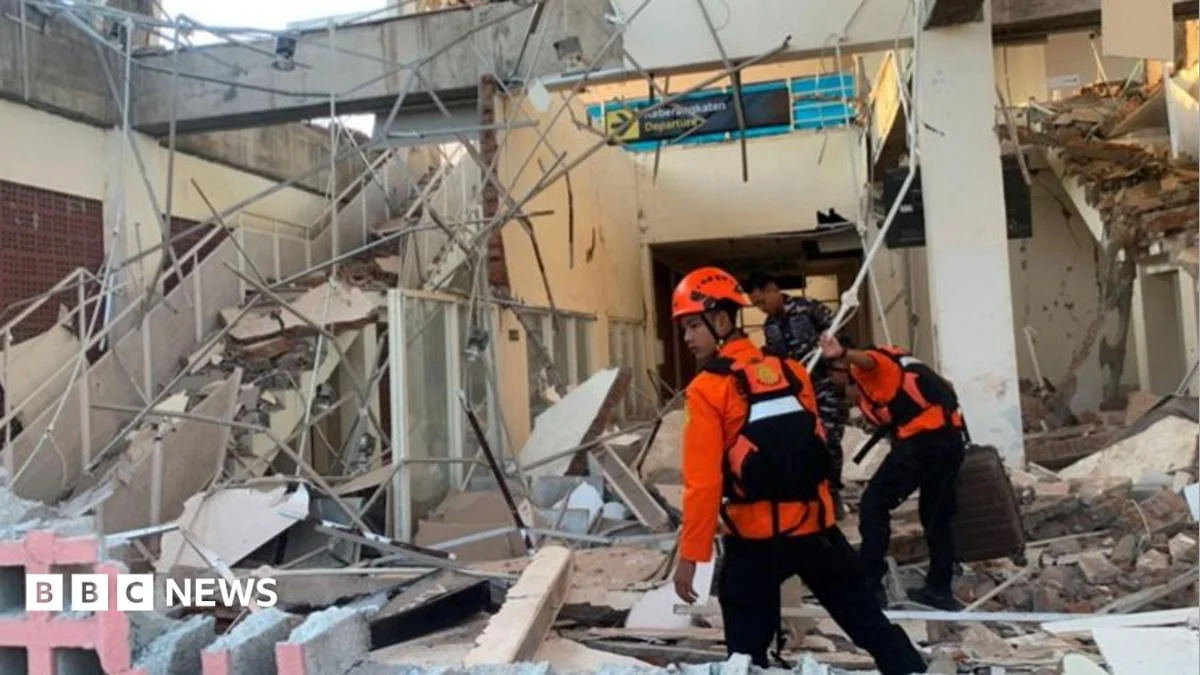
The destructive power of an earthquake is significantly amplified by its shallowness, with tremors closer to the surface inflicting more severe damage on the ground. This grim reality was starkly illustrated when a powerful 7.7-magnitude earthquake struck Indonesia, triggering widespread devastation and claiming the lives of at least 38 people. The seismic event, originating at a relatively shallow depth, sent violent tremors across the region, leaving a trail of destruction and panic in its wake. In the immediate aftermath, the earth continued to tremble, with strong aftershocks, including one registering a formidable 6.1 magnitude, further unsettling the already traumatized population.
The sheer force of the initial quake was vividly captured in harrowing video footage from the port in Maumere. The images showed colossal chunks of concrete, dislodged from the terminal building, raining down upon unsuspecting passengers who were gathered, awaiting passage on an inter-island ferry. The chaos escalated as the gangway to a waiting ship catastrophically collapsed, throwing some individuals into the churning sea below. The terrifying experience was recounted by Emanuel Melkiades Laka Lena, the governor of East Nusa Tenggara province. Speaking at a news conference, he confirmed the tragic toll, stating that many victims were tragically killed in their sleep, buried beneath the rubble of their collapsing homes.
Arnold Welianto, a resident of Talibura, a village perilously close to the coastline in Sikka, East Nusa Tenggara, described the terrifying moment he was jolted awake. "I was startled awake and immediately went to my child’s room," he recounted, his voice still laced with the lingering fear of the "very strong shaking." He explained to the BBC that a significant portion of the community had already sought refuge in the higher ground of the hills, a preemptive measure driven by the primal instinct for survival.
Welianto also observed other distressing signs of the unfolding disaster. "Some other residents were standing along the roadside because the sea had also receded," he explained, his words painting a picture of widespread unease. "The water remained low for quite some time, so everyone panicked and ran – I went around to the community health centre, and the people there had already been evacuated." This unusual receding of the tide, a classic precursor to a tsunami, fueled the palpable sense of panic. Authorities, recognizing the imminent danger, swiftly issued a tsunami warning. However, after a tense three-hour period, the warning was eventually lifted when no significant sea level rise was detected, offering a sliver of relief to the anxious populace.
The fear of a tsunami prompted a mass exodus from coastal areas. A continuous stream of people could be seen fleeing inland on motorbikes, their urgency palpable as they sought safety from the potential wrath of the ocean. The National Disaster Management Agency (BNPB) reported that approximately 2,000 people had either evacuated voluntarily or were relocated by authorities. The human cost of the earthquake was beginning to be tallied, with the BNPB confirming three fatalities in Sikka province, six in Manggarai province, and five in East Manggarai province. The scale of the disaster extended beyond fatalities, with at least two individuals sustaining serious injuries and another eleven suffering minor wounds, according to the disaster agency.
The psychological impact of the earthquake was equally profound. Welianto noted that many residents of Talibura were choosing to remain outdoors, their fear of returning to their homes amplified by the persistent threat of aftershocks. The ground continued to tremble intermittently, a constant reminder of the destructive forces unleashed. This pervasive fear was eloquently articulated by Yulian Juita Ekalia, a university lecturer from Ruteng, a city situated to the west of the earthquake’s epicentre. She described a scene of makeshift living, where she had dragged her stove outside and was cooking there, a stark testament to her apprehension about further tremors. "I have never felt an earthquake this big," she told the news agency AFP, her voice still echoing with the trauma. "It felt like we were on a trampoline – it was really scary."
Assessing the full extent of the destruction in the region, which is characterized by its remote and mountainous terrain, will undoubtedly be a lengthy and challenging process. Preliminary reports offered a grim glimpse into the scale of the damage. Fifty-four houses were reported to have been severely damaged, alongside five healthcare facilities, three places of worship, six government buildings, an educational institution, and a warehouse. Manggarai province emerged as one of the most severely affected areas, according to the BNPB.
In the face of this devastation, the BNPB issued crucial advice to the public, urging them to remain calm and to stay away from coastal areas and any structures that exhibited signs of damage. This guidance was aimed at preventing further casualties and ensuring the safety of those impacted by the earthquake.
Indonesia’s geographical location makes it particularly vulnerable to seismic and volcanic activity. Situated along the meeting point of three major tectonic plates – the Indo-Australian, Pacific, and Eurasian plates – the archipelago is a hotbed of geological dynamism. This constant geological flux, while contributing to the nation’s breathtaking landscapes, also renders it susceptible to the powerful and often devastating forces of earthquakes. The recent 7.7-magnitude tremor serves as a stark reminder of this enduring vulnerability and the profound impact that geological forces can have on human lives and communities. The recovery process will be long and arduous, requiring significant national and international support to rebuild shattered lives and infrastructure. The resilience of the Indonesian people will be tested once more as they confront the aftermath of this catastrophic natural disaster. The shallow depth of the earthquake amplified its destructive potential, turning a geological event into a profound human tragedy. The aftershocks served as a constant, chilling reminder of the earth’s instability, forcing residents to confront their deepest fears. The collapsing port infrastructure in Maumere painted a vivid picture of the chaos and immediate danger faced by those caught in the quake’s epicentre. Governor Laka Lena’s words underscored the devastating reality for many families, who lost loved ones in their sleep, a particularly cruel twist of fate. The collective experience of waking to violent shaking, as described by Arnold Welianto, has left an indelible mark on the survivors. The decision to flee into the hills and the unusual receding of the sea were primal responses to an existential threat, a testament to the raw power of nature. The issuance and subsequent lifting of the tsunami warning created a rollercoaster of fear and tentative relief, highlighting the uncertainty that follows such a significant seismic event. The sight of people fleeing inland on motorbikes, a visual representation of their desperate search for safety, encapsulated the scale of the evacuation efforts. The confirmed fatalities in multiple provinces painted a grim picture of the earthquake’s widespread impact. The injuries sustained, both serious and minor, underscored the immediate medical needs of the affected population. The decision to sleep outdoors, a measure born of fear, illustrated the lingering psychological trauma and the persistent threat of aftershocks. Yulian Juita Ekalia’s vivid description of the ground moving like a trampoline captured the sheer terror of the experience. The remote and mountainous nature of the region presents unique challenges for damage assessment and relief efforts. The preliminary reports of damaged buildings and infrastructure provided an early, albeit incomplete, understanding of the economic and social consequences. The identification of Manggarai province as particularly hard-hit emphasized the need for targeted assistance. The BNPB’s advice to remain calm and avoid damaged areas was a critical component of managing the ongoing crisis and preventing further harm. Indonesia’s position on the Pacific Ring of Fire is a constant reminder of its geological precariousness, making preparedness and rapid response crucial. The resilience of communities in the face of such adversity is a testament to the human spirit, but the path to recovery will be long and arduous. The international community’s response will be vital in supporting Indonesia’s efforts to rebuild and restore normalcy to the affected regions. The memory of the violent tremors and the immediate aftermath will undoubtedly shape the lives of those who survived this powerful earthquake for years to come.




 Nakalama John
 Ramos Leo
 Nana Banana