George Anjay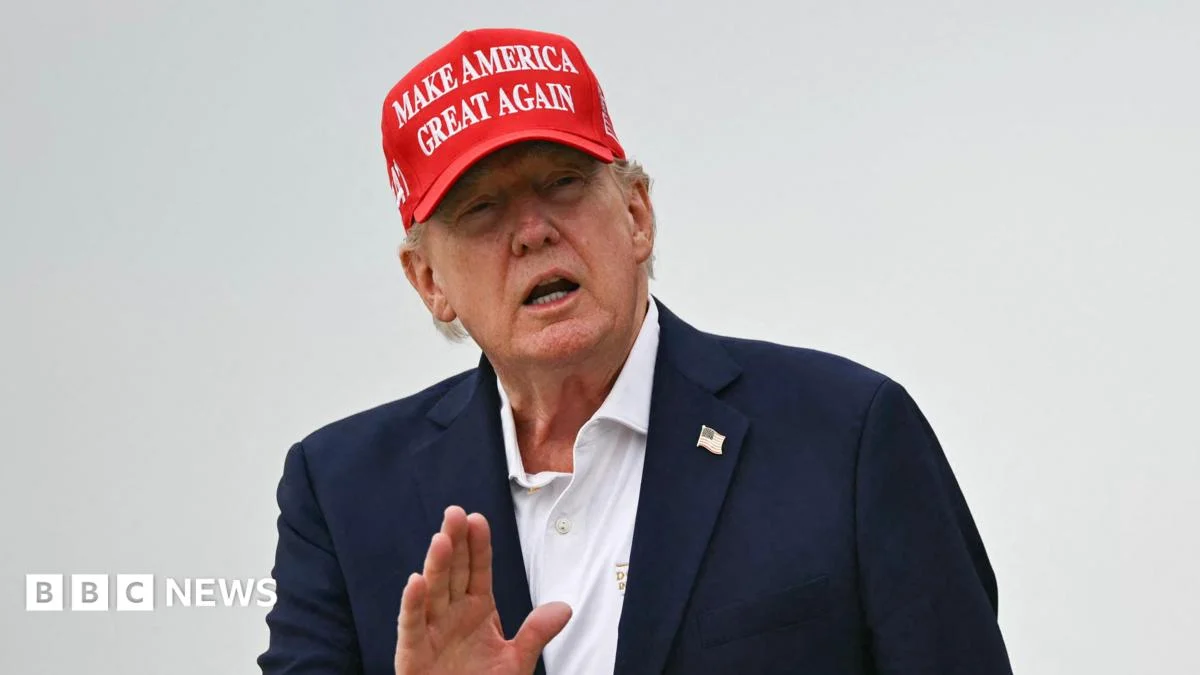
President Donald Trump has reportedly issued a stark and unprecedented threat to bomb Oman, a nation long considered a diplomatic partner and a crucial regional ally of the United States, should it impede Washington’s efforts to engage in direct negotiations with Iran. This alarming statement, relayed by Fox News, emerged during a phone call on Monday, a conversation in which the President also asserted that the U.S. maintained a direct backchannel communication line with the Islamic Revolutionary Guard Corps (IRGC), a powerful and influential branch of the Iranian military. The IRGC, however, has vehemently denied any such ongoing dialogue, casting doubt on the President’s claims. Concurrently, Iranian officials have indicated that they are nearing the finalization of an agreement with Oman aimed at facilitating maritime passage through the strategically vital Strait of Hormuz, a waterway that has become a flashpoint in the escalating tensions between the U.S. and Iran.
The expiration of a 60-day Memorandum of Understanding (MoU) on Monday marks a critical juncture in the diplomatic landscape. This agreement, a commitment from both the United States and Iran, was intended to pave the way for further discussions and ultimately the achievement of a comprehensive resolution to the ongoing disputes. Oman, which has consistently maintained a stance of neutrality in the broader conflict, has unfortunately found itself on the receiving end of several strikes originating from Iran since the current crisis began to unfold. Despite these aggressions, Oman has now stepped into a pivotal role, actively engaging in negotiations with Iran with the explicit objective of reopening the Strait of Hormuz to unimpeded shipping.
The Strait of Hormuz, a narrow waterway through which approximately one-fifth of the world’s total oil and liquefied natural gas shipments transit, has been largely blockaded by Iran since the United States and Israel launched coordinated attacks against Iranian interests in February. The reopening of this critical artery for global energy markets has consequently become a paramount concern and a central point of discussion in all diplomatic overtures. The United States, under President Trump’s leadership, has been actively pursuing its own independent initiatives to ensure the unimpeded flow of traffic through the Strait. It was within this context that Fox reporter Trey Yingst quoted President Trump making the extraordinary and bellicose statement: "If Oman gets in the way, we’ll bomb the shit out of them." This remark, if accurately reported, represents a significant escalation in rhetoric and a departure from traditional diplomatic engagement with a partner nation.
The IRGC, in its swift response, unequivocally denied President Trump’s assertion regarding the existence of backchannel negotiations with the United States. The IRGC, which wields substantial influence across Iran’s military, political, and economic spheres, dismissed the President’s claims as baseless fabrications. A spokesperson for the IRGC, speaking to the semi-official Tasnim News agency, stated, "There are no talks taking place between IRGC officials and the Americans, and this lie by Trump is merely fantasies caused by the delusions and nightmares he has suffered as a result of defeat and desperation in the war." This forceful rebuttal directly contradicts the President’s public pronouncements and underscores the deep chasm of distrust that persists between the two nations.
The diplomatic maneuvering surrounding Oman’s role highlights the complex geopolitical landscape. Oman, situated on the southeastern coast of the Arabian Peninsula, shares a border with Saudi Arabia and Yemen and strategically overlooks the Strait of Hormuz. Its long-standing policy of neutrality and its ability to maintain diplomatic ties with both the United States and Iran have historically positioned it as a valuable mediator. However, the recent escalations have placed Oman in an increasingly precarious position, caught between the conflicting interests of two global powers. The country’s efforts to de-escalate tensions and ensure freedom of navigation are crucial for regional stability and global economic security.
The context of the alleged threat also needs to be understood within the broader framework of the Trump administration’s Iran policy. Since withdrawing the United States from the Joint Comprehensive Plan of Action (JCPOA), commonly known as the Iran nuclear deal, in 2018, the administration has pursued a strategy of "maximum pressure," aiming to cripple Iran’s economy and force it to negotiate a new, more stringent agreement. This policy has involved the reimposition of stringent sanctions and a heightened military posture in the Persian Gulf region. The current situation, with the Strait of Hormuz being a focal point of contention, is a direct consequence of this policy.
The alleged backchannel communication with the IRGC, if true, would represent a significant shift in U.S. diplomatic strategy. Traditionally, official diplomatic channels with Iran have been routed through the Swiss Embassy in Tehran, which acts as the U.S. Interests Section. Direct engagement with the IRGC, a designated terrorist organization by the U.S. in 2019, would be a highly unconventional and potentially destabilizing move, even if intended for de-escalation. The IRGC’s denial suggests either a deliberate attempt to conceal such communications or a fundamental misunderstanding or misrepresentation by the U.S. President.
The Iranian officials’ announcement regarding a potential deal with Oman on shipping through the Strait of Hormuz adds another layer of complexity. Such an agreement, if finalized, could signal a partial easing of the blockade and a recognition of Oman’s mediating role. However, the U.S. administration’s apparent apprehension about Oman’s involvement, as evidenced by President Trump’s threat, suggests a desire for exclusive control over the narrative and the negotiation process. This could stem from a concern that Oman’s efforts might lead to an outcome not entirely aligned with U.S. objectives, or perhaps a desire to leverage the situation for greater political leverage.
The historical context of U.S.-Oman relations is important to consider. Oman has been a steadfast partner of the United States for decades, providing crucial intelligence cooperation and serving as a reliable interlocutor in a volatile region. Its strategic location and its commitment to regional stability have made it an invaluable asset to U.S. foreign policy. The reported threat to bomb such an ally is therefore particularly jarring and raises serious questions about the coherence and stability of U.S. foreign policy under the current administration. It also risks alienating a key regional partner at a time when diplomatic unity is most needed.
The broader implications of this alleged threat extend beyond the immediate U.S.-Iran-Oman triangle. Such aggressive rhetoric from a U.S. President can have a chilling effect on diplomatic efforts worldwide. It can embolden adversaries, alienate allies, and create an atmosphere of instability and unpredictability. The potential for miscalculation and unintended escalation in a region already fraught with tension is immense. The international community will be closely watching how these developments unfold and the extent to which diplomatic channels can be salvaged from the fallout of such inflammatory pronouncements. The future of maritime security in the Strait of Hormuz, and indeed the broader prospects for de-escalation in the Persian Gulf, hinge on the ability of all parties to engage in constructive dialogue, a process that is severely undermined by threats of military action against even neutral or allied nations. The reported statement by President Trump serves as a stark reminder of the fragility of diplomatic relations in the face of assertive and unpredictable leadership.


 Roy Suryo
 Nana Banana
 Nakalama John
 Ramos Leo