George Anjay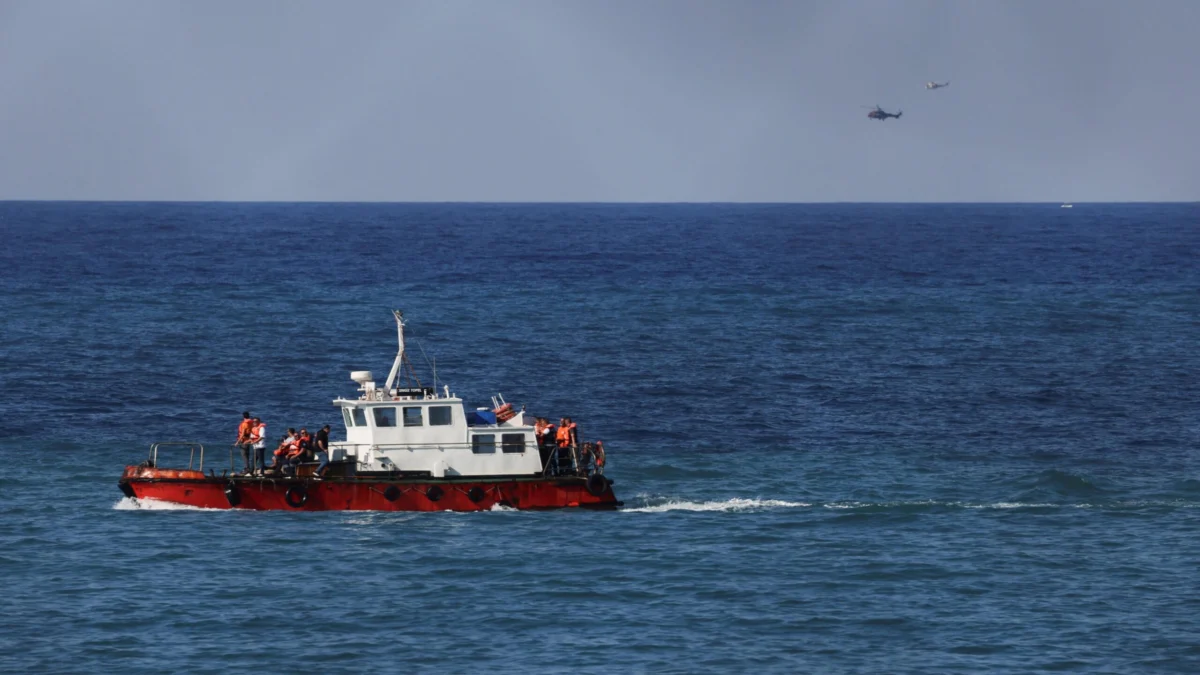
At least eight people have died and more than a dozen others are still missing after a passenger boat, the Filo Jet, capsized off the coast of northern Cyprus. The incident occurred shortly after the vessel departed from the popular holiday resort of Kyrenia (Girne) on Saturday, carrying a significant number of passengers and crew. Ãœnal Ãœstel, prime minister of the self-proclaimed Turkish Republic of Northern Cyprus (TRNC), confirmed the tragic toll and announced that the ship’s captain and seven crew members have been detained as part of an ongoing investigation into the disaster.
The ferry, a privately owned Filo Jet vessel measuring 40 meters in length and 10 meters in width, had been scheduled to travel to Turkey on Saturday. However, its departure was delayed due to adverse weather conditions. According to Ãœstel, the boat was en route to Tasucu in Turkey when it encountered a severe maritime incident. He informed Turkish media outlet TRT that the ferry was struck by two powerful waves. The first wave reportedly caused the vessel to list, and while the captain was attempting to regain control, a second, more substantial wave hit, leading to the ferry taking on water rapidly and ultimately capsizing.

The ferry had departed Kyrenia at approximately 12:30 local time (09:30 GMT). It was carrying 259 passengers and eight crew members, according to Ãœstel’s social media statement. The full manifest and the nationalities of those on board are still being determined, adding to the uncertainty and distress of the situation. A large-scale search and rescue operation was immediately launched, involving multiple Turkish and Cypriot authorities. Helicopters, coastguard boats, and other maritime vessels have been deployed to the area to scour the waters for survivors and recover those who have perished. Ambulances have been stationed on the coastline, ready to provide medical assistance to any rescued passengers.
Ãœstel emphasized that the "priority right now is human life" and confirmed that security forces, rescue teams, and health officials were all actively involved at the scene. He pledged a thorough and transparent investigation into the disaster, stating that "even the slightest negligence will be uncovered" and that "no one will be spared, regardless of who they are, who is found to be at fault or responsible." This commitment to accountability underscores the gravity of the incident.
Erhan Arikli, the transport minister of the TRNC, provided an update stating that approximately 100 passengers had been brought to shore. However, the fate of the remaining passengers and crew members remains a grave concern. By Sunday evening, Arikli confirmed to TRT that the ship had completely sunk, complicating search efforts and extinguishing hopes for many of those still missing.

The Filo Jet vessel sails under the flag of Turkey, according to marine traffic data. Filo Denizcilik, the company that operates the capsized passenger boat, has issued a statement expressing its "deep sadness" over the "tragic accident." A hotline has been established to disseminate information to the relatives of the passengers, offering a crucial point of contact amidst the unfolding tragedy.
Turkey’s President Recep Tayyip Erdogan expressed his condolences to Turkish Cypriots and assured that efforts to locate those still missing "continue uninterrupted." Speaking at a military ceremony on Sunday, he stated, "Immediately after the accident, we launched extensive search-and-rescue operations in co-operation with the authorities of the Turkish Republic of Northern Cyprus." This statement highlights the close collaboration between Turkey and the TRNC in responding to the crisis.
Images broadcast on local television showed the ferry upside down in the water, with some survivors, clad in life vests, visible on its hull. The geographical context of the incident is important. The TRNC, recognized solely by Turkey, controls the northern third of the island of Cyprus, which has been politically divided since the Turkish invasion in 1974. The ferry route between Kyrenia and Tasucu is a common maritime link between the island’s north and mainland Turkey.

The exact cause of the capsize remains under investigation. While the initial reports point to the impact of two large waves, maritime experts will likely examine factors such as the vessel’s seaworthiness, cargo loading, and adherence to safety protocols. The detention of the captain and crew members suggests that questions are being raised about the decisions made in the moments leading up to and during the incident, especially in light of potentially challenging weather conditions.
The loss of life and the number of missing individuals underscore the inherent risks associated with maritime travel, even on seemingly routine routes. The incident serves as a stark reminder of the unpredictable nature of the sea and the importance of robust safety measures and emergency preparedness in the shipping industry. As the search and rescue operation continues, the focus remains on finding any further survivors and providing support to the families affected by this devastating event. The full extent of the human cost and the underlying causes of this tragedy will likely emerge as the investigation progresses. The international community will be watching closely as the situation unfolds and the recovery efforts continue.




 Roy Suryo
 Nakalama John
 atisusanti
 Ramos Leo