
 George Anjay
On the first day of the new Palestinian school year, the head-teacher of al-Mughayyir boys school arrived at work before dawn, walking past the freshly installed barbed wire fencing and reinforced school gates as the sun began creeping through olive trees around the village, deep inside the occupied West Bank. "We are scared," Bassam al Assaf told me. "The students are afraid, and their parents are afraid." Six people, including three pupils at the school, have been killed in al-Mughayyir this year, in a surge of settler-related violence against Palestinians. One of them, 14-year-old Aws al-Naasan, was shot dead by a settler outside the school gates in April. "I was inside my classroom and two little students came rushing to tell me there were settlers close to the school wall," remembers English teacher Waheed Abu Naem, whose brother Jihad was also killed by an Israeli soldier in the same attack. Waheed said he was trying to move pupils to safety inside the school gate when the settler fired towards them. Mobile phone footage shows the moment Aws was shot. "When I turned him onto his back, I saw lots of blood coming from his nose and mouth, and the bullet in his head," said Waheed. "We lost him." He told me that bullets continued hitting the school building, as students hid behind the walls of their classrooms, or lay on the floor.
The Israeli military stated at the time that stones had been hurled at a car carrying "civilians including a reservist soldier," and that the reservist had exited the vehicle and fired at suspects. Israeli media reported the reservist was subsequently suspended from duty, and an investigation was initiated. Since that day, the number of casualties has escalated, mirroring the growing fears of parents. Over the summer, two more pupils were fatally shot by Israeli forces during settler attacks and incursions in the village, alongside a 19-year-old who had recently completed his schooling. In both instances, the Israeli army claimed its forces responded to instigators of "a violent riot." With three empty desks in the classrooms, some parents harbored reluctance to send their children back for the new academic year.
The school is situated on the periphery of Al-Mughayyir, an isolated village northeast of Ramallah, increasingly encircled by Jewish settler outposts. It is also frequently obstructed by Israeli forces, who habitually establish ad-hoc checkpoints at its entrance. Bassam al-Assaf has erected a substantial barbed-wire fence around the school compound and reinforced the gates in an effort to allay parental anxieties. Ambulance crews are now stationed on the adjacent road, and several parents have volunteered to maintain a vigil outside the school throughout the day, providing an additional layer of security. "I came because it makes the children feel their parents are with them, that they are safe, it gives them a kind of security," said Haroon Bishara, whose sons are in the first and second grades. "We fear for our children more this year," he told me. "We know the situation is not safe at the school." However, he affirmed that this fear was interwoven with a resolute determination not to be driven out by the threat of settler attacks.
Lined up in the playground for their first assembly, the pupils were repeatedly instructed by teachers throughout the day: if soldiers or settlers approach the school, do not shout, do not approach them, do not react. Just over an hour after classes commenced, settlers were observed through the school windows: two men, herding sheep through Palestinian fields a couple of hundred meters from the school, with Israeli soldiers standing nearby. Minutes later, another settler with a flock of sheep appeared. "They have got closer to the village since April," said Abu Naem. "They used to keep their sheep behind this [hill], but now the soldiers bring the settlers up to the village." When questioned about the allegations in this report, the Israeli army was unable to provide a response before publication.
All Israeli settlements in the occupied West Bank are considered illegal under international law. Numerous small, ad-hoc settler outposts that have proliferated around al-Mughayyir are also illegal under Israeli law. However, one of the ambulance crews stationed outside the school indicated that, instead of removing illegal settlements, Israeli soldiers have begun to support and facilitate settler incursions into the village. Hadi al-Naasan, an ambulance driver in the village, noted a shift in the conduct of Israeli forces over the past year, stating that the rise in Palestinian deaths and injuries in al-Mughayyir this year directly reflects this change. "At the beginning of 2025, settler attacks were few, due to the army’s interventions," he said. "In 2026, the situation changed completely: the settlers became fully protected by the occupation soldiers. This year, the number of martyrs is higher, the number of injuries is also much higher – and the number of child injuries is higher too." Hadi, along with other residents of al-Mughayyir, believes that some Israeli settlers are now deliberately targeting children to exert pressure on the adults in the village to abandon their homes.
A UN Commission of Inquiry, published in June, found that settler attacks "have instrumentalized children, as part of a broader coercive strategy to drive Palestinians off their land." The report further described "a pattern of settlers intentionally targeting Palestinian children" as they played near their homes, commuted to and from school, tended to farms, or herded livestock, "turning everyday spaces into sites of fear." Israel dismissed the report as a "libellous sham."
Sheep farmer Sami Abu Rahma firmly believes that some violent settlers are targeting children. At the end of July, his nine-year-old son Salim was shot and injured while playing with his siblings on the family sheep farm outside al-Mughayyir. The bullet remains lodged in his arm. Security camera footage from the farm shows Salim pointing and shouting to his parents that settlers are approaching, before running for shelter with his siblings and mother, as two gunshots are heard. Salim is seen clutching his shoulder. "In that moment, you stop thinking; you just feel fear," Sami told me. "Fear that, God forbid, [the attacker] was shooting to kill. The first thing in your mind is losing the most precious thing you have." The man who shot his son, he stated, resided in an illegal settler outpost that appeared next to the farm in June and had previously shot at Salim in the same area a week earlier. "You no longer feel you can keep them safe in the street, or even at school," he said. "The settlers don’t want us to stay here, [they want us to feel] as if there’s no future for us here." Sami added that he is the last sheep farmer remaining in the area, with others having been driven away by settler attacks. The settler who shot his son had repeatedly instructed the family to vacate their land. "No matter how determined you might be to stay," he concluded, "what do you do when settlers start shooting your kids?"
The regional settlers council informed us that an off-duty soldier was apprehended on suspicion of involvement in the shooting. "We regret any harm to innocent people, Jews or Arabs, and oppose any act of violence that violates the law," it stated, adding that it rejected "the attempt to attribute to the entire settlement community in Judea and Samaria acts that have not yet been determined by an investigation, as well as the baseless claim that lawful sheep grazing or Jewish presence in the area are part of a deliberate plan to harm children or drive residents from their homes."
Al-Mughayyir is emblematic of a broader pattern unfolding across the occupied West Bank, characterized by an increasing number of illegal settler outposts encircling Palestinian villages, greater protection afforded to settlers by Israeli forces, and a shift in attacks from farms and grazing land to populated areas, where women and children are more vulnerable. "Children, seeing the army enter, don’t grasp the gravity of the situation," said the local ambulance crew member, Hadi al-Naasan. "Adults are more aware of how events can unfold."
UN figures indicate a sharp rise this year in the number of Palestinians injured during settler attacks by Israeli soldiers or settlers, averaging three injuries per day. The number of injuries inflicted directly by settlers themselves has also increased. This escalation is accompanied by the expansion of Israeli settlements and settler outposts in the West Bank. All Israeli settlements in the West Bank are illegal under international law, and Israel’s staunchly pro-settlement government is facing mounting international pressure, including from the UK, which is expected to announce sanctions this week in response to Israeli settlement policies. The arrest of some violent settlers and a reported plan by Israel’s prime minister to dismantle illegal outposts in the West Bank have not yet halted attacks, nor have they reassured Palestinians, who assert that outposts previously demolished by Israeli authorities were swiftly rebuilt. With Israeli elections less than two months away, Israel’s Finance Ministry has advanced plans this week to assume control of land registration in the West Bank and East Jerusalem, a move described by the Israeli settlement monitor Peace Now as "a clear step towards annexation." Israel’s prime minister, Benjamin Netanyahu, has attributed settler violence to a minuscule extremist minority, referring to them in a recent television interview as "150 juvenile delinquents." Since the beginning of 2025, the UN has recorded 316 Palestinians killed by Israeli forces or settlers, and over 5,600 injured, up to the end of July 2026. It also reports 20 Israelis killed over the same period, including one child and eight members of the security forces, and 123 Israelis injured. Palestinian parents who have remained in villages like al-Mughayyir amidst escalating settler violence now face a growing dread of losing their children if they continue to reside on their land.



 Nakalama John
 Ramos Leo
 atisusanti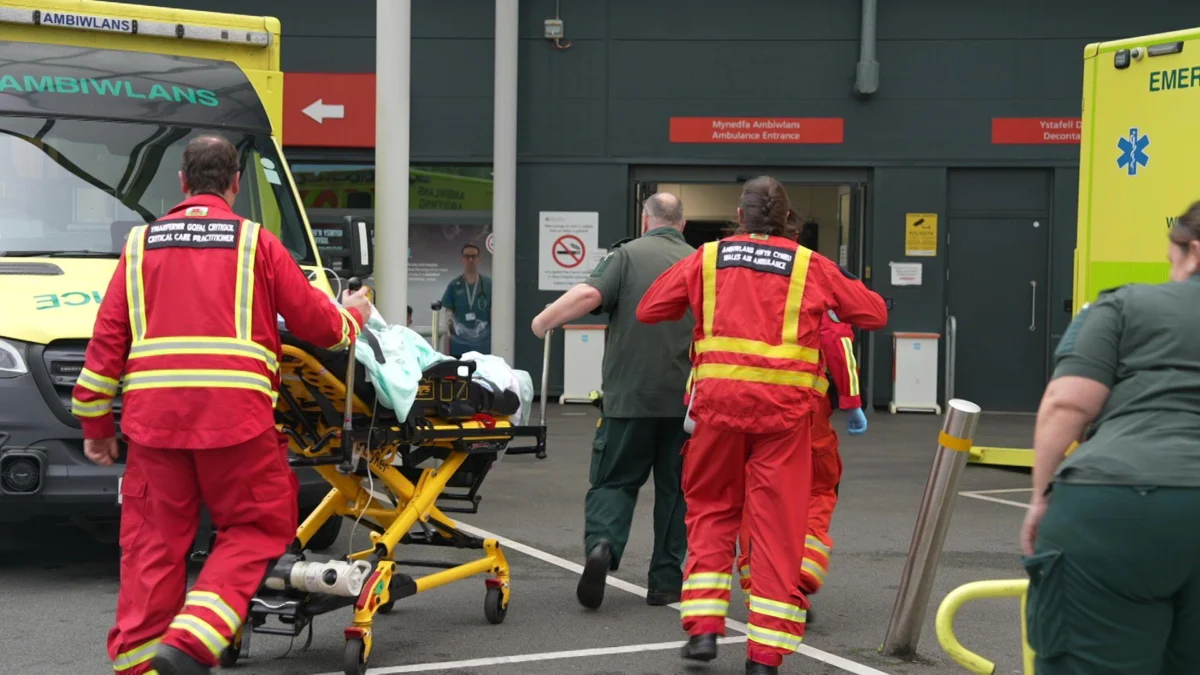
 Roy Suryo