atisusanti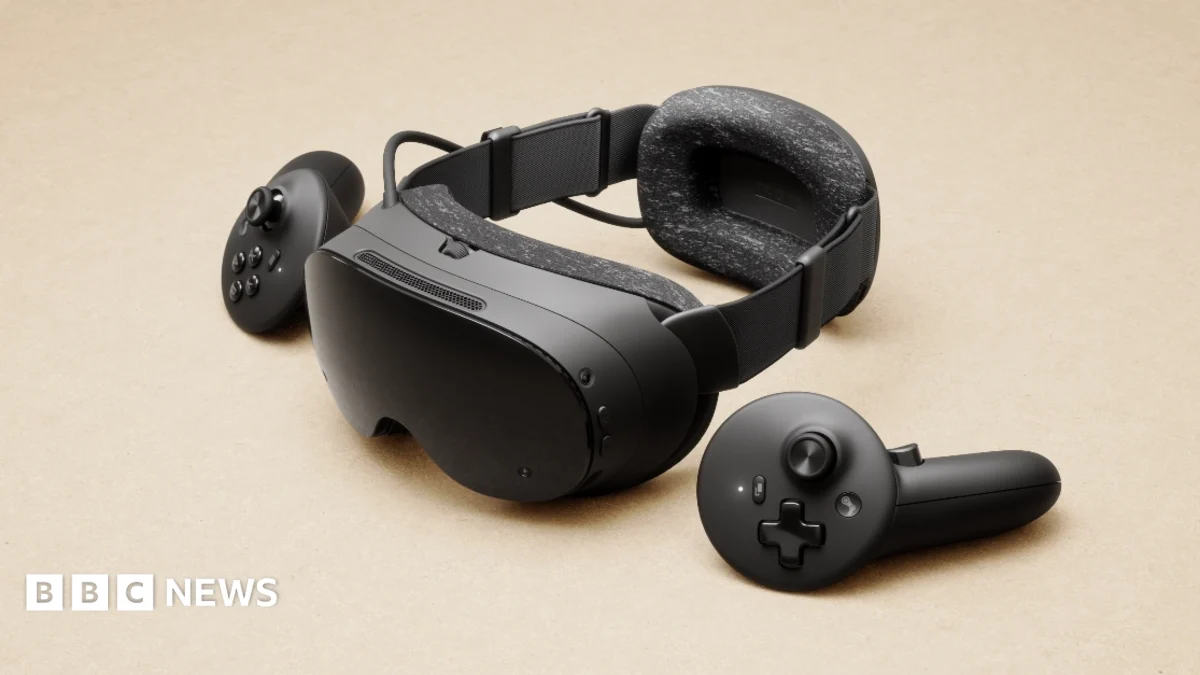
The recent unveiling of Valve’s Steam Frame, a high-end virtual reality headset, has reignited a long-standing debate within the tech community: is the immersive world of VR still prohibitively expensive for the average consumer? With a price tag exceeding £1,000, the Steam Frame undoubtedly positions itself as a premium offering, catering to enthusiasts and early adopters who are willing to invest significantly in cutting-edge technology. However, the notion that VR, as a whole, remains an inaccessible luxury is a viewpoint that many industry insiders and seasoned VR users find to be a significant oversimplification, a "misconception," as David Heaney, the editor of the influential VR publication UploadVR, puts it.
Heaney’s argument against the "too expensive" narrative is multi-faceted and rooted in a pragmatic comparison with other established forms of entertainment and gaming hardware. He highlights that while top-tier VR devices can indeed command steep prices, the market offers increasingly affordable entry points. For instance, Meta’s Quest 3S, a budget-friendly option, retails at a considerably lower £320, and has been available for as little as £250 during promotional periods. To put this into perspective, Heaney draws a stark comparison with current-generation gaming consoles. A Nintendo Switch 2, often considered a more casual gaming device, carries a price tag of £420. Its more powerful counterparts, the Xbox Series S and the PlayStation 5, are priced at £430 and £470 respectively. When measured against these figures, the Quest 3S, which serves as a primary gateway to VR gaming for many, emerges as a more economical choice. This suggests that for consumers already invested in or considering console gaming, the financial leap to a capable VR headset is not as substantial as the prevailing narrative might suggest.
Beyond the direct cost comparison, Heaney posits that the perceived expense of VR is intrinsically linked to its developmental stage. He likens the current state of virtual reality to the nascent era of personal computers in the 1980s. In that decade, even if personal computers had been inexpensive – which they demonstrably were not – they would have lacked the polish, the software library, and the user-friendliness required for widespread adoption. The technology was still too raw, too niche, and its potential not yet fully realized or accessible to the general public. Similarly, VR, according to Heaney, is still in its "1980s PC era." It is a technology that is "only just getting started," a far cry from the maturity and ubiquity that established technologies like personal computers and gaming consoles have achieved.
This analogy is crucial for understanding the current VR landscape. The early adopters are the pioneers, navigating a frontier of emerging hardware, evolving software ecosystems, and an expanding, albeit still developing, content library. The Steam Frame, with its advanced features and premium price, represents the cutting edge of this frontier. It offers an unparalleled level of fidelity, immersion, and performance, pushing the boundaries of what is currently possible in consumer VR. However, its cost is reflective of the research and development, the sophisticated components, and the niche market it aims to serve at this juncture. It is a testament to the potential of VR, but not necessarily indicative of the overall accessibility of the technology.
The "early days" argument also addresses the rapid pace of innovation in VR. Just as the bulky, monochrome PCs of the 80s gave way to sleek, powerful machines, today’s VR headsets are undergoing a swift evolution. Technologies that were once the exclusive domain of high-end, PC-tethered systems are now becoming integrated into standalone headsets. Features like inside-out tracking, higher resolution displays, wider fields of view, and more sophisticated haptic feedback are becoming more commonplace and, crucially, more affordable with each iteration. This continuous improvement cycle means that while the absolute best might be expensive, the "good enough" for mainstream enjoyment is rapidly improving and becoming more accessible.
Furthermore, the perception of VR’s expense can also be influenced by what is considered a "necessary" investment. For a dedicated gamer, the cost of a high-end PC or a top-tier console, coupled with multiple games, can easily surpass the price of a premium VR setup. When one considers the potential for VR to offer entirely new gaming experiences, educational tools, social platforms, and even professional applications, the initial investment begins to appear more justifiable within a broader context of entertainment and productivity. The Steam Frame, for example, is not just a gaming device; it’s a portal to a multifaceted digital realm.
The argument that "we’re still in the early days" also implies a future where the cost-to-performance ratio will inevitably improve. As manufacturing processes become more efficient, as component costs decrease with scale, and as competition among manufacturers intensifies, the price of VR hardware is expected to follow a similar trajectory to that of other consumer electronics. We have witnessed this phenomenon with smartphones, tablets, and even early personal computers. What was once a luxury item becomes a mass-market product as the technology matures and becomes more democratized.
The presence of more affordable options like the Meta Quest 3S is a critical piece of evidence supporting this optimistic outlook. These devices are not merely entry-level; they are capable of delivering compelling VR experiences that can captivate a wide audience. They demonstrate that the fundamental promise of VR – immersive, interactive digital worlds – is achievable without an exorbitant financial outlay. The existence of these budget-friendly alternatives acts as a vital on-ramp, allowing a larger segment of the population to experience VR and, in doing so, fueling demand and driving further innovation and cost reduction across the entire market.
The Steam Frame, therefore, should be viewed not as the definitive price point for VR, but rather as an exemplar of its current technological zenith. Its high cost is a reflection of its advanced capabilities and its position at the forefront of VR development. However, to extrapolate this price point to the entire VR market would be to ignore the burgeoning ecosystem of more accessible headsets that are making VR a tangible reality for millions. The challenge for VR, as Heaney rightly points out, is not solely one of cost, but of continued maturation, broader content development, and increased public awareness of its diverse applications and affordability. As VR continues its evolutionary journey, much like the personal computer before it, its accessibility is poised to grow exponentially, transforming it from a niche fascination into a mainstream phenomenon. The question is no longer if VR will become affordable, but when and how quickly it will reach that point of widespread adoption, a journey that has already begun with the growing availability of capable and increasingly cost-effective hardware.




 Roy Suryo

 George Anjay
 Nakalama John
 Ramos Leo