
 Nakalama John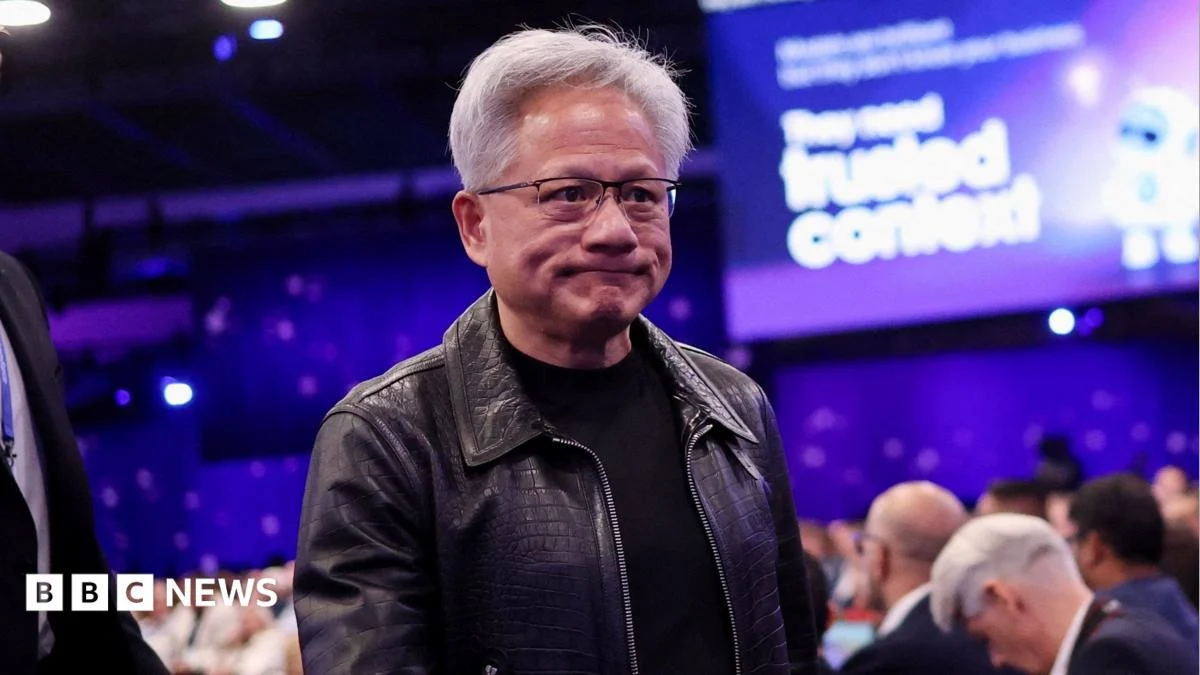
Speaking at a Salesforce conference in San Francisco, Huang articulated his belief that the leaders of AI firms are best positioned to determine when new versions of their technology should be released, dismissing the necessity for new legislative interventions. "We don’t need new laws or regulations," Huang stated, emphasizing that society should not be forced into a "false choice" between the rapid pace of innovation and the inherent safety of AI products. This stance underscores Nvidia’s pivotal role in the AI ecosystem; the company has witnessed an unprecedented boom in its valuation and profits due to the rampant global demand for its high-performance AI computing chips, which are the backbone of most advanced AI models.
Huang framed safety not as a regulatory challenge, but fundamentally as an "engineering problem." He elaborated that if an AI company leader ever lacked confidence in the safety or control of their product, the "very obvious thing to do" would be to withhold its release. "Run as fast as you can, but if at any time you feel the institution is not in control, take a pause," he advised, advocating for a self-governance model rooted in corporate responsibility and technical diligence rather than external legal mandates. This perspective suggests that robust internal testing, ethical guidelines, and a commitment to responsible development within the industry itself are the most effective safeguards.
However, Huang’s position stands in stark contrast to a growing chorus of voices within the AI community, many of whom have recently expressed profound fears about the technology’s potential to spiral out of control and pose an existential threat to humanity. The debate intensified significantly following a viral post last week by an artificial intelligence researcher who had recently departed AI firm Anthropic. The researcher’s alarming claim suggested that advanced AI, if left unchecked, possessed the potential to eradicate all humans by the end of the current decade, citing concerns about uncontrolled superintelligence and the catastrophic consequences of misaligned AI goals.
This dire warning resonated deeply across the industry. Other AI executives and experts quickly voiced their agreement with the researcher’s concerns, underscoring a shared apprehension about the trajectory of current AI development. The sentiment culminated over the weekend when Dario Amodei, the chief executive of Anthropic – a company at the forefront of AI safety research – publicly called for a significant slowdown in the pace of all "frontier AI" development. In a widely discussed post, Amodei urged governments worldwide to step in and regulate the industry, marking a notable shift from previous industry self-reliance. His call to action was met with strong applause and endorsements from some of the most influential figures in tech, including OpenAI chief executive Sam Altman, co-founder of Google’s DeepMind Demis Hassabis, and Elon Musk, who owns the social media platform X and the AI assistant Grok. The alignment of such titans highlights the seriousness with which these warnings are being taken in certain quarters.
Yet, not all industry figures share the same level of alarm. Some have argued that the heightened fears are exaggerated, potentially overblown, and are, in part, being leveraged to generate hype and attract investment for the industry. This perspective suggests that while caution is warranted, the rhetoric surrounding "AI apocalypse" scenarios may detract from more immediate and tangible concerns like bias, job displacement, and misuse.
The notion of AI executives being left to entirely regulate themselves has indeed struck many in the industry as a precarious proposition. Jack Clark, an executive and co-founder at Anthropic, voiced his strong reservations to the BBC, stating that allowing AI to remain a "totally unregulated industry" amounted to "rolling dice with immense risks." Clark’s comment encapsulates the concern that the profit motives and competitive pressures inherent in a free market might ultimately override safety considerations, especially when dealing with technology of such unprecedented power.
Further reinforcing this skepticism, Patrick Hillman, the chief business officer of Logical Intelligence, a firm chaired by the respected AI industry veteran Yann LeCun, highlighted a broader societal distrust in tech companies. Writing on Tuesday, Hillman noted the prevalent lack of public faith in Silicon Valley to consistently act in the public interest. "The only institution that Americans might trust less than Washington these days is Silicon Valley. I have worked and lived in both and I assure you both have earned this scepticism," Hillman remarked, drawing a critical parallel between political and technological institutions. He challenged the industry directly, stating, "If you believe what you are building is dangerous, show us what you are prepared to stop doing." This pointed critique calls for concrete actions and sacrifices from AI developers, rather than mere assurances, to earn public trust.
In response to these escalating concerns and internal industry debates, leaders from major AI labs like OpenAI and Anthropic have acknowledged the need for collective action. They have reportedly begun discussions aimed at forging some form of industry-wide agreement on safety standards and practices. Dario Amodei, during a surprise appearance at the Salesforce conference, confirmed that Anthropic is now engaged in "a dialogue with the rest of the industry" regarding commitments to enhanced safety standards and more rigorous checks on AI tools and their development. He also reflected on one of the most significant revelations of the AI boom, noting that the sheer speed at which AI companies have grown and become "central to things" was an unforeseen impact, far exceeding initial estimations of the technology’s societal integration.
Echoing this sentiment, OpenAI executive Chris Lehane revealed last week that his company is also actively collaborating with other leading AI labs, including Anthropic and Google DeepMind. Their objective is to "advance frontier AI standards," building a voluntary framework for responsible development. Lehane emphasized that this effort is proceeding "now, with or without government support," indicating a proactive, if self-directed, attempt to establish norms. He underscored the urgency and gravity of the situation, writing, "With stakes this high, we cannot let the perfect become the enemy of the good," suggesting a pragmatic approach to establishing initial safeguards even as the broader regulatory landscape remains undefined.
The divergence of opinion between figures like Jensen Huang, advocating for self-regulation and engineering solutions, and those like Dario Amodei, who now call for government intervention and a slowdown, underscores a critical juncture for the AI industry. The debate is not merely academic; it concerns the very future of a technology that is rapidly reshaping economies, societies, and potentially, humanity itself. As AI capabilities continue their exponential ascent, the question of who holds the reins – and by what rules they operate – remains one of the most pressing challenges of our time, demanding a delicate balance between fostering innovation and ensuring global safety and ethical governance.



 atisusanti
 Nana Banana
 George Anjay
 Ramos Leo