
 George Anjay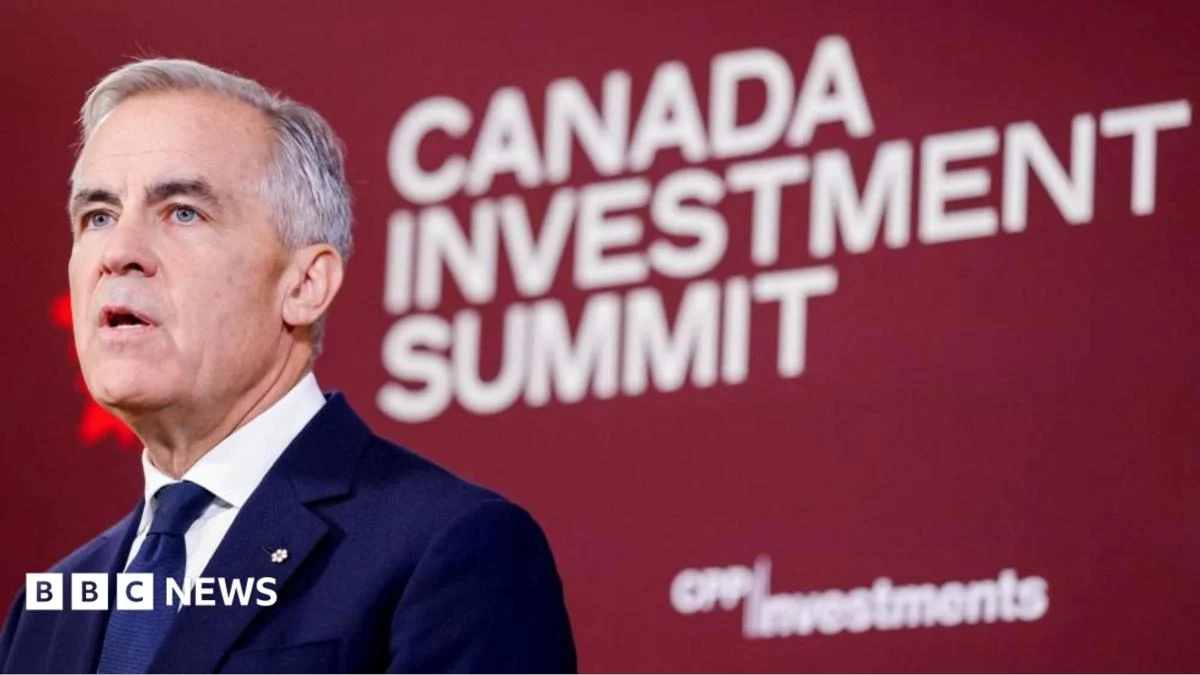
Prime Minister Mark Carney is strategically positioning Canada as a "safe harbour" for global investment giants, a move underscored by a high-stakes summit in Toronto aimed at attracting C$1 trillion in foreign capital over the next five years. In an era marked by escalating geopolitical tensions and economic volatility, Carney’s administration is actively seeking to diversify Canada’s economic partnerships beyond its dominant relationship with the United States. This ambitious push, detailed across five key takeaways from the recent summit, signals a deliberate effort to bolster Canada’s economic resilience and tap into new global financial currents, particularly amid an ongoing trade dispute with its southern neighbour.
The summit, which convened over 100 major investors managing assets exceeding C$120 trillion, served as a critical platform for showcasing Canada’s investment potential. Prime Minister Carney framed the event as an opportunity for these financiers to "peer into our shop window," presenting a diverse portfolio of over 160 projects ripe for investment. These opportunities span a wide spectrum, from the rapidly expanding digital infrastructure of data centres to the foundational needs of energy pipelines and the logistical enhancements of port expansions. To sweeten the deal, Ottawa has introduced a suite of new tax incentives, including a notable "mega deduction" measure, and has pledged to streamline regulatory processes. Carney emphasized a commitment to "predictability" for major projects, setting an ambitious one-year review timeline for approvals, and importantly, assuring investors of swift decisions, whether positive or negative. This proactive approach aims to overcome historical hurdles of lengthy approval processes, a common concern for large-scale capital deployment. The prime minister also engaged in high-level bilateral meetings with prominent figures such as Larry Fink, CEO of BlackRock, and Jon Gray, President of Blackstone, signalling the seriousness with which these engagements were approached.

A significant announcement emerging from the summit was the proposed privatization of private investment in four of Canada’s major airports: Toronto Pearson, Vancouver International, Montreal-Trudeau, and Calgary International. This initiative is projected to generate billions of dollars, which Carney stated would be strategically reinvested into vital transport infrastructure, including improvements to smaller, regional airports. While many developed nations have long incorporated private investment into their airport models, Canada has historically operated under a not-for-profit governance structure. Under Carney’s proposed framework, the federal government would retain ownership of the underlying land and assets, while permitting private entities to invest in and operate these critical hubs. However, this proposal has not been without its critics. Labour unions, including the Canadian Labour Congress, have voiced strong opposition, arguing that such a move would be detrimental to both workers and passengers. Lily Chang of the Congress stated, "In the middle of a trade war, handing profitable public infrastructure over to private investors is exactly the wrong move." Similarly, Nick Barry-Shaw from the advocacy group Council of Canadians decried the summit as a "privatisation summit," arguing that it represented a "country selling" rather than "nation building."
The summit also highlighted Canada’s burgeoning appeal as a destination for artificial intelligence (AI) infrastructure. Reports from the prime minister’s office indicated that nearly C$500 billion in new investments were generated across various sectors, with AI infrastructure projects garnering substantial interest. Aidan Gomez, co-founder of the AI firm Cohere, noted that Canada’s cool climate, ample space, and a predominantly "clean" energy grid make it an ideal location for developing data centres and other AI-related infrastructure. Dave McKay, CEO of the Royal Bank of Canada (RBC), one of Canada’s largest financial institutions, observed a "consistency of message" from the prime minister and executives, indicating a shared vision and collaborative spirit. This suggests that Canada is well-positioned to capitalize on the global demand for advanced technological infrastructure.
In a carefully calibrated move, Prime Minister Carney extended an "olive branch" to American investors, seeking to reaffirm the enduring economic ties between Canada and the United States despite escalating trade disputes. Carney, whose political career was partly built on a more assertive stance towards the US, acknowledged the recent imposition of tit-for-tat tariffs and the breakdown of formal trade talks. He directly addressed American executives present in Toronto, emphasizing that "Canada will continue to be the US’s most important partner in many key areas." He underscored the deep historical ties that persist even amidst disagreements, a sentiment aimed at reassuring American businesses of Canada’s commitment to a robust bilateral relationship. This diplomatic outreach is particularly significant as new US tariffs were implemented on Canadian goods, with further restrictions anticipated. The underlying message is one of partnership and mutual benefit, aiming to mitigate the economic fallout from current trade tensions.

The Canadian government’s strategic pivot also includes a significant focus on strengthening economic alliances with Europe. Following the Toronto summit, Prime Minister Carney is slated to address the European Union parliament and initiate discussions aimed at forging a "unique security and economic alliance" with the bloc. RBC CEO Dave McKay echoed this sentiment, suggesting that while geographical proximity ensures Canada’s continued close alignment with the US, there are substantial opportunities for diversification through enhanced engagement with overseas markets. He articulated this as an "and" strategy, encouraging diversification of trade and growth beyond the traditional US-centric approach. McKay believes that Canadians are increasingly recognizing the significant opportunities present in Asian and European markets, moving beyond a historical tendency to primarily focus on opportunities to the south. This strategic diversification is seen as crucial for long-term economic stability and growth.
However, the summit also faced vocal opposition from protestors who accused the Carney government of orchestrating a "great Canadian sell-off" of public resources and infrastructure to corporate interests. Hundreds gathered outside the opening night gala, expressing concerns about the increasing influence of corporate capital. Kai Nagata of the advocacy group Dogwood highlighted that a significant portion of the invited investors were American, warning that selling off national assets to American billionaires could bring Canada closer to becoming the 51st state. These protests underscore a deep-seated public concern about the potential erosion of national sovereignty and public control over essential services in exchange for foreign investment. The tension between attracting much-needed capital and safeguarding public assets represents a central challenge for the Carney administration as it navigates this ambitious investment drive. The success of Canada’s push to woo the world’s richest investors will ultimately depend on balancing these competing interests and demonstrating tangible benefits for the broader Canadian populace.



 Roy Suryo
 Nakalama John
 Ramos Leo