
 Nana Banana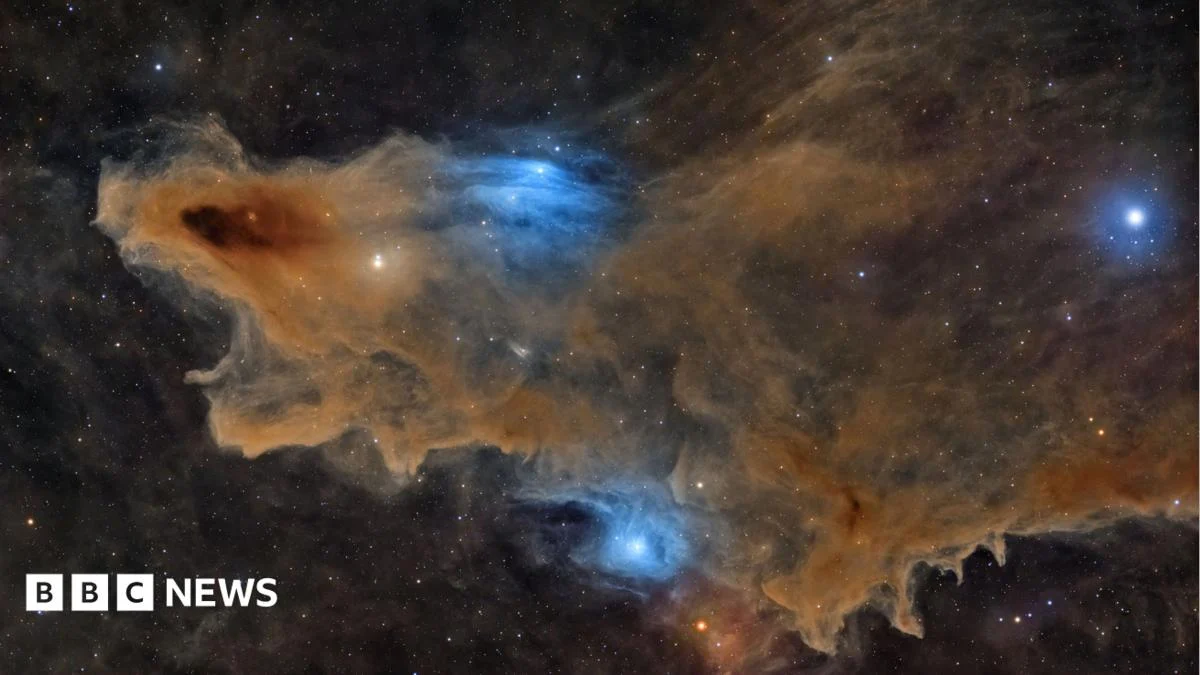
The prestigious Royal Observatory Greenwich has proudly unveiled the winner of its highly anticipated Astronomy Photographer of the Year competition, bestowing the coveted top honour upon an extraordinary image of the ethereal Shark Nebula. This annual contest, renowned globally for showcasing the pinnacle of astrophotography, celebrates both the scientific marvels and the breathtaking artistic beauty of our universe, drawing entries from every corner of the globe. The Royal Observatory Greenwich, a historic centre of astronomical research and timekeeping, continues its legacy of inspiring wonder and scientific curiosity through initiatives like this competition, bringing the distant cosmos closer to public appreciation.
Ali Alobaidly, the masterful photographer behind the winning entry, captivated the judging panel with his stunning capture of the cosmic entity. His image, taken from Kuwait, not only portrays the intricate beauty of the Shark Nebula but also serves as a testament to the dedication and technical prowess required to excel in the demanding field of astrophotography. The Royal Observatory Greenwich, established in 1675 by King Charles II, has for centuries been at the forefront of astronomical observation and education, and its Astronomy Photographer of the Year competition has become a cornerstone event in the global astrophotography calendar, attracting thousands of entries and setting a benchmark for excellence.
The subject of Alobaidly’s winning photograph, the Shark Nebula, is a fascinating dark nebula located approximately 650 light-years away from Earth within the constellation Cepheus. Dark nebulae, unlike their brighter emission or reflection counterparts, do not emit or reflect light. Instead, they are vast, dense clouds of interstellar dust and gas so opaque that they effectively block the light from stars and nebulae situated behind them. This characteristic makes them appear as dark silhouettes against the luminous backdrop of the Milky Way, often taking on evocative shapes that inspire their common names, such as the "Shark Nebula" due to its resemblance to the marine predator. The challenging nature of imaging such an object, which requires exceptional long exposures and meticulous processing to reveal its subtle structure and depth, further underscores the remarkable achievement of Alobaidly’s work.
Steve Marsh, a distinguished judge for the competition and the insightful art editor at BBC Sky at Night Magazine, lauded Alobaidly’s entry with high praise. He described the image as possessing "flawless presentation, pin-sharp details and dynamic contrast," highlighting the technical mastery evident in every pixel. Marsh’s comments underscore the stringent criteria applied by the judging panel, which assesses not only the aesthetic appeal but also the scientific accuracy, technical execution, and the overall impact of each photograph. Achieving "pin-sharp details" in an astronomical image is particularly challenging, given the vast distances involved, atmospheric distortions, and the minute movements of celestial objects. The "dynamic contrast" further speaks to the photographer’s skill in bringing out the subtle gradations of light and shadow within the dark nebula, making it appear three-dimensional and captivating.
Marsh further elaborated on the profound quality of the winning image, stating, "The Shark Nebula is already a striking object, but when it is resolved to the point where even detail-rich distant galaxies can be seen through it, you know you’re looking at something very special." This observation is key to understanding the exceptional nature of Alobaidly’s photograph. Dark nebulae, by definition, obscure light. To capture faint, distant galaxies through the dense dust of the Shark Nebula signifies an extraordinary level of light-gathering ability, precision tracking, and post-processing expertise. It suggests an image with incredible depth, revealing not just the foreground nebula but also the cosmic tapestry stretching far beyond, adding layers of complexity and wonder. Such a feat requires not only sophisticated equipment but also immense patience and a profound understanding of astrophotography techniques.
For his remarkable achievement, Ali Alobaidly was awarded the grand prize of £10,000, a substantial sum that acknowledges the immense talent and effort invested in his work. Expressing his profound gratitude and vision, Alobaidly articulated his aspirations beyond just winning the competition. He stated his hope to utilise his photographs "to make astronomy more accessible, engaging and meaningful through science communication and education," describing the award as a "tremendous honour." This statement reflects a growing trend among astrophotographers who see their art not merely as a personal pursuit but as a powerful tool for public outreach and scientific literacy. By transforming complex astronomical phenomena into visually stunning and comprehensible images, photographers like Alobaidly play a crucial role in inspiring the next generation of scientists, educators, and space enthusiasts, bridging the gap between cutting-edge research and public understanding. His dedication to science communication underscores the Royal Observatory Greenwich’s own mission to promote a deeper understanding of the universe.
The Astronomy Photographer of the Year competition has firmly established itself as a global phenomenon, attracting a truly international field of participants. For the 2026 competition cycle, a staggering almost 4,000 entries poured in from 66 different countries, underscoring the universal appeal of astrophotography and the widespread desire to capture the wonders of the night sky. This vast number of submissions highlights the competition’s prestige and the fierce level of talent vying for recognition. Alobaidly’s entry, specifically, was submitted in the highly competitive "Stars and Nebulae" category, which consistently features some of the most breathtaking and scientifically significant images of deep-sky objects. Other categories typically include Galaxies; Aurorae; Our Moon; Our Sun; Planets, Comets, and Asteroids; Skyscapes; and a dedicated Young Astronomy Photographer of the Year award, ensuring a comprehensive celebration of all facets of astronomical imaging.
Alobaidly’s success also shines a light on the burgeoning astrophotography community in regions like Kuwait, demonstrating that exceptional images can be captured from diverse locations, even those facing challenges such as light pollution. While urban centres worldwide grapple with increasing light pollution, dedicated astrophotographers often travel to remote, dark-sky sites to achieve optimal results. Alobaidly’s ability to capture such a detailed image of the Shark Nebula from Kuwait speaks volumes about his skill in mitigating potential light interference and maximising the clarity of his astronomical targets. His win serves as an inspiration for aspiring photographers in regions not traditionally known for dark-sky observatories, proving that passion and expertise can overcome geographical limitations.
The Royal Observatory Greenwich’s Astronomy Photographer of the Year competition is more than just a contest; it is a global platform that celebrates human curiosity, technological innovation, and artistic vision. It fosters a deeper appreciation for the cosmos, encouraging viewers to ponder their place in the universe and inspiring a new generation to look up at the night sky with awe and a thirst for knowledge. Alobaidly’s winning image of the Shark Nebula is a profound testament to this mission, offering a glimpse into the majestic and mysterious depths of space, rendered with clarity and artistry that truly brings the distant universe into sharp focus for all to admire. His triumph is not just a personal victory but a significant contribution to the ongoing dialogue between science and art, reminding us of the boundless beauty that lies beyond our earthly confines.


 George Anjay
 Nakalama John

 Ramos Leo
 Roy Suryo