
 Roy Suryo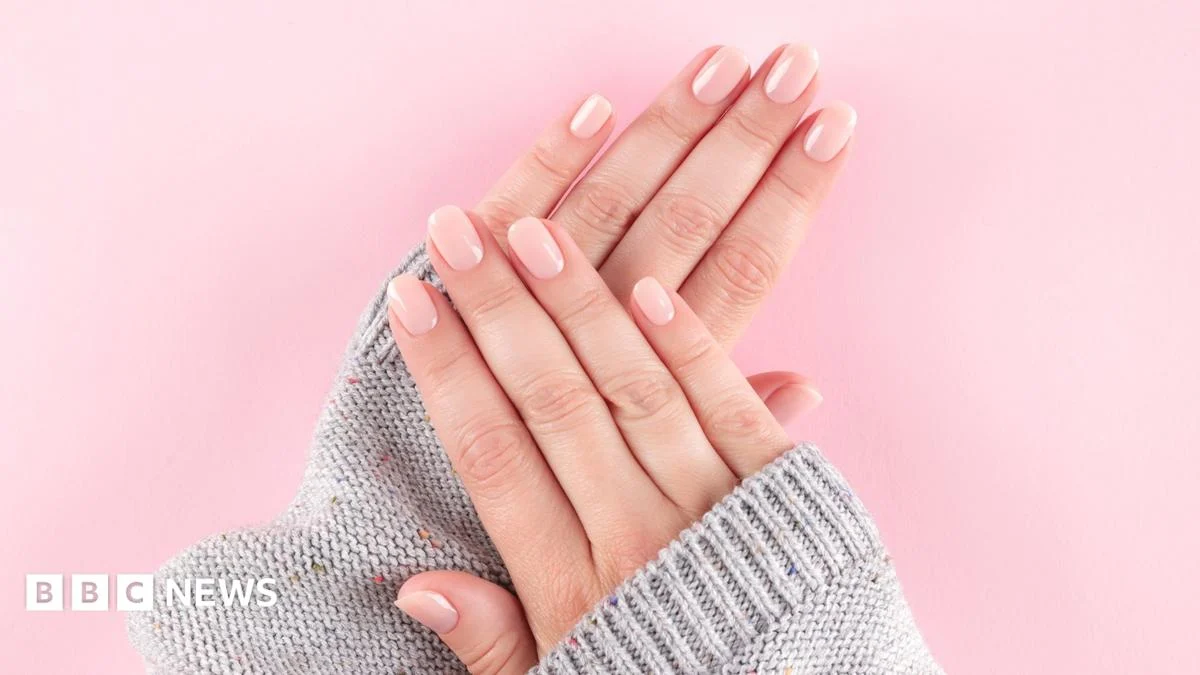
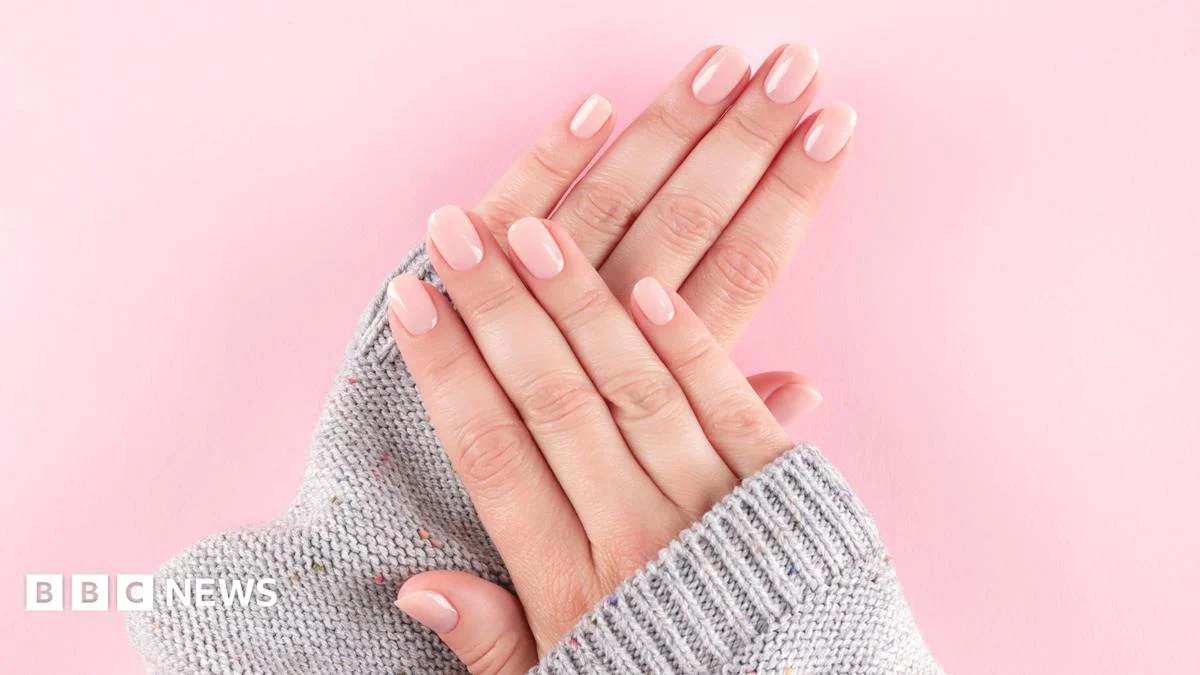
In recent months, Paloma Buddemeier, owner of Wumman Spa in London, has observed a curious phenomenon: a steady stream of clients entering her salon with the explicit goal of achieving a look that appears as if they’ve never been there at all. "It’s crazy," she remarks, describing a trend that prioritizes an almost imperceptible manicure. These discerning customers still undergo the essential nail care ritual: filing, buffing, and trimming. "You still do the cuticle, you do the soaking and hydrate everything," Buddemeier explains, "but you just put no polish on." This deliberate absence of color is, according to her, fueled by a viral craze for bare-looking nails.
Artsy photographs of glossy, unadorned nails have been inundating social media feeds, gracing fashion runways, and adorning the red carpets of prestigious events. This aesthetic is increasingly being interpreted as the latest emblem of "quiet luxury," a subtle yet potent expression of wealth and taste. However, this burgeoning trend has not been without its detractors. Critics argue that the emphasis on bare nails carries significant implications regarding class, the relentless cycle of beauty standards, and the inherent power dynamics in defining what is deemed tasteful and sophisticated.
The historical and creative tapestry of nail art is deeply intertwined with Black, Latino, and Asian communities, whose vibrant expressions have long pushed the boundaries of conventional beauty. The emerging notion that bare nails now signify high status is seen by many as a potentially stigmatizing shift that could marginalize the bold and innovative manicures pioneered by these very communities. Beauty journalist Kristina Rodulfo articulates this concern, telling the BBC that this trend "really promotes blankness and this kind of sameness and erasure of culture and identity that is so important to Black and brown communities." She further elaborates on the insidious nature of such commentary, noting that when bare nails are described as "elegant or tasteful," these terms often function as euphemisms that inadvertently perpetuate white supremacist standards of beauty.
Yet, for some individuals, the embrace of bare nails is not a rejection of vibrant nail art but rather a practical decision driven by a desire to simplify their beauty routines. A growing number of converts are ditching nail polish as a form of rebellion against entrenched, often demanding, female beauty standards, or simply as a means to reclaim time and financial resources. Others genuinely appreciate the minimalist aesthetic. Then there are those who have always preferred their nails au naturel, finding it amusing that their long-standing habit – or lack thereof – has suddenly become fashionable.
Irish TV presenter Angela Scanlon exemplifies this latter group. For years, she meticulously maintained a bi-weekly nail salon appointment, a routine that began during her time in New York in the 2000s, where manicures seemed to be a universal, almost uniform, aspect of social presentation. However, what started as a norm gradually evolved into a chore. Scanlon found herself regularly sporting everything from delicate, shiny shellac to robust "Builder In A Bottle" gel manicures. "It wasn’t like I was in my head going: ‘I must go because Dave from Hull is going to be disgusted if I’m on This Morning next week without a full set’," she recounts, speaking about her role as a Radio 2 presenter. "I just added it to the list of things that we must do… in the way you would wash your hair."
Eventually, in a moment of profound realization, Scanlon made the decision to cease these regular salon visits, seeking to liberate both her time and her mental energy. "I heard myself saying to people: ‘Ugh, my god, I have to go and get my nails done’," she recalls. "And I thought: ‘I probably don’t need to do this anymore’." Scanlon’s subsequent posts on Substack and Instagram detailing her decision to forgo continuous manicures resonated deeply, causing them to "blow up" earlier this year. It was evident that she had tapped into a widespread sentiment.
The February New York Fashion Week saw simple nails take center stage, with designers like Marc Jacobs notably sending models down the runway without polish. However, some fashion aficionados argue that this is hardly a novel concept. Nevertheless, beauty publications have enthusiastically declared the shift. Articles have proclaimed that "All The Cool Girls Are Quietly Quitting Manicures," that "Bare Nails Are the New Status Symbol" for "Polished Women," and even that "Manicures Are No Longer Classy," with bare nails now crowned "the ultimate indicator of wealth." A continuous stream of posts on Instagram and TikTok showcases glossy, natural-looking nails, offering tutorials on how to achieve the look at home. The trend has become so highly sought after that some individuals have come full circle, booking appointments at salons specifically to mimic this seemingly effortless aesthetic.
At Wumman Spa, Buddemeier’s clients sometimes spend hours in the chair as nail artists meticulously craft hyper-realistic, sheer, glossy neutral nails, à la celebrities like Zoe Kravitz and Zendaya. Khadija, a Londoner, shares her journey from being a devotee of elaborate nail art to embracing bare nails earlier this year. "It’s just really chic. And I love less is more, I love minimalism… less consumerism and just self-care things that you could probably do at home," she explains. Reluctantly joining the bandwagon, influenced by the rising cost of living, is her friend Emmanuella. "It’s just too expensive now," she laments. Another 25-year-old expresses a similar sentiment to the BBC, stating, "I think getting [your] nails done is tacky now, because who’s got an hour to waste? Also, I lift weights in the gym, so I don’t want to snap a nail and waste money."
However, a significant segment of the population believes that the trend, or at least the discourse surrounding it, conceals something more problematic. Fashion journalist Suzanne E. Shapiro, author of Nails: The Story of The Modern Manicure, contends that manicures have historically served as unspoken signifiers of a wearer’s societal standing. "Women’s bodies – and sense of self-presentation – have always held huge political and cultural significance," Shapiro tells the BBC. She points to historical examples, such as the lengthy talons cultivated by nobility in 13th century Imperial China, which, protected by intricately carved brass nail guards, symbolized a life free from manual labor. In the 1800s, a single layer of rose-tinted waxy salves indicated vigor and health, but two layers, in an era when artificial beauty was associated with virtue, marked a woman as vain or "loose." The introduction of Revlon’s red at-home nail lacquer in the early 1930s, conversely, became a symbol of empowerment for modern women rebelling against such judgments.
Crucially, historians emphasize that it was women of color who truly democratized manicures and transformed them into an accessible and fashionable form of self-expression. Trailblazers like entertainer Josephine Baker, disco icons Diana Ross and Donna Summer, and Olympic gold medalist Florence Griffith-Joyner, whose elaborate acrylic sets often commanded as much attention as her record-breaking athletic performances, were instrumental in pioneering nail art. The influx of Vietnamese refugees in the 1970s led to the proliferation of nail bars, making professional manicures no longer the exclusive domain of the affluent.
However, as with many luxuries, their increasing popularity and accessibility to the masses prompted the wealthy to adopt a different strategy, a phenomenon known as "counter-signaling," as described by Rodulfo. "The same way that logo bags are considered gauche or quiet luxury is more aspirational, bare nails are considered the trend now," she explains. She observes that "the examples are almost always white women or celebrities… [and] they’ll often conflate class and taste with that bareness."
The irony is not lost on many that these so-called natural nails often require their own time-consuming and costly grooming routines. "The irony in all this is these natural nails are not natural either," Shapiro points out. "They also require a lot of grooming and sometimes pretty premiere services." While the feminist critique of unrealistic beauty standards within the beauty industry is valid, it’s also important to acknowledge the empowering nature of the largely female-run nail sector. "I feel like nail care has very much had a ‘for women, by women’ sort of ethos around it," Shapiro notes. "The first salon opened in New York City was owned by a woman, and she was a remarkably independent one… a lot of the first entrepreneurs offering product lines, opening salons were women."
Hampton expresses her disappointment with how trends, both past and present, are weaponized. "We’re taking the fun out of nails… Anyone should be able to wear what they like – nail polish or bare nails," she argues. "Why is there an argument? Why is there beef?" Scanlon echoes this sentiment, finding the situation somewhat bewildering. "For me, it’s like, just stop judging ourselves and everybody else," she advises. "Some people like to have the nails done, some people don’t." She concludes with a reflective thought: "I suppose the question that I was posing was, is it doing anything for you? The truth of it is: it’s not that deep."


 George Anjay
 atisusanti
 Nakalama John