Nana Banana
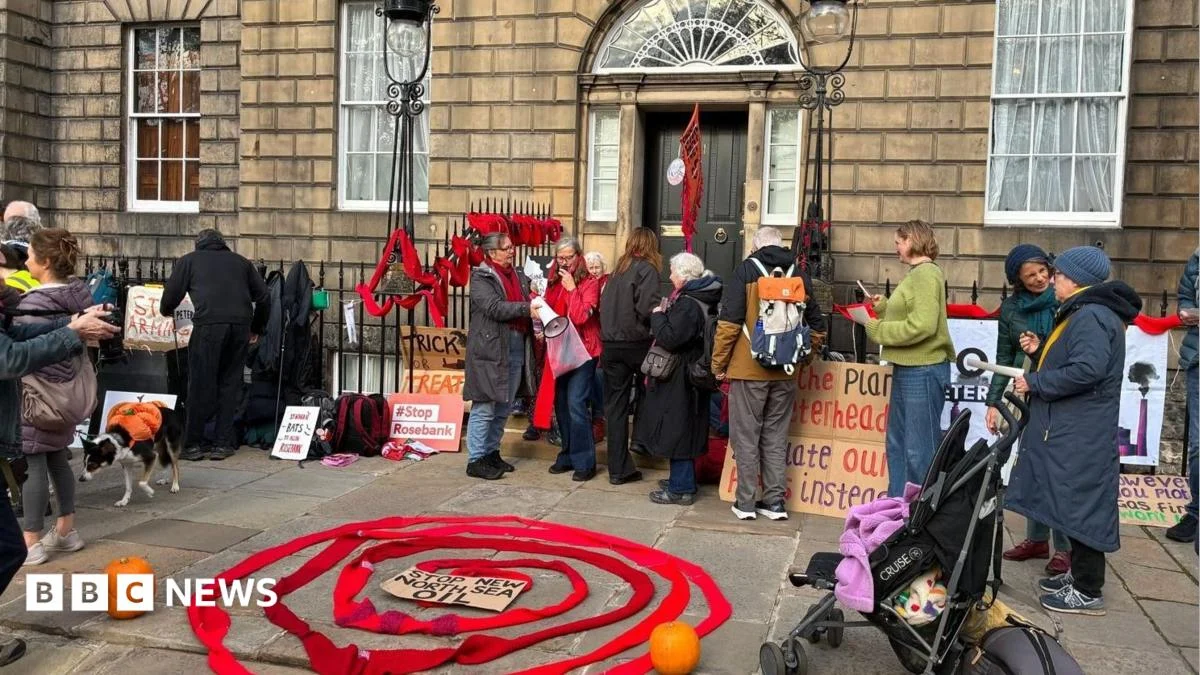
Kate Whitaker, a prominent spokesperson for Friends of the Earth Scotland, articulated the deep-seated anxieties gripping environmental advocates. She asserted that fossil fuels are unequivocally "scary," not merely as an abstract concept, but due to the tangible and devastating harm they are inflicting upon "millions of people" across the globe. This harm, she elaborated, manifests in increasingly severe and frequent extreme weather events, rising sea levels threatening coastal communities, widespread crop failures leading to food insecurity, and the exacerbation of public health crises through air pollution and vector-borne diseases. The human cost, she emphasised, is already immense and continues to mount, creating an urgent imperative for decisive action.
Whitaker further underscored the psychological toll exacted by what she described as "disastrous decisions to approve new oil or gas." She noted that when politicians, entrusted with safeguarding the collective future, opt to greenlight projects that perpetuate reliance on fossil fuels, public apprehension intensifies dramatically. This sentiment of betrayal and growing fear about "our collective future" is particularly acute among younger generations who face the most profound consequences of a warming planet. Such decisions, campaigners argue, send a disheartening message that economic considerations and short-term energy security are being prioritised over long-term environmental stability and human well-being, fostering a sense of despair and powerlessness among those who advocate for change.
The decision to give "the go ahead for a new fossil-fuelled power plant at Peterhead" was singled out by Whitaker as a particularly egregious error. She characterised it as a "catastrophic failure from the Scottish government to protect people from both climate breakdown and the increasing burden of household energy bills." The proposed Peterhead plant, intended to be a gas-fired power station, despite potentially incorporating carbon capture, utilisation, and storage (CCUS) technology, is viewed by environmentalists as a dangerous commitment to fossil fuel infrastructure for decades to come. They argue that even with CCUS, the technology is unproven at scale, energy-intensive, and does not address the upstream emissions associated with gas extraction and transportation. This move, they claim, fundamentally undermines Scotland’s legally binding target to achieve net-zero emissions by 2045, sending a confusing and counterproductive signal to both domestic and international audiences.
Campaigners argue that the decision not only exacerbates the threat of climate breakdown but also fails to address the immediate and pressing issue of escalating household energy bills. By continuing to rely on gas, which is subject to volatile global market prices, the government, in their view, exposes consumers to ongoing financial insecurity. They contend that a genuine commitment to energy independence and affordability would necessitate a rapid transition to abundant, domestically sourced renewable energy, which is less susceptible to geopolitical fluctuations and offers more stable pricing.
Whitaker proposed a clear alternative pathway, stating that "politicians could instead help allay our fears by focusing on climate solutions that improve people’s lives." This approach centres on a just transition, where climate action is intrinsically linked to social and economic benefits for all citizens. Among the key solutions highlighted were initiatives to create "warmer homes." This encompasses comprehensive energy efficiency programmes, including widespread insulation upgrades and the rollout of low-carbon heating systems like heat pumps. Such measures would not only significantly reduce carbon emissions from the residential sector but also alleviate fuel poverty, improve public health outcomes, and create local employment opportunities in retrofitting and installation.
Another critical area of focus, according to Friends of the Earth Scotland, is the investment in "reliable bus services." Enhancing and expanding public transport networks, particularly buses, would offer a viable alternative to private car ownership, thereby reducing traffic congestion, improving air quality in urban areas, and lowering transport-related emissions. Furthermore, accessible and affordable public transport is a matter of social equity, enabling greater mobility and access to jobs, education, and essential services for all segments of society, especially those without access to private vehicles.
Finally, Whitaker stressed the importance of "creating green jobs" as a cornerstone of a sustainable future. This involves strategically investing in renewable energy generation, energy efficiency, sustainable agriculture, and the circular economy. A robust green jobs sector would not only drive economic growth and innovation but also provide skilled employment opportunities, ensuring that workers currently in fossil fuel industries can transition into new, future-proof roles. This vision stands in stark contrast to the perceived risk of job losses and economic instability associated with clinging to declining fossil fuel sectors.
In response to the growing criticism, a Scottish government spokesperson issued a statement affirming their unwavering commitment to climate action. "We remain unwavering in our commitment to tackle climate change, delivering positive climate action to achieve net zero by 2045," the spokesperson declared. This reiteration of Scotland’s ambitious net-zero target seeks to reassure the public and international partners of the government’s long-term environmental goals. However, critics argue that this statement rings hollow when juxtaposed with the approval of new fossil fuel infrastructure.
The spokesperson also pointed to the official documentation surrounding the decision, stating, "The full grounds for the ministers’ decision are set out in the decision letter." This suggests that the government believes its decision is robust and legally sound, having undergone due process and careful consideration of all relevant factors. However, the complexity of these decision letters can often make it challenging for the public and non-specialist groups to fully grasp the detailed rationale, fueling suspicions that the full implications are not being adequately transparently addressed.
Furthermore, the government spokesperson emphasised that "potential impacts on communities, nature and cultural heritage, including the cumulative effects of developments, were important considerations in the decision-making process." This indicates that a comprehensive assessment, encompassing environmental impact assessments and public consultations, was undertaken. While local impacts on communities, nature, and cultural heritage are standard considerations in planning decisions, campaigners argue that in the context of a global climate emergency, the "cumulative effects" must be viewed through a broader lens, encompassing the planet’s overall carbon budget and the irreversible damage caused by continued fossil fuel combustion. They contend that the global impact of adding more fossil fuel capacity far outweighs any localised benefits or mitigation measures, making the Peterhead decision a step backwards for Scotland’s climate leadership.
The protest at Bute House and the subsequent exchange highlight the profound tension within Scotland’s energy policy. On one hand, the nation has set some of the world’s most ambitious climate targets and has made significant strides in renewable energy development, particularly wind power. On the other hand, it grapples with a legacy of North Sea oil and gas, a sector that still employs thousands and contributes significantly to the economy. The approval of the Peterhead plant, despite its potential for CCUS, is seen by environmental groups as a dangerous compromise that prioritises short-term energy security or industrial decarbonisation pathways over the urgent need for a rapid, unequivocal phase-out of fossil fuels.
The Scottish Green Party, a partner in the Scottish government, also faces scrutiny, with campaigners questioning their influence and effectiveness in preventing such decisions. This internal political dynamic adds another layer of complexity to the debate, raising questions about the compromises made within coalition governments when facing competing priorities. The broader economic implications are also significant; continued investment in gas infrastructure could potentially divert funds and political will away from scaling up proven renewable technologies and grid improvements that are essential for a truly sustainable energy future.
Ultimately, the confrontation at Bute House symbolises a critical juncture for Scotland. The environmental campaigners are demanding an unwavering commitment to a truly green transition, one that not only meets emissions targets but also demonstrably improves the lives of its citizens through cleaner air, affordable energy, and secure green jobs. The government, while asserting its climate commitments, appears to be navigating a more pragmatic path, balancing energy security and industrial needs with environmental goals. As the planet warms and the urgency of climate action intensifies, the pressure on policymakers to align their decisions with their declared ambitions will only continue to mount, ensuring that protests like the one at Bute House remain a recurring feature of the national climate discourse.


 George Anjay

 atisusanti
 Ramos Leo