
 Ramos Leo
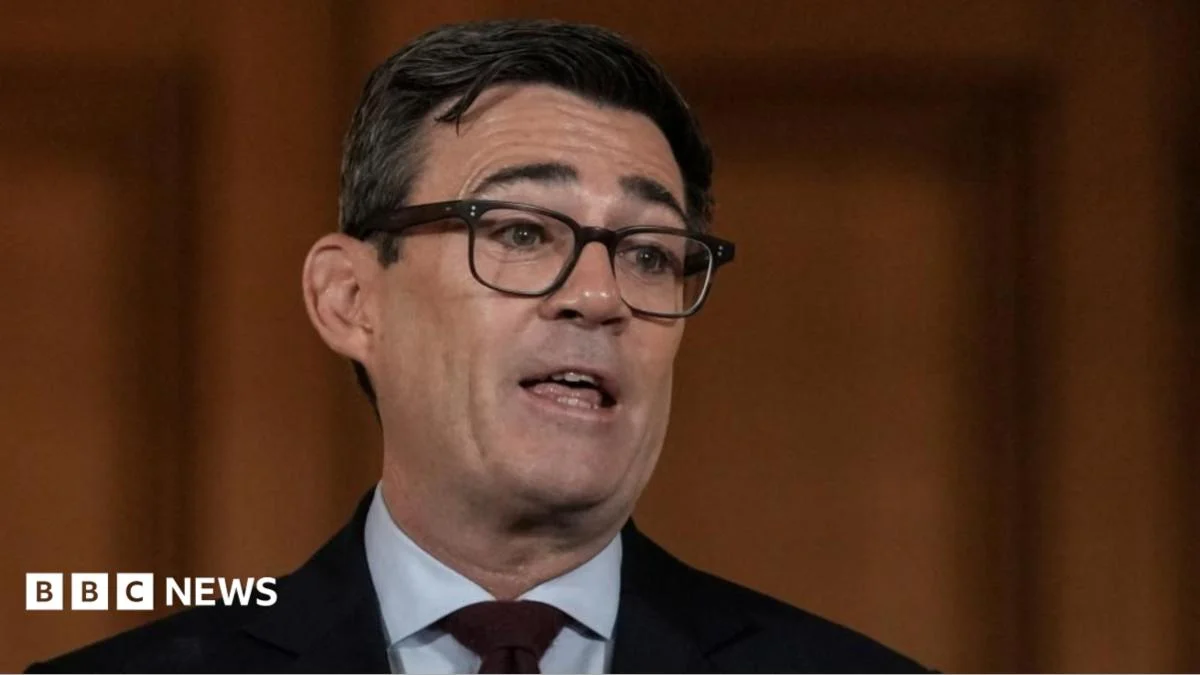
Prime Minister Andy Burnham has indicated a willingness to consider a formal apology from the United Kingdom for its profound role in the transatlantic slave trade, a pivotal and brutal chapter in global history. However, he has unequivocally dismissed any notion of financial reparations, drawing a clear line between symbolic acknowledgment and monetary restitution. Burnham articulated his stance by expressing a desire for a "dialogue with those affected," signaling an openness to "calls for an apology," but maintained that reparations were "not the right answer" for addressing historical injustices of such magnitude.
This nuanced position, while falling short for some, was cautiously welcomed by the All-Party Parliamentary Group (APPG) for Afrikan Reparations. Its esteemed chairwoman, Bell Ribeiro-Addy, conveyed to BBC Radio 4’s Today programme that the conversation surrounding reparations extends far beyond mere financial compensation. Her comments underscored a broader understanding of "reparative justice" that encompasses historical truth-telling, institutional reform, and cultural recognition, rather than solely monetary payments.
Burnham’s statement gains particular significance as it precedes the eagerly anticipated Commonwealth leaders summit, scheduled to take place next week in the Caribbean. This region, deeply scarred by the legacy of slavery, has been a vocal proponent for an apology and reparative measures. Adding to the gravity of the moment, King Charles III is currently undertaking a tour of the region, where renewed calls for an apology have reverberated across the islands. During the initial leg of his tour in the Bahamas, the King made a poignant reference to the "suffering of the past," a carefully chosen phrase that acknowledged the historical pain without issuing a formal apology. His subsequent visit to Guyana, where he toured the site of a significant rebellion of enslaved people against British authorities, further highlighted the enduring impact of this dark period.
On Saturday, Prime Minister Burnham unequivocally condemned the transatlantic slave trade, describing it as a "brutal and barbaric violation" of human rights. He stressed that Britain, as a nation, must "face up to the past," acknowledging its complicity and responsibility in the systematic trafficking of millions of Africans to the Americas. This acknowledgment marks a notable shift in tone compared to previous governmental pronouncements, signaling a more direct engagement with Britain’s historical role.
Historically, the British government has consistently refrained from issuing a formal apology for slavery or offering any form of reparations. Burnham, while adopting a more conciliatory tone regarding an apology, has aligned himself with the established policy of his predecessors in firmly ruling out reparation payments. In a compelling piece published in The Guardian, Burnham elaborated on his rationale, stating, "I do not think that British people today can be held liable for historical wrongs, however heinous, that happened in a different age under different laws and in which they played no personal part." This argument centers on the principle of intergenerational responsibility, suggesting that contemporary citizens should not bear the financial burden for crimes committed centuries ago by their ancestors.
He further noted that Commonwealth countries have, for many years, sought an "honest conversation" about the legacy of slavery. In response, Burnham proposed a "structured dialogue" to facilitate this critical discussion. He affirmed his commitment to this process, adding: "Listening to calls for a formal apology on behalf of the British state will form an important part of this process. I am open to them." This commitment to listening and engaging represents a significant step forward, offering a platform for affected communities to voice their perspectives directly to the highest levels of British government.
Chancellor John Healey, speaking to the BBC, reiterated the Prime Minister’s position, stating that Burnham was "open to a discussion" about an apology because it was "the right thing, particularly ahead of the Commonwealth heads conference." Healey, however, echoed Burnham’s firm stance against reparations, clarifying that a formal apology does not imply that British people today should "accept the financial liability for any part in things that happened hundreds of years ago in which they had no role." This distinction aims to manage expectations, separating symbolic acknowledgment from tangible financial commitments.
The Commonwealth Heads of Government Meeting (CHOGM) is set to commence on 1 November in Antigua, with King Charles III officially opening the proceedings as part of his regional tour. This high-profile event provides a crucial platform for these discussions to unfold on an international stage.
The Prime Minister’s position has drawn diverse reactions from across the political spectrum. Conservative leader Kemi Badenoch vehemently opposed any notion of reparations, asserting that there was "no reason British taxpayers today should be held financially responsible for things that happened generations before any of us were born." In a post on X (formerly Twitter), Badenoch criticized what she perceived as Labour’s fiscal irresponsibility, writing that the party was "already spending too much on Britain’s welfare state, now is not the time for Andy Burnham to be providing global welfare." Her comments highlight a deep ideological divide on the issue, framing reparations as an unjust burden on contemporary taxpayers.
In contrast, Liberal Democrat leader Ed Davey expressed a more straightforward endorsement of an apology, stating: "I do think we have a duty there and saying sorry is always quite a good thing." This perspective emphasizes the moral imperative of acknowledgment and reconciliation.
Bell Ribeiro-Addy, while welcoming the government’s acceptance of the UK’s historical role, stressed that it had "still fallen short of a formal state apology and that actually costs nothing." She emphasized the qualitative difference between mere acknowledgment and a deeper understanding that comes with a formal apology. "Acknowledgement is not the same as understanding," she told Today, adding: "Until we apologise, we are never going to be on equal footing… it’s meant to be a family of nations – a Commonwealth – and it’s simply not the case." Ribeiro-Addy, who serves as MP for Clapham and Brixton Hill, further clarified that, to her knowledge, no specific invoice for financial reparations has ever been presented to the UK. Therefore, she argued, focusing exclusively on "financial reparations" often misses the broader point of "reparative justice." "My worry is the focus on financial reparations, and I think that is deeply problematic and has not quite listened to what people have said," Ribeiro-Addy explained, advocating for a more comprehensive approach that addresses the multi-generational impact of slavery.
Downing Street’s strategic considerations also play a role in the government’s approach. There is a strong belief that strengthening the Commonwealth is firmly in the UK’s national interest, particularly in a global landscape where powers like China and Russia are actively seeking to exert greater influence. The timing of Burnham’s statement is therefore not accidental, as it seeks to foster goodwill and reinforce alliances within the Commonwealth, especially given recent geopolitical moves, such as President Vladimir Putin’s hosting of a Russia-Africa summit in Moscow just this week.
Internationally, reactions have been mixed. Barbados Prime Minister Mia Mottley, a prominent advocate for reparations and a leading voice in the Caribbean Community (CARICOM) Reparations Commission, welcomed Burnham’s statement. She indicated a willingness to engage in good faith while unequivocally reaffirming her commitment to pursuing reparatory justice. This suggests a strategic opening for dialogue, even if the UK’s current position does not meet all of Barbados’s demands.
However, Denis O’Brien, founder of The Repair Campaign, expressed disappointment, asserting that Burnham’s statement did not go far enough. "The British government must stop obfuscating and give a full and formal apology now," he demanded, emphasizing that such an act "would be a significant and symbolic first step towards reparatory justice." His view reflects the sentiment of many activists who believe that anything less than a full, unambiguous apology is insufficient.
From the 16th Century onwards, English authorities and the monarchy were deeply and prominently involved in the centuries-long transatlantic slave trade. This brutal enterprise saw British ships transport millions of enslaved Africans across the Atlantic, enriching the British economy and laying foundations for industrial wealth, while simultaneously inflicting unimaginable suffering and creating enduring legacies of racial inequality and underdevelopment in the Caribbean and parts of Africa.
Burnham is not the first UK prime minister to grapple with this complex and painful issue. In 2007, then-Prime Minister Tony Blair acknowledged the UK’s role in the slave trade as a matter of "deep sorrow and regret," a statement that, while significant at the time, fell short of a formal apology. In 2015, David Cameron, during a visit to Jamaica, explicitly ruled out making reparations for Britain’s historical role, controversially urging Caribbean countries to "move on" from the past. More recently, in 2023, Rishi Sunak dismissed a call for the government to apologize and pay reparations for the UK’s historical role in slavery after Bell Ribeiro-Addy pressed him on the issue, stating a firm "no" and adding, "Trying to unpick our history is not the right way forward." Even Labour leader Sir Keir Starmer, in 2024, ruled out compensation for the UK’s historical role, expressing a desire to focus on the future of the Commonwealth. This consistent rejection of financial reparations across successive governments highlights the political sensitivity and economic implications of such demands.
A crucial historical detail that often fuels calls for reparations is the aftermath of the 1833 Slavery Abolition Act. While this landmark legislation abolished slavery throughout most of the British Empire, it came with a contentious caveat: British plantation owners, who claimed loss of "property," were compensated by the British government for the "loss" of the enslaved people they had held. The colossal sum borrowed by the government to facilitate these payments created a national debt that the UK only finished paying off in 2015 – a stark and ironic contrast to the complete lack of compensation or apology for the millions of enslaved Africans and their descendants. This historical fact remains a potent symbol of injustice and inequality, continuing to shape contemporary debates about accountability and reparative justice.


 Roy Suryo

 Nana Banana

 George Anjay

 atisusanti
