
 Nana Banana
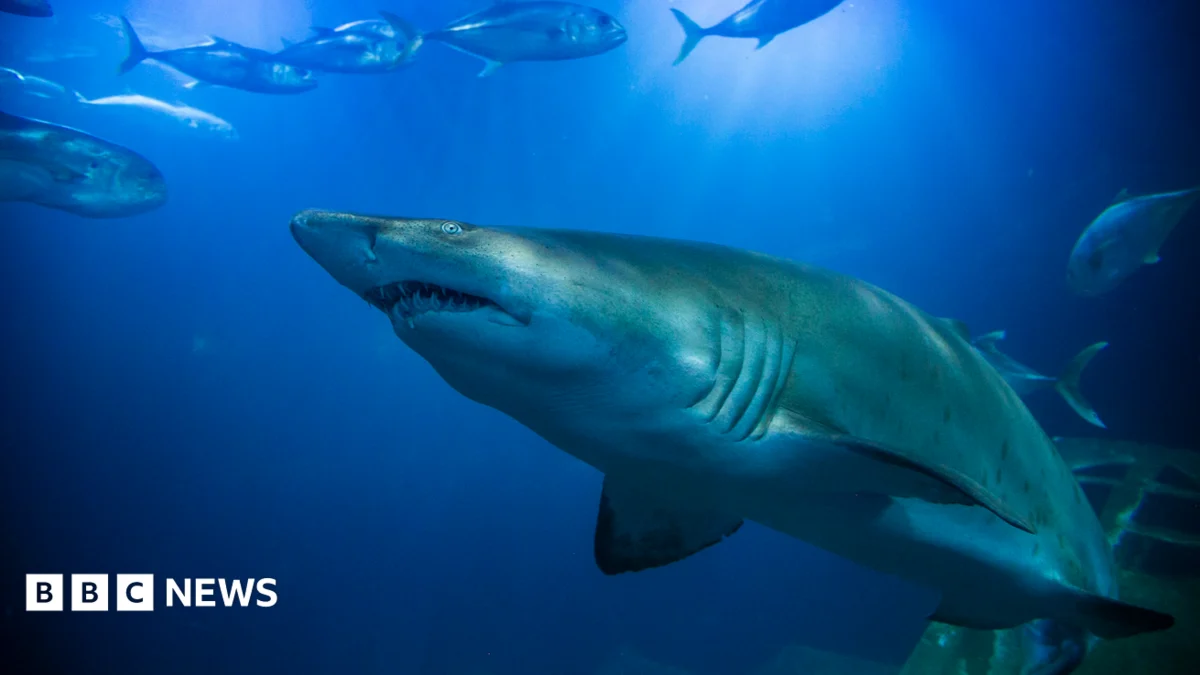
Howard had been an integral part of the NMA’s fabric since its very inception, arriving as one of the original inhabitants when the facility first opened its doors almost 30 years ago. From the moment she joined the aquarium family, she embarked on a remarkable journey within its carefully curated habitats. Initially, she resided within the vibrant and intricate Great Barrier Reef exhibit, a testament to the aquarium’s ambition to showcase diverse marine ecosystems. As she matured and her impressive stature began to develop, reaching an eventual length of 9ft (2.7m), it became clear that a more expansive and suitable environment was necessary to accommodate her growing needs. This led to her relocation to the vast and deeper Atlantic Ocean habitat, a move that allowed her ample space to roam and exhibit her natural behaviours in a setting designed to mimic the open ocean. This transition marked a significant milestone in her life at the NMA, solidifying her status as a prominent figure in one of the UK’s largest and deepest tanks.
Believed to have been almost 30 years old at the time of her passing, Howard’s longevity is a remarkable achievement for a sand tiger shark, both in captivity and in the wild. Sand tiger sharks (Carcharias taurus) typically have a lifespan of around 20-30 years, making Howie’s age a testament to the exceptional care and dedication provided by the NMA’s husbandry team. Her long life allowed generations of visitors to connect with a species often misunderstood and feared. More than just an exhibit, she became an "incredible ambassador," a living testament to the beauty and fragility of marine life. Her consistent presence offered a unique opportunity for millions of people to observe a critically endangered species up close, fostering a deeper appreciation and understanding that textbook descriptions or documentary footage simply cannot replicate.
One of Howard’s most significant contributions was her pivotal role in "dispelling many of the myths" surrounding sharks, particularly her own species. For centuries, sharks have been unfairly demonized in popular culture, often portrayed as mindless, aggressive predators driven solely by an insatiable hunger for human flesh. This pervasive misconception has fueled fear and hindered conservation efforts globally. Howie, through her calm and often placid demeanor, challenged these stereotypes directly. Visitors could witness firsthand that not all sharks are aggressive, constantly in motion, or a threat to humans. Her serene glides through the Atlantic tank, often hovering motionless in the water column – a unique trait of sand tiger sharks – directly contradicted the sensationalized images often presented in media.
Specifically for sand tiger sharks, their fearsome appearance, characterized by rows of sharp, needle-like teeth that protrude even when their mouths are closed, often leads to an assumption of ferocity. Yet, despite this intimidating dental display, sand tiger sharks are generally considered docile towards humans. Howie’s peaceful nature underscored this biological reality. She demonstrated that appearance can be deceiving, and that understanding a species requires observation and education, not just knee-jerk reactions based on visual cues. Her presence allowed NMA educators to highlight that these sharks are opportunistic feeders, primarily preying on fish, crustaceans, and squid, and pose virtually no threat to divers or swimmers unless provoked. This direct interaction with a seemingly formidable yet gentle creature was instrumental in reshaping public perception.
Beyond her passive presence, Howard was central to the NMA’s extensive educational programmes. Through daily talks, guided tours, and interactive sessions, visitors learned about her species’ unique biology, its role in the marine ecosystem, and the severe threats it faces in the wild. Her life story became a powerful narrative for conservation, illustrating the plight of critically endangered species and the urgent need for human intervention to protect them. She put a face, or rather, a fin, to the statistics of declining populations. Her peaceful existence within the aquarium walls served as a poignant reminder of the fragility of marine biodiversity and inspired countless individuals, particularly young children, to become stewards of the ocean. This direct, emotional connection is often the most effective catalyst for behavioral change and support for conservation initiatives.
The sand tiger shark’s critically endangered status makes Howard’s ambassadorial role even more crucial. Their populations have plummeted dramatically across their global range, which includes the Atlantic Ocean, Mediterranean Sea, and parts of the Indian and Pacific Oceans. The primary drivers of this decline are overfishing, both targeted and incidental bycatch in commercial fisheries, and habitat degradation. Sand tiger sharks have a notoriously slow reproductive rate, which exacerbates their vulnerability. Females only reproduce every two to three years, giving birth to just one or two pups after a nine to twelve-month gestation period. This low fecundity means that populations struggle to recover quickly from even moderate fishing pressure, pushing them closer to the brink of extinction. Howie’s presence at the NMA served as a constant reminder of this dire situation, galvanizing support for research and protective measures.
Distinguished by their relatively large, stout bodies, distinctively pointed heads, and those perpetually exposed, jagged teeth, sand tiger sharks possess a unique elegance in the water. Unlike many other shark species that must constantly swim to push water over their gills for respiration, sand tiger sharks have the remarkable ability to gulp air at the surface and store it in their stomachs. This buoyancy control mechanism allows them to hover almost perfectly still in the water column, conserving energy and making them a captivating sight for aquarium visitors. They are often seen slowly cruising along the bottom or mid-water, a stark contrast to the rapid, frenzied movements often associated with other shark species. Their two similarly sized dorsal fins, located far back on their bodies, also contribute to their distinctive silhouette.
The NMA staff, who had nurtured Howard for nearly three decades, are deeply mourning her loss. For many, she was more than just an animal; she was a colleague, a teaching assistant, and a beloved member of the aquarium family. Her keepers developed an intimate understanding of her individual personality, her routines, and her subtle expressions, forming bonds that transcended the typical human-animal relationship. A spokesperson for the National Marine Aquarium, the Director of Husbandry, expressed the profound sadness felt throughout the organisation, while also celebrating her incredible legacy. "Howard was truly one of a kind," he stated. "She touched the lives of millions and played an immeasurable role in shifting public perception of sharks. Her peaceful demeanor and captivating presence educated countless individuals about the importance of marine conservation. We are heartbroken by her passing but immensely proud of the impact she had." Her story will continue to be told, inspiring future generations to care for the ocean and its inhabitants.
Howard’s passing marks the end of an era for the National Marine Aquarium, but it also reinforces their unwavering commitment to marine conservation and education. While the immediate future of the Atlantic Ocean habitat and the possibility of introducing another sand tiger shark will be carefully considered, the NMA’s core mission remains unchanged. They will continue to champion the cause of critically endangered species, conduct vital research, and provide immersive educational experiences that connect people with the ocean. The void left by Howard will be felt, but her legacy of education, myth-busting, and inspiring awe will endure, reminding everyone who visits the NMA of the profound beauty and urgent need to protect the magnificent creatures that inhabit our planet’s oceans. Her life was a powerful testament to the value of every single individual in the grand tapestry of marine biodiversity.



 George Anjay

 Nakalama John

 atisusanti

 Ramos Leo

 Roy Suryo
