
 Nana Banana
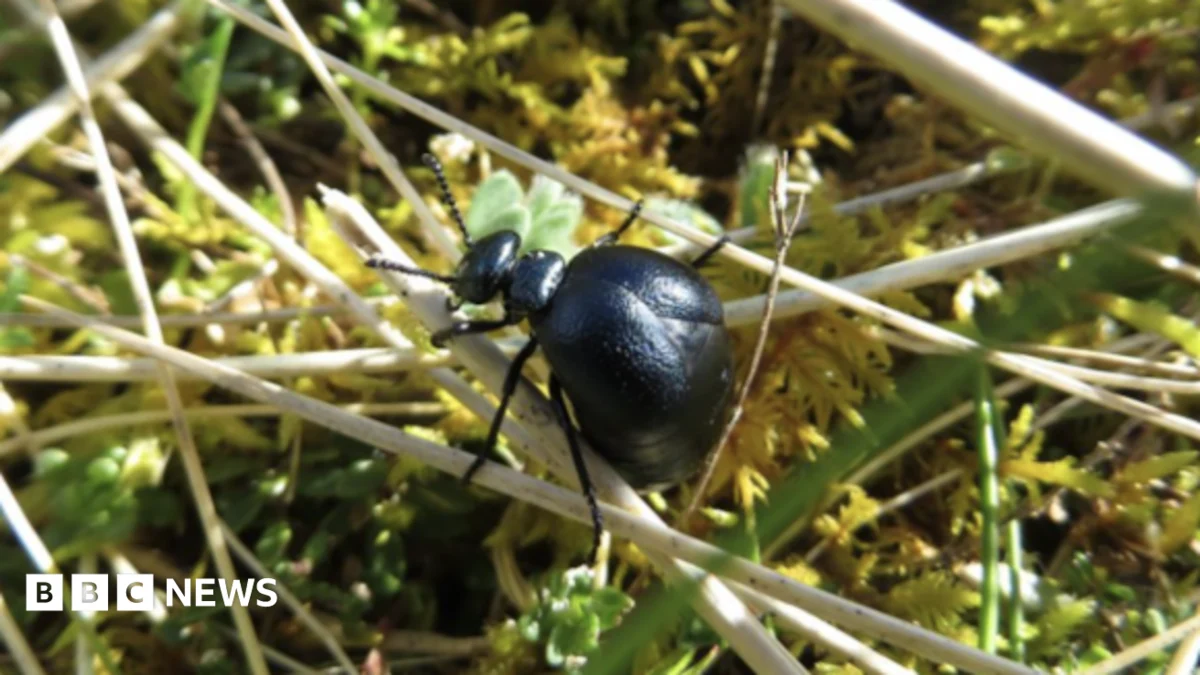
This particular species of oil beetle possesses an extraordinarily complex and delicate lifecycle, making its survival a true testament to the health of its specific ecosystem. It is entirely dependent on solitary bees for its larval development, exhibiting a parasitic relationship that underscores the intricate web of life within its habitat. The beetle’s first larval stage, known as a triungulin, is highly mobile and actively seeks out a suitable solitary bee. Once attached, it hitches a ride back to the bee’s nest, where it then transforms, consuming the bee’s stored pollen and nectar provisions, and sometimes even the bee’s own eggs or larvae. This dependency means that the beetle’s fate is inextricably linked to the presence and abundance of specific solitary bee species, which themselves require undisturbed nesting sites and ample floral resources.
To complete its lifecycle, the Short-Necked Oil Beetle requires a very particular habitat. This includes robust, thick vegetation to provide essential shelter from predators and adverse weather conditions, as well as dense flower coverage that offers a consistent supply of nectar and pollen for the solitary bees it relies upon. These specific conditions, typically found in undisturbed coastal grasslands and sand dune systems, are increasingly rare in the modern landscape. Historically, the species suffered a catastrophic decline, leading to it not being reported in the UK for almost 60 years after 1948. This dramatic disappearance was primarily attributed to widespread habitat loss and fragmentation, which pushed the Short-Necked Oil Beetle to the very brink of extinction across its former range.
Anne Hobbs, from the esteemed Bumblebee Conservation Trust, expressed profound excitement at the recent findings, stating that the evidence strongly suggests the species is indeed breeding in Wales again. This confirmation provides a much-needed beacon of hope for biodiversity conservation in the region. The journey to this discovery has been one of dedication, perseverance, and no small amount of anxiety for the teams involved. Last year, in 2022, a comprehensive survey undertaken at the Castlemartin Range in Pembrokeshire yielded only dead adult specimens of the Short-Necked Oil Beetle. This finding, while confirming the species’ presence, raised significant concerns about the long-term viability of the population and its ability to reproduce successfully on the site. The absence of live larvae indicated that, despite adults being present, the critical breeding cycle might not have been completed, casting a shadow over the future of this elusive insect in Wales.
However, this year, after an intensive and meticulous three-year search effort, experts finally made the breakthrough they had been hoping for. They discovered larvae of the beetle within a small, specific area of the Castlemartin site. This sighting was a game-changer. The presence of larvae is irrefutable proof of successful breeding, indicating that the adult beetles found previously had indeed mated and laid eggs, and that those eggs had successfully hatched. Natural Resources Wales (NRW) confirmed that the number and distribution of the beetle larvae observed further supported this conclusion, suggesting that surveyors had managed to locate some of the hatchlings from a larger, thriving batch of immature beetles. This wasn’t just a transient adult, but a sign of a self-sustaining population.
The Short-Necked Oil Beetle holds a critical conservation status, reflecting its scarcity and vulnerability. It is officially classed as nationally rare within Great Britain, a designation applied to species found in only 15 or fewer 10km squares across the country. Furthermore, it is listed as ‘Vulnerable’ on the IUCN Red List, the world’s most comprehensive inventory of the global conservation status of biological species. This ‘Vulnerable’ classification signifies that the species faces a high risk of extinction in the wild in the medium-term future if the causal factors threatening its survival continue unchecked. These classifications underscore the immense importance of the discovery at Castlemartin and the ongoing conservation efforts.
Adult Short-Necked Oil Beetles are typically observed from March to June, a period when they are most active. They prefer flower-rich coastal grassland and sand dune habitats, where they can be seen foraging for mates and engaging in their complex reproductive behaviours. These fascinating insects are most active on warm, sunny days, when the ambient temperature is conducive to their movement and metabolic processes. Adult beetles can grow up to 24mm (approximately 0.9 inches) in length, possessing a distinctive, somewhat plump, soft-bodied appearance, often with a metallic sheen. Their short ‘neck’ or prothorax gives them their common name. The lifespan of an adult beetle is relatively brief, typically lasting approximately one year, during which time they must complete their reproduction cycle to ensure the continuation of the species.
NRW has highlighted that these highly specific environmental requirements mean there are only a handful of suitable sites remaining in the entire United Kingdom that can adequately support Short-Necked Oil Beetle populations. The precise combination of undisturbed coastal grassland, specific host solitary bee species, and appropriate soil conditions for bee nesting is a rare commodity. This scarcity makes every known population, and particularly every new breeding confirmation, incredibly valuable.
Before the recent Welsh discovery, the species had experienced a series of remarkable rediscoveries across the UK. It was first rediscovered in Devon, England, in 2006, sparking renewed hope for its survival. This was followed by another significant finding on the Isle of Coll, in Scotland, in 2009. Since these initial rediscoveries, further populations have been identified on other remote Scottish islands, including Tiree, Islay, Barra, and Uist. These populations, often isolated, highlight the fragmented nature of the beetle’s distribution and the importance of safeguarding each remaining stronghold.
The Castlemartin Range, a site managed by the Ministry of Defence but with significant conservation value, is currently the only place in Wales where the Short-Necked Oil Beetle species is known to exist. This singular presence places an immense responsibility on conservationists and land managers to protect and enhance its habitat. Consequently, the site is being consistently and meticulously surveyed by dedicated conservation teams, who employ systematic search methods to monitor the beetle’s population dynamics and habitat health.
The project at Castlemartin is an integral component of Wales’s "flagship species recovery programme," as stated by NRW. This ambitious programme works to conserve not only the Short-Necked Oil Beetle but also a suite of other vulnerable species that share similar habitats and face common threats. By focusing on a key indicator species like the oil beetle, the programme adopts an ecosystem-based approach, recognizing that the health of one species is often reflective of the health of the entire ecological community. Protecting the beetle’s habitat indirectly benefits countless other invertebrates, plants, and even birds that rely on these precious coastal ecosystems.
Anne Hobbs described the Short-Necked Oil Beetle as an "amazing creature," emphasizing its unique biology and the intricate ecological role it plays. She further stressed that conservation work aimed at protecting this species must consider the "needs of several species to be effective." This integrated approach is crucial; simply protecting the beetle without ensuring the presence of its host solitary bees, or the flora that supports those bees, would ultimately be futile. This interdependency highlights the complexity and beauty of natural systems, where the fate of seemingly disparate organisms is deeply intertwined.
Hobbs extended her heartfelt thanks to all their partners and the dedicated volunteers whose unwavering support has been instrumental in this long-term conservation effort. She specifically acknowledged their continued commitment, despite facing the challenging reality of two consecutive years without a larval sighting. This period of uncertainty would have tested the resolve of many, yet the teams persisted, demonstrating the profound dedication required for successful species recovery. "We look forward to the continued management of the site so that this amazing species can survive now and into the future," Hobbs concluded, articulating a hopeful vision for the Short-Necked Oil Beetle and the rich biodiversity of Wales. This recent discovery at Castlemartin is not merely a scientific footnote; it is a powerful reminder of nature’s resilience and the vital importance of ongoing conservation efforts in safeguarding our planet’s most fascinating and vulnerable inhabitants.



 George Anjay

 Nakalama John

 atisusanti

 Ramos Leo

 Roy Suryo
