George Anjay
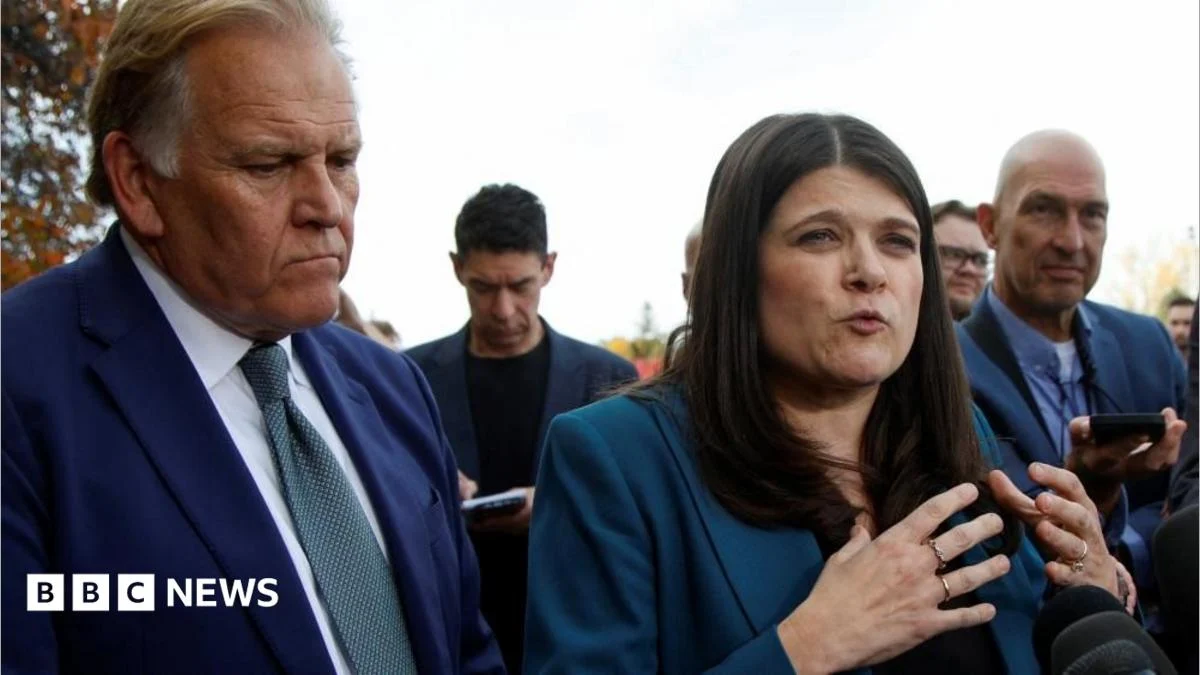
In a stunning and deeply divisive move just days before a critical election, Michigan Congresswoman Haley Stevens, a prominent Democrat, has publicly endorsed the Republican candidate for the U.S. Senate, Mike Rogers, marking a dramatic escalation of her bitter feud with her own party’s nominee, Abdul El-Sayed. The congresswoman’s defection, announced Sunday, has sent shockwaves through the Democratic Party, exposing deep ideological fissures and raising serious questions about party unity in a state considered a crucial battleground in the upcoming national elections.
Stevens, who narrowly lost the Democratic nomination for the Senate seat to El-Sayed in a bruising primary contest earlier this year, made her surprise endorsement during a joint appearance with Rogers on Sunday. Shortly after the event, she released a video statement on X, formerly Twitter, that unequivocally declared her estrangement from El-Sayed’s campaign and her newfound allegiance to the Republican challenger. "I don’t belong in Abdul’s campaign," Stevens stated emphatically in the video. "Who we are as Michiganders is not hate and is not what we are getting out from our Democratic nominee right now." She continued, "That’s why I am endorsing Mike Rogers."
The decision to break ranks with her party and throw her support behind a Republican nominee has been met with widespread condemnation from many of her Democratic colleagues, who view her actions as a profound betrayal of party principles and a detrimental blow to their efforts to secure a crucial Senate seat. The public spat between Stevens, a centrist Democrat representing a more traditional wing of the party, and El-Sayed, who champions the party’s progressive, left-wing agenda, has intensified in recent days, culminating in this unprecedented endorsement.
The most recent flashpoint in their escalating conflict involved a controversial campaign advertisement from an outside liberal group that drew a linkage between U.S. support for Israel and rising domestic prices. Stevens had publicly demanded that El-Sayed denounce the advertisement, which she deemed inflammatory and harmful. El-Sayed, in turn, criticized the ad and distanced himself from its content, stating he had no involvement in its creation or dissemination. However, the exchange only served to further inflame the already strained relationship between the two Democrats.
Stevens had been scheduled to participate in a campaign event with El-Sayed on Sunday, an appearance intended to project an image of Democratic solidarity. However, reports indicate that El-Sayed requested Stevens not attend, a snub that Stevens took as a clear signal of her unwelcome status within his campaign. In response, she opted to attend a church service alongside his Republican opponent, Mike Rogers, a move that was immediately perceived as a calculated political maneuver. "This is a very close election, we all know that, but Abdul made clear that I was not welcome in his campaign, that he didn’t need me there, that he didn’t want me there," Stevens told reporters gathered outside the church, standing beside Rogers.
When questioned about Stevens’ endorsement, El-Sayed maintained a focus on the core issues facing Michiganders. "At the end of the day, I don’t think about Haley Stevens," he told reporters on Sunday. "None of this matters." This dismissive response further highlighted the deep chasm that has opened between the two Democrats.
In downtown Detroit, interviews with several Democratic voters revealed a palpable sense of disappointment and bewilderment regarding Stevens’ endorsement of Rogers. "I just genuinely don’t understand it," one voter, who preferred to remain anonymous, expressed. "I do think it’s a betrayal of the party because the things she stands for are not the same things that he stands for as a Republican." Another Michigan voter, Matthew Barera, offered a more nuanced perspective, suggesting, "Maybe she had frustrations with the party."
Conversely, some Republicans who support Mike Rogers expressed skepticism about the impact of Stevens’ endorsement on the election outcome. Marissa Lee, a Rogers supporter, told the BBC, "People can see right through her actions, you know? She’s just angry. She is not going to make anybody change their mind." This sentiment suggests that some voters may perceive Stevens’ move as driven by personal animosity rather than a genuine alignment of political principles.
Over the weekend, as Stevens’ criticisms of El-Sayed intensified, a number of Democratic politicians in Michigan issued public appeals urging her to cease the feud and rally behind the party’s candidates. The national party apparatus also weighed in, with Democratic Senator Chuck Schumer unequivocally condemning Stevens’ endorsement of Rogers as "a despicable betrayal" of her political party.
The Democratic primary race for the Senate seat was characterized by a stark ideological divide. El-Sayed, a progressive outsider with a background in public health and the son of Egyptian immigrants, successfully tapped into a vein of grassroots frustration with established political norms and U.S. foreign policy, particularly concerning Israel. He ultimately defeated Stevens, a congresswoman who represented a more centrist faction of the Democratic Party and had garnered the support of key party figures, including Michigan Governor Gretchen Whitmer, during the primary campaign. This internal party conflict has underscored significant divisions within the Democratic Party regarding its future direction, with implications that extend beyond the current election cycle and into the 2028 presidential race.
The Democratic Party is currently striving to regain control of the U.S. Senate, a feat that requires a net gain of at least four seats. Michigan, a state currently held by a Democrat, is considered a vital pick-up opportunity. A loss in this state would represent a significant setback for the party’s ambitions, forcing them to seek a net gain of five seats to achieve their objective. The internal strife exemplified by Stevens’ endorsement not only jeopardizes their chances in Michigan but also highlights the broader challenge the party faces in uniting its diverse ideological wings to effectively compete in a closely divided national political landscape. The ramifications of this intra-party conflict are likely to be closely scrutinized by political analysts and strategists as the election draws near, with the potential for significant consequences on the balance of power in Washington.




 Nakalama John

 atisusanti