
 atisusanti
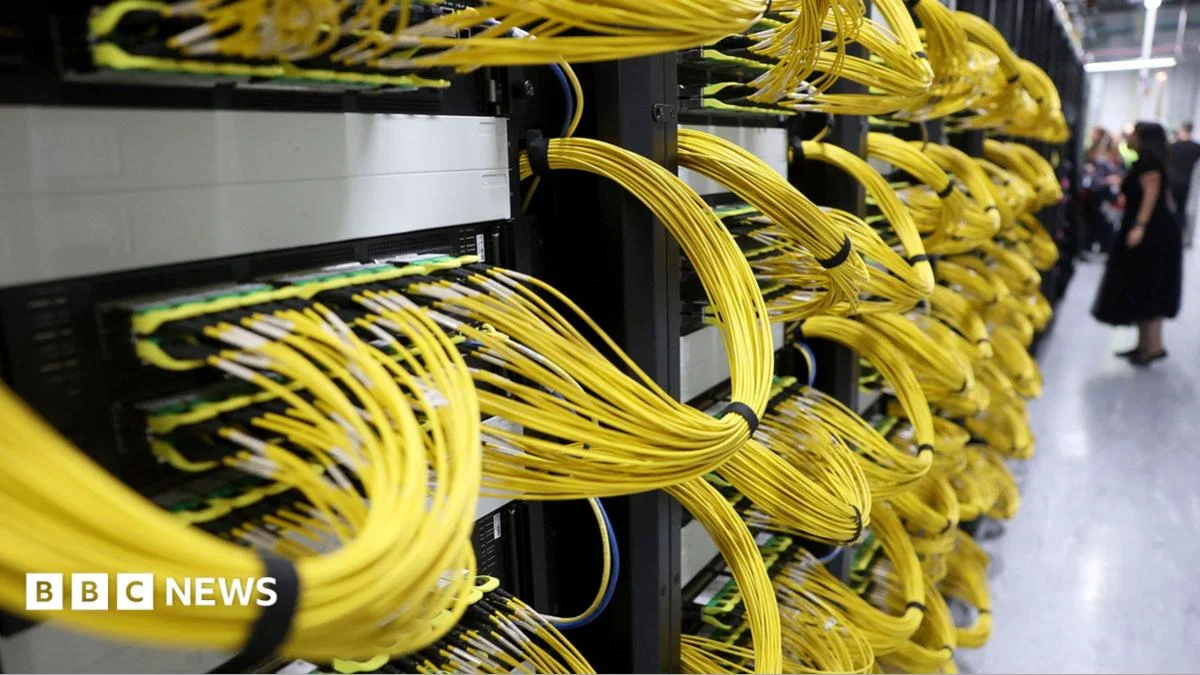
At their core, neocloud firms typically finance their substantial investments in high-demand computing hardware through long-term lease agreements with major technology clients. These contracts, which guarantee a steady revenue stream, are then leveraged by the neocloud companies to secure significant borrowing. As Cory Johnson, an analyst at the IPO research firm "The Quiet Period," explains, these lease contracts, along with the expensive AI chips they acquire, serve as collateral for loans. This reliance on debt is not a minor detail; it’s fundamental to the neocloud business model, primarily because the cutting-edge hardware required for AI development demands immense upfront capital expenditure.
The industry leader, CoreWeave, exemplifies this dynamic. While a fraction of the size of the tech behemoths it serves, such as Microsoft and Meta, CoreWeave has managed to accumulate a staggering $35.1 billion in debt. Johnson suggests that a key factor enabling this level of borrowing is that lenders often prioritize the creditworthiness of CoreWeave’s clientele – the established tech giants – over CoreWeave’s own financial standing. This reliance on the perceived stability of their customers’ balance sheets has allowed neoclouds to scale rapidly, but it also creates a significant dependency.
This perceived vulnerability has begun to spook some investors. In the past month alone, CoreWeave’s stock has experienced a significant decline, shedding a quarter of its value. This downturn is not an isolated incident; other neocloud companies, including Nebius, IREN, and Applied Digital, have seen similar, if not more substantial, drops in their share prices over the same period. The apprehension extends to debt investors as well, who are now demanding higher returns from firms within this sector, signaling a perceived increase in risk.
Despite the market turbulence, CoreWeave’s CEO, Mike Intrator, has publicly dismissed the current market sentiment as "irrational," expressing unwavering confidence in his company’s business model. He points to the consistent and growing demand from some of the world’s most influential companies for CoreWeave’s infrastructure and AI services as proof of its underlying strength. However, the recent volatility suggests that the market is beginning to question the long-term sustainability of this high-growth, high-debt model.
A significant portion of the neocloud sector’s origins lies in the often-volatile world of cryptocurrency mining. Companies that were once primarily focused on generating cryptocurrencies like Bitcoin have found themselves surprisingly well-positioned to capitalize on the AI revolution. This is because the physical infrastructure required for crypto mining – vast arrays of powerful computing hardware – shares many similarities with the infrastructure needed for AI development. CoreWeave itself was founded in 2017 with an initial focus on mining Ethereum. Similarly, IREN, Core Scientific, and Applied Digital all have roots in the crypto mining industry. When AI experienced an explosive surge in popularity in 2022, driven by innovations like OpenAI’s ChatGPT, these companies were able to pivot and repurpose their existing infrastructure, giving them a head start.
An outlier in this trend is Nebius, which was formerly known as Yandex NV. It was part of Russia’s dominant internet company before splitting off and rebranding in 2024. Despite its different origin story, Nebius now operates within the same competitive landscape, its success intrinsically linked to the fate of major AI developers and hyperscalers. Hyperscalers are essentially massive data center operators, often themselves significant customers of neocloud firms.
The success of these neocloud companies is therefore inextricably tied to the trajectory of the AI industry as a whole. Melissa Otto, head of Visible Alpha Research at S&P Global, highlights the immense capital being poured into the AI ecosystem, describing it as an "arms race." This unprecedented spending has undoubtedly benefited neoclouds, providing them with a seemingly insatiable market for their services.
However, this rapid growth comes with inherent risks. Charlie Dai, a VP and principal analyst at Forrester, points out that the neoclouds’ business model, while effective in capitalizing on current demand, carries "greater financial risk" when faced with potential shifts in the market. The primary concern is any adjustment in spending plans by their major tech customers. This was vividly illustrated in the past week when forecasts of lower-than-expected AI spending from tech giants like Microsoft and Google sent shares of several neocloud firms tumbling.
The future prospects of neoclouds are also closely linked to the impending public offerings of major AI players like Anthropic and OpenAI. These highly anticipated Initial Public Offerings (IPOs) are seen as crucial indicators of the broader AI market’s health. If the AI boom is indeed a bubble that eventually bursts, Bradley Tusk of Tusk Ventures warns that neocloud firms "are definitely going to face collateral damage."
Further complicating the landscape is the increasing cost of borrowing. As interest rates rise, the expense of servicing their substantial debt burdens grows, putting additional pressure on neocloud companies. Elon Musk, in a recent social media post, speculated that this challenge could lead to significant consolidation within the sector, predicting that "more than 200 neoclouds" might face "guppy-level death and consolidation," with smaller, less resilient firms being the most vulnerable. He grimly concluded, "Some will make it through, but not many."
Despite these concerns, some analysts remain optimistic about the short-to-medium term outlook. Analysts at Yorkville Ives note that the demand for computing power continues to outstrip supply, and neoclouds are fulfilling a critical gap that larger data center companies are currently unable to address. This persistent demand provides a buffer for the sector.
However, the recent "wobbles" in the neocloud sector are undeniably concerning. High-profile incidents, such as Microsoft’s cancellation of a deal with British neocloud outfit Nscale due to power supply issues that could persist until 2030, and Australia’s Firmus shelving its IPO plans, underscore the real-world challenges facing these companies. These developments occur against a backdrop of growing public scrutiny of data centers and ongoing debates about the true value AI can deliver in terms of worker productivity. As Cory Johnson aptly summarizes, "There’s reason to worry." The interconnectedness of these firms with the broader AI ecosystem and their significant debt levels paint a picture of a sector at a critical juncture, where the promise of AI is being weighed against the stark realities of financial risk and market volatility.




 Roy Suryo

 Nana Banana

 George Anjay
 Nakalama John
