
 Nakalama John
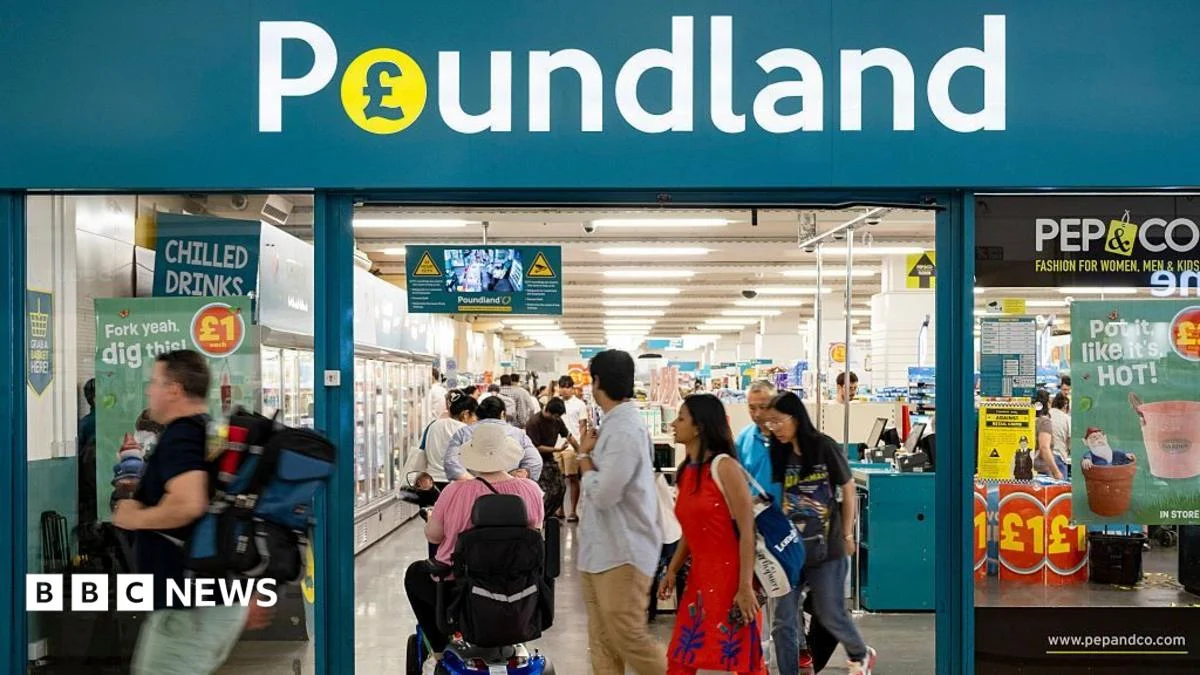
The gravity of the situation became palpable following the revelation that Gordon Brothers, which controversially acquired Poundland for a nominal sum of £1 last June, has rejected a significant takeover bid. This rejected offer, sources suggest, was seen as a viable lifeline that could have safeguarded the vast majority of the 12,000 jobs currently at risk. The swift rescheduling of the meeting between Reynolds and Gordon Brothers signals the government’s alarm and its determination to pressure the investment firm into finding a rescue deal before the company spirals into insolvency.
Gordon Brothers has attributed Poundland’s severe financial challenges to a confluence of economic headwinds. They cite escalating inflation, which has driven up operational costs across the retail sector, increasing staff wages mandated by rising minimum wage requirements, and "severe levels of shoplifting" as primary factors eroding the retailer’s profitability. These challenges, they contend, have made the business unsustainable at its current operational level.
However, this narrative is fiercely contested by key political figures and even Poundland’s own management. Both Business Secretary Jonathan Reynolds and Prime Minister Andy Burnham have publicly questioned Gordon Brothers’ rationale, expressing bewilderment as to why a definitive deal for the future of the business has not yet been secured. A source close to the Business Secretary revealed that Reynolds adopted a firm stance in the meeting, unequivocally stating that Gordon Brothers has a moral and economic imperative to "do everything in their power to protect jobs and provide certainty for workers." The source added that Reynolds was "pleased to have secured this commitment from Gordon Brothers" during the discussions, though he vowed to "continue to hold the company to account and closely monitor developments." Crucially, it is understood that Gordon Brothers made a pledge in the meeting to prioritise any future bids that explicitly aim to protect both the workforce and the existing store units. Despite this assurance, fundamental questions persist regarding the US investment firm’s ultimate intentions: whether they will endeavour to keep the business intact or, more controversially, opt to break it up and sell off its assets piecemeal.
The crisis has also drawn the attention of Parliament, with MPs from the Business Committee summoning Poundland’s owners for questioning on Wednesday, 11th November. Liam Byrne, the formidable chair of Parliament’s business committee, minced no words in his condemnation of the unfolding situation. He asserted, "Every report suggests Poundland is a viable, profitable business with a future ahead of it and without good reason to let it crash and burn – and then to break it up and sell it off piece by piece." Byrne’s committee is demanding answers, stating, "We are asking Gordon Brothers to appear before Parliament to explain themselves and tell us just what it is that’s preventing them from accepting the fully-funded deal on the table to save more than 12,000 jobs." This parliamentary scrutiny highlights the widespread belief that Poundland’s issues may stem more from ownership decisions than inherent business failures.
Adding to the complexity, Business Minister Kate Dearden and various union representatives held a separate meeting with Poundland’s managing director, Barry Williams. Mr. Williams provided a starkly contrasting perspective to that of Gordon Brothers, telling the BBC unequivocally that Poundland is not only profitable but also experiencing growing sales. "We’re back in profit and it has a bright future ahead of it if it’s allowed to deliver that," he affirmed, painting a picture of a resilient business capable of navigating economic challenges if given the opportunity.
The procedural steps taken by Poundland further underscore the urgency. The company has filed a notice of intention to appoint administrators. This legal manoeuvre grants the retailer a temporary reprieve, protecting it from its creditors until next Thursday. However, it is merely a delaying tactic, a window of opportunity to find a solution before the formal insolvency process begins.
Prime Minister Andy Burnham, when pressed for his message to Poundland’s owner, urged Gordon Brothers to "focus on the people in your employment" and to "come up with a practical solution that saves jobs and saves those stores." He insisted, "There is a solution to be found here, sit down with us and let’s find it," echoing the sentiment that the current impasse is avoidable.
The potential collapse of Poundland extends far beyond its immediate workforce, threatening a devastating ripple effect across its extensive supply chain. Adam Turner, sales director at Bradford-based Highcrest Retail Brands, a major confectionery supplier to Poundland, articulated the severe financial repercussions for his company. Poundland, being one of Highcrest’s biggest customers, would cause a loss of "a few million" in sales if it went bust, a substantial hit for a family-owned business turning over approximately £50 million. While Highcrest, as a "longstanding business," might be able to "stomach this," Turner issued a dire warning based on conversations with other, smaller suppliers. He revealed that many medium and small enterprises supplying Poundland have expressed fears that "if Poundland goes under, so do they."
This grim forecast resonates with an earlier warning issued by Poundland founder Steve Smith. On Monday, Smith cautioned that two to three thousand suppliers, many of whom are exclusively reliant on Poundland for their business, would be directly impacted by its collapse. He estimated that the total number of jobs affected, including those within the supply chain, could soar to as many as 30,000. Smith, like others, expressed his "amazement" that Poundland was being pushed towards administration, particularly given its reported profitability. He also highlighted the existence of "two offers on the table from some really good people," reiterating his plea for Gordon Brothers to "see if they can put a deal together."
Gordon Brothers, however, maintains its stance, stating that Walsall-based Poundland is "still not cash generative at a sustainable level" due to the prevailing economic issues. The prospect of an administration scenario paints a bleak picture for suppliers. Turner explained that if Poundland goes under, suppliers would likely receive "pennies in the pound" back from the administration process, a prospect he described as "very upsetting." In such a situation, Gordon Brothers, as a secured creditor, would be first in line to recoup its investment, while the "suppliers who have done nothing wrong" would bear the brunt of the financial loss.
"It’s sad. It’s a nightmare for us all to be honest with you. It’s not just the suppliers, it’s the staff at Poundland, some of these guys have been there for many years," Turner lamented, underscoring the human cost. "It’s from the warehouse staff all the way to the shop staff to everybody within head office. It’s a massive ripple effect through the supply chain."
A particularly unsettling aspect of the situation is the timing. Turner admitted he had no knowledge of whether Gordon Brothers had deliberately timed the administration process to take advantage of high stock levels, which it could then liquidate. One of Gordon Brothers’ core business models revolves around stock liquidations – selling off inventory from collapsed businesses. An insider familiar with the situation expressed bewilderment, telling the BBC that the timing of Poundland facing collapse was "odd," noting that "most retailers don’t fall over in the run-up to Christmas," a period typically marked by peak sales and profitability.
The future for Poundland’s 12,000 employees remains deeply uncertain. While some stores might attract new buyers in the event of an administration, allowing a portion of the workforce to retain their jobs on the same premises, current indications are grim. It is understood that buyers are presently interested in only about half of Poundland’s extensive store portfolio, meaning that roughly 6,000 employees could face unemployment, even in a best-case scenario of partial rescue. The coming days will be crucial in determining whether the government’s intervention, parliamentary pressure, and the desperate pleas of suppliers and former management can sway Gordon Brothers to accept a deal that protects jobs and saves a beloved British retail institution.



 atisusanti
 Ramos Leo

 Roy Suryo
 George Anjay
