
 Ramos Leo
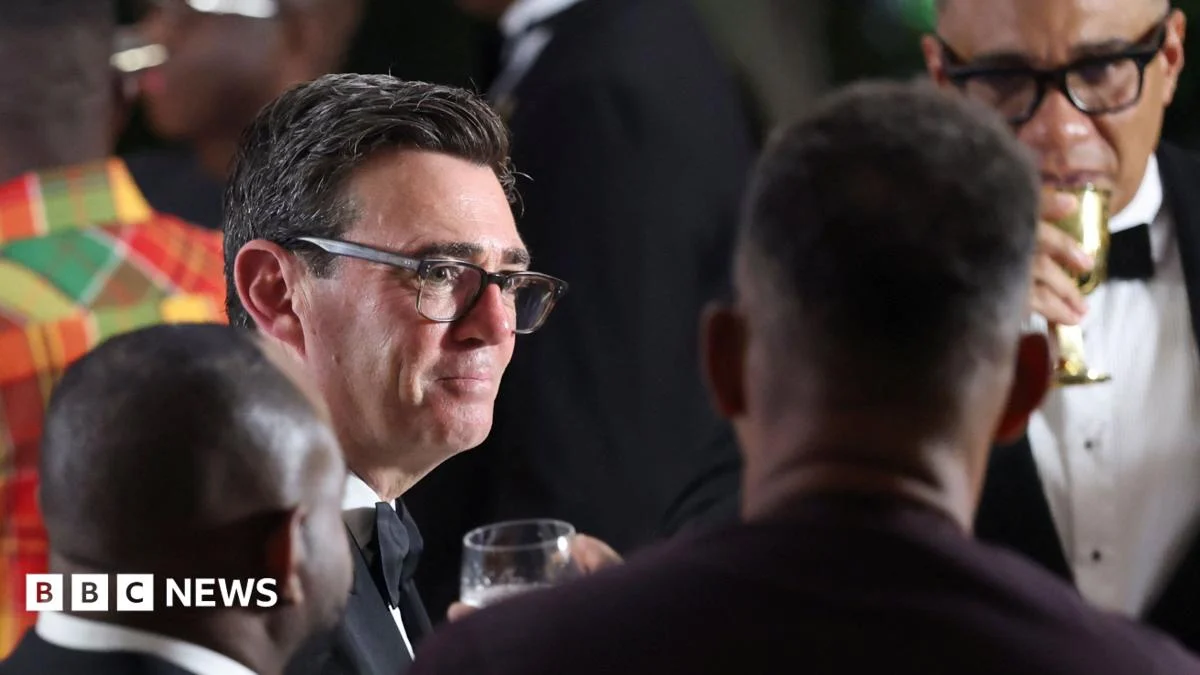
Burnham remains in the foothills of establishing a meaningful relationship with the president – so far it has amounted to a handful of phone calls and one face-to-face meeting at the United Nations in New York in September. This limited engagement suggests a cautious approach, perhaps reflecting the unpredictable nature of President Trump himself, or a strategic decision to observe rather than dive headfirst into a potentially volatile partnership. High-level diplomatic relationships typically involve numerous formal visits, extensive bilateral meetings, and a shared history of policy collaboration. Burnham’s interactions, by contrast, appear to be foundational at best, hinting at a relationship still very much in its nascent stages.
As he continues to attempt to build a rapport with Donald Trump, he will be doing so with a president in a wildly different political situation than when Sir Keir Starmer was hypothetically trying to build bridges with him. The political winds have shifted dramatically. No longer is this a story of an extraordinary comeback, a narrative often spun by Trump’s supporters following his initial election or subsequent political rallies. Instead, the recent midterm elections have painted a picture of a midterm president seemingly punished for the consequences of a foreign war the type of which he had originally promised to avoid. The electorate’s verdict, as reflected in various key races across the United States, indicated a clear dissatisfaction with the status quo, and more specifically, with the economic fallout of international conflicts.
This perceived punishment for foreign policy missteps is particularly poignant given Trump’s “America First” platform, which historically advocated for disengagement from foreign entanglements and a focus on domestic issues. The war with Iran, therefore, presents a stark contradiction to this initial promise, creating a complex political predicament for the President. The impact of this conflict, especially on global energy markets, has directly translated into economic hardship for American families, a factor that appears to have significantly influenced voter sentiment during the midterms.
And it is noticeable that the British government’s public reaction is grounded too in the consequences of the war with Iran: specifically, the escalating cost of living. Prime Minister Burnham’s focus on this issue aligns closely with the concerns of his own electorate, demonstrating a keen awareness of the interconnectedness of global events and domestic welfare. "I feel the world has an opportunity now to unite around the issue that is affecting us all and that’s the cost of living," the prime minister said, attempting to frame a common ground for international cooperation. However, he quickly underscored the limitations of national policy in isolation: "But I can’t get people’s cost of living pressures down until the conflict in the Middle East is resolved, the conflict between in Ukraine started by Russia." This statement explicitly links domestic economic stability to the resolution of geopolitical conflicts, highlighting the vulnerability of national economies to international turbulence.
Within government circles, the Iran war and its multifaceted consequences, particularly on energy prices, is widely seen as the biggest individual contributor among the many factors currently driving up the cost of living. The disruption to oil supplies, the uncertainty in global markets, and the subsequent surge in petrol and gas prices have had a cascading effect on households and businesses alike. This assessment is not unique to the British government; bluntly, it is one that puts many, including many of America’s traditional allies, in alignment with a significant portion of the American public, both Democrat and Republican. When asked why these elections went as they did, countless voters and analysts alike point directly at the prices displayed outside any petrol station, a tangible and immediate indicator of economic distress.
Speaking before the votes in America were counted, the Foreign Secretary Ed Miliband reflected on this critical intersection of foreign policy and domestic economy when I spoke to him on BBC Newscast. The interview provided a platform to explore the potential ramifications of the midterm results on US foreign policy, particularly concerning the unpredictable President Trump. When I asked him specifically if he feared that a domestically humiliated Trump may prove more belligerent internationally, a plausible scenario given past presidential behavior, it was to the Iran war that the foreign secretary immediately referred. This strategic pivot underscored the British government’s profound concern about the conflict’s impact and its potential to escalate.
Miliband, exercising diplomatic caution, didn’t offer a direct answer to my question about Trump’s potential belligerence. Instead, he chose to redirect the conversation, saying: "I know that one of the biggest responsibilities of the whole government, frankly, is the cost of living situation at home, and we know one of the biggest contributors to the cost of living situation is, frankly, the conflict." This artful deflection highlighted the UK’s primary concern – the economic burden on its citizens – while subtly acknowledging the broader geopolitical tensions without directly criticizing the US President. He then elaborated on the specific mechanism of impact: "The Strait of Hormuz being not exactly closed, but not properly open, not free flowing, and that is hitting families at home," he said. The Strait of Hormuz is a crucial chokepoint for global oil shipments, and any disruption or perceived threat to its free passage sends ripple effects through international energy markets, directly influencing consumer prices worldwide.
"We know that we need a diplomatic way out of this of this conflict, and so that is one of the things that we’re working on. It’s something I talked to the U.S. Secretary of State about at the G20, and it’s something we continue to work on," he added, emphasizing the UK’s commitment to de-escalation through diplomatic channels. This statement indicates active engagement with the highest levels of the US administration to find a resolution, underscoring the urgency and shared concern among allies. The foreign secretary confirmed that he had met with the US Secretary of State at the G20 meeting in Atlanta last week, discussing these critical issues. Separately, the article notes his meeting with Senator Marco Rubio, an influential figure within the Republican party, which could indicate efforts to build bridges across the political spectrum in the US.
But the big question for the British government, and indeed for so many other nations globally, is whether defeat at home makes it more likely that President Trump gets angrier abroad. A president facing domestic setbacks might be tempted to project strength on the international stage, either to distract from internal failures or to reassert his authority. This could manifest as heightened rhetoric, aggressive trade policies, or even military adventurism, potentially destabilizing already fragile regions. The implications of such a shift in behavior would be profound, impacting everything from global trade agreements to regional security alliances.
Alternatively, do America’s traditional allies, including the UK, the European Union, Canada, Australia, and others, feel more strident and willing to work with Donald Trump’s domestic political opponents to try to challenge and restrain a weakened president? This scenario suggests a strategic realignment, where allies might seek to bolster internal checks and balances within the US political system. This could involve intensified lobbying efforts with Congress, closer engagement with opposition leaders, or even multilateral initiatives designed to circumvent or mitigate potentially unilateral US actions. Such a collaborative approach among allies could aim to uphold international norms, reinforce multilateral institutions, and provide a counterweight to any potentially disruptive foreign policy shifts from a politically vulnerable Trump administration. The answers to these two final questions – whether Trump turns outward in anger or whether allies can effectively work to restrain him – will determine much in world affairs in the next couple of years, shaping the trajectory of international diplomacy, economic stability, and global security.


 Roy Suryo
 George Anjay

 Nakalama John
 Nana Banana
