
 George Anjay
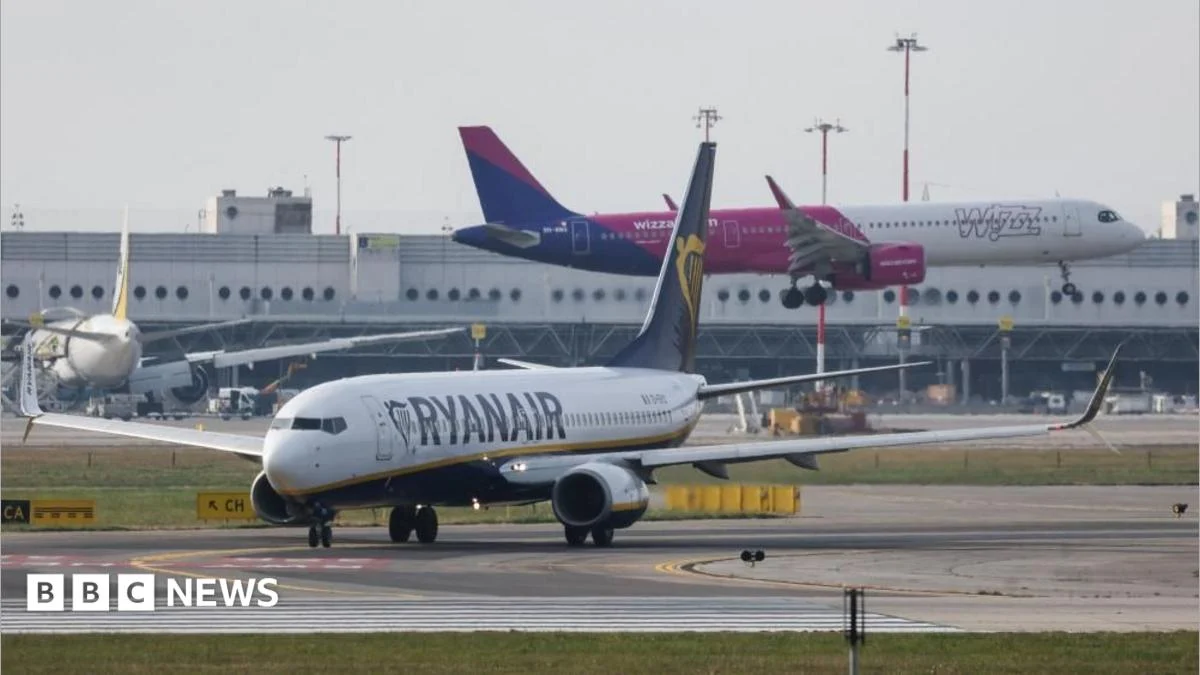
The unnerving wave of bomb threats that recently swept across European airports, targeting airline after airline with alarming regularity, has cast a long shadow of uncertainty over the continent’s critical air travel infrastructure. In almost every instance, save for a notable exception at London’s Heathrow Airport, these threats were deemed credible enough to warrant significant disruption, ranging from the diversion of aircraft to, in the case of Italy, the dramatic deployment of fighter jets to escort suspected flights. While each of these alarms ultimately proved to be a hoax, the unsettling reality remains that the next threat, however improbable, could indeed be genuine.
The synchronized and seemingly coordinated nature of these incidents, occurring in tandem with a series of other malicious activities across Europe, has inevitably led many to cast a suspicious eye towards Russia. This suspicion is not without its foundations, particularly in light of preceding events. Earlier this year, Europe witnessed a spate of sophisticated cyber-attacks and the unsettling appearance of mysterious drones hovering over sensitive installations. More recently, the remote hacking of supermarket freezer systems and a blood bank sent ripples of unease through civilian life, while a peculiar incident on Poland’s border with Russia added another layer of geopolitical tension. Furthermore, in August, a drone attack on Germany’s Leipzig Halle airport saw the nation’s Interior Minister publicly attribute blame to Moscow, further fueling the narrative of a deliberate campaign of disruption.
This escalating pattern has prompted a critical question: Is Russia orchestrating these elaborate hoaxes? A significant contingent of observers, relying on a confluence of circumstantial evidence, argues that these actions represent a clear manifestation of "hybrid warfare," "grey zone" tactics, or "sub-threshold" operations. This form of conflict deliberately targets a nation’s infrastructure and societal stability through anonymous and deniable means, meticulously calibrated to avoid triggering Article 5 of the NATO treaty, which would obligate collective defense and elicit a robust Western response.
Moscow’s current geopolitical stance, characterized by its fervent opposition to NATO’s unwavering support for Ukraine, undeniably fuels such speculation. The Kremlin’s strategic objectives of absorbing Ukraine and effectively extinguishing its independence have been significantly thwarted by the international coalition backing Kyiv. Russian bloggers have openly voiced sentiments suggesting a retaliatory approach, positing that if Ukraine’s drone capabilities can compromise the safety of Russian airports, and Western sanctions continue to restrict Russian airlines’ access to European airspace, then Western nations should logically experience a commensurate level of disruption and insecurity. This perspective paints a picture of a tit-for-tat exchange, albeit one conducted through asymmetric and deniable means.
However, as of Thursday evening, concrete evidence directly linking the pervasive airline hoaxes to Russia, Iran, or any of their affiliated proxy groups remained elusive. The nature of the threats themselves offers only fragmented clues. One such example is an email received by airport authorities in Rome on Thursday morning, purportedly originating from a group identifying itself as "Fighters of the Male State." This moniker strongly suggests a connection to the Russian ultra-right group Muzhskoi Legion, or "Male Legion." This organization, notorious for its extreme ideologies, was indeed banned by a Moscow court in 2021. Despite this official proscription, it maintained a considerable online presence, boasting tens of thousands of followers on the Telegram platform, where it vociferously supported the full-scale Russian invasion of Ukraine.
Yet, even if the email to Rome were demonstrably authentic – and the inherent difficulty in verifying such claims cannot be overstated, as other entities could easily adopt a similar guise – it is unlikely to provide the definitive leads that law enforcement agencies and airport security personnel desperately need. The task of identifying the perpetrators behind these pervasive hoaxes and understanding their motivations is a complex and multifaceted challenge. For national police forces, airport authorities, and transport ministries grappling with the immediate aftermath of these disruptions and strategizing on how to mitigate future occurrences, the paramount imperative is to move beyond conjecture and focus on the pursuit of irrefutable evidence. The true path forward lies not in speculating about the most probable culprits, but in diligently following the cold, hard facts, should they emerge from the intricate web of digital and physical investigations.
The psychological impact of these coordinated threats cannot be understated. The sheer volume and apparent sophistication of the communications have instilled a pervasive sense of vulnerability within the European air travel ecosystem. Passengers, already contending with the lingering effects of global health crises and economic uncertainties, now face the added anxiety of potential security breaches that can materialize with little warning. This erosion of confidence can have significant economic repercussions, impacting tourism, business travel, and the overall flow of goods and services that depend on reliable air connectivity.
Moreover, the financial and operational costs associated with responding to each hoax are substantial. The diversion of flights, the deployment of security personnel, the evacuation of terminals, and the meticulous sweeps conducted by bomb disposal units all represent significant expenditures of public and private resources. These resources, arguably, could be better allocated to enhancing existing security measures, investing in advanced threat detection technologies, or improving intelligence gathering capabilities. The constant diversion of these resources to investigate unsubstantiated threats creates a drain that can ultimately weaken overall security resilience.
The debate surrounding Russia’s potential involvement is further complicated by the evolving nature of modern conflict. "Hybrid warfare" encompasses a broad spectrum of activities, including disinformation campaigns, cyber-attacks, economic coercion, and the manipulation of social media to sow discord and undermine public trust. The recent bomb threats align with many of these characteristics: they are disruptive, create fear, strain resources, and sow doubt about the state’s ability to maintain order. The ambiguity and deniability inherent in such tactics are precisely what make them so effective for actors seeking to destabilize adversaries without crossing explicit red lines.
The "Male Legion" connection, while intriguing, also highlights the challenges of attribution. The use of existing extremist groups as fronts or the creation of entirely new personas to mask the true identity of the perpetrators is a well-established tactic in the realm of clandestine operations. This necessitates a sophisticated approach to intelligence analysis, one that can penetrate layers of deception and connect seemingly disparate pieces of information.
The investigation into these threats demands a multi-pronged strategy. Firstly, enhanced international cooperation is crucial. Sharing intelligence and best practices among European nations and their allies can help identify patterns, track the origin of communications, and build a comprehensive picture of the threat landscape. Secondly, investing in advanced technological solutions for threat detection and communication interception is vital. This includes sophisticated AI-powered systems that can analyze communication patterns, identify anomalies, and flag suspicious activity in real-time. Thirdly, a robust public communication strategy is needed to balance the need for transparency with the imperative of not amplifying fear or providing undue attention to the perpetrators. Clear, factual information about the nature of the threats and the measures being taken to address them can help maintain public confidence.
Ultimately, the question of who is behind these hoax bomb threats to European air travel may remain unanswered for some time. However, the persistence of these incidents underscores a critical vulnerability within our interconnected world. It highlights the need for constant vigilance, adaptive security strategies, and a deep understanding of the evolving tactics employed by those who seek to sow chaos and undermine our collective sense of security. The pursuit of definitive answers, while challenging, is essential for safeguarding the future of open travel and maintaining the stability of the continent.




 atisusanti
 Ramos Leo

 Nana Banana

 Nakalama John
