
 atisusanti
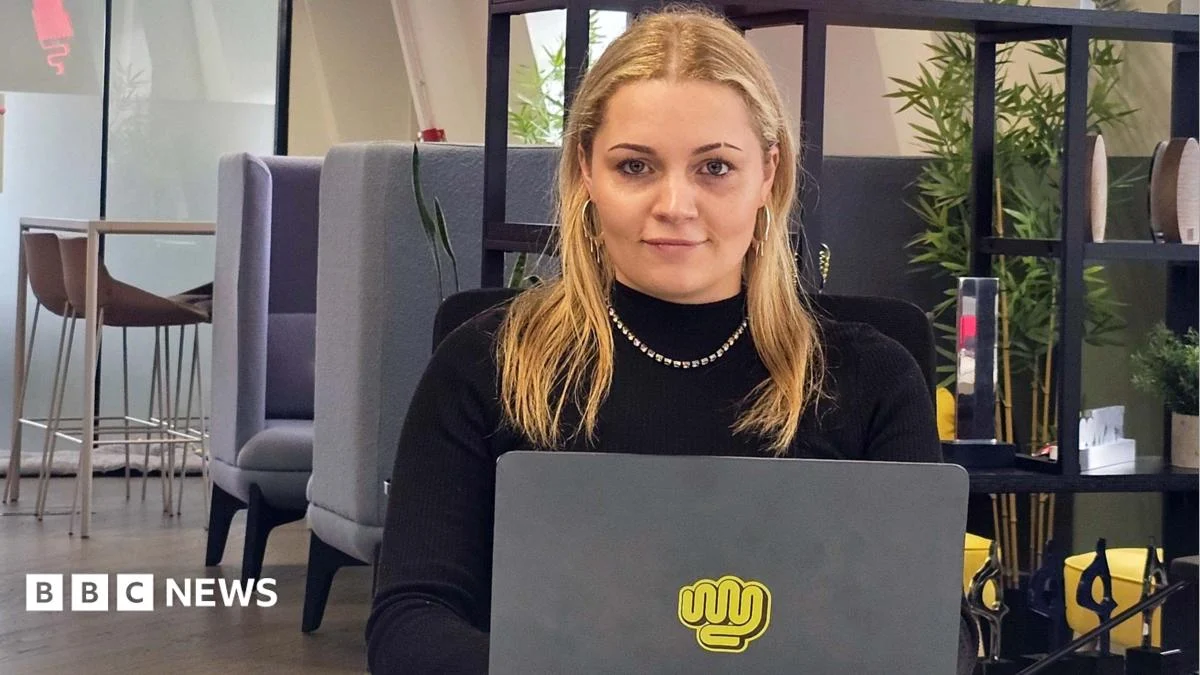
Recent university graduate Lotte Underwood, 25, a public relations executive with a twist, finds herself spending more time leveraging artificial intelligence than engaging in traditional PR practices. Underwood joined London-based PR agency Fight or Flight in November last year, assuming the novel position of "AI associate" after completing both an undergraduate degree and a master’s in marketing. She is an integral part of a newly formed, dedicated AI team responsible for building and managing approximately 30 AI agents. These agents are instrumental in a wide array of tasks, including comprehensive industry research, detailed client reporting, meticulous preparation for media interviews, facilitating clearer client briefs, and generating visual content.
A significant portion of Underwood’s responsibilities involves overseeing these AI agents, scrutinizing their outputs, and disseminating this information to team members who directly interface with clients and the media. A crucial aspect of her role also entails monitoring how clients are represented across the outputs of various AI tools such as ChatGPT, Claude, and Gemini. Underwood emphasizes the critical nature of client meetings and calls in determining the most beneficial applications of these AI agents. While AI is widely recognized as a primary driver behind graduate job cuts, the emergence of dedicated AI-specific graduate roles, exemplified by Underwood’s position, signifies a counter-trend.
Dillan Patel, 24, offers another compelling example. He commenced his career at engineering software company Stride 18 months ago as an intern. A graduate in business management, Patel was tasked with developing an internal chatbot designed to encapsulate the expertise of a senior staff member who was nearing retirement. Today, Patel holds the title of AI automation analyst, a role that involves the continuous development of internal agents to deliver specific information to individual teams. Furthermore, his responsibilities extend to identifying repetitive or manual tasks across the company that could be automated through AI. Patel, based in Coventry, articulates his role as being focused on discovering practical applications of technology, automation, data, and AI to enhance operational efficiency.
Graduates possessing such AI proficiency are in high demand across various sectors, including outsourced contact centre company ArvatoConnect. CEO Debra Maxwell confirms that while the company’s typical graduate intake has been temporarily suspended this year, plans are in place to reinstate it next year with an intensified focus on AI integration. Maxwell anticipates seeking candidates for "AI-disruptor type roles," individuals who can challenge the organization to adopt a more holistic perspective on AI implementation and identify new avenues for business growth. She views these graduates not as occupants of administrative roles, but as significant contributors of value to the organization in a novel capacity. Maxwell further elaborates that a recent graduate is currently utilizing AI to conduct in-depth market analyses, thereby enriching the information available for contract bidding processes, ultimately affording him a more comprehensive and impactful role.
Maxwell posits that if AI can elevate a graduate role, making it more substantial and integral to the organization, companies can cultivate a more loyal and engaged workforce, enabling earlier and more meaningful contributions. Research conducted by consultancy PwC substantiates this notion, indicating that AI is enabling some graduate roles to assume greater responsibilities by allowing companies to expect more senior-level competencies from junior hires. The consultancy’s 2026 AI Jobs Barometer, which analyzed 2.4 million entry-level positions in the US, revealed that entry-level roles most impacted by AI are now seven times more likely to require skills traditionally associated with senior-level positions, such as motivational leadership, strategic decision-making, and team building. PwC’s findings indicate a 35% increase in these higher-expectation entry-level roles since 2019, while other entry-level positions have seen a 10% decline.
The development of valuable AI knowledge by graduates like Underwood, Patel, and Clinton undoubtedly positions them favorably for future career trajectories. However, the significant concentration of their work on AI raises pertinent questions about the extent to which they are acquiring foundational knowledge in their designated professional fields. Underwood expresses a desire to develop traditional PR skills that her current role does not extensively emphasize, yet she remains confident in her future within the agency’s expanding AI division. She states, "There are certain things that I haven’t had the chance to do yet, like directly pitching to the media. I absolutely plan to do this."
Conversely, Simon Pratt, chief operating officer at Portman Finance Group, voices concern regarding graduates becoming excessively AI-centric. He asserts that while proficiency in AI is important, the company’s two-year graduate program is fundamentally dedicated to "learning the trade." Pratt explains that their graduates undertake six-month rotations across four distinct areas, working directly alongside senior relationship managers to acquire practical skills. This immersive experience involves learning about the company’s financial products, mastering the drafting of credit papers for lender submission, and cultivating meaningful client relationships, ultimately progressing to managing transactions from inception to completion.
Claire Reid, PwC UK’s chief technology and innovation officer, suggests that graduate roles overly focused on AI may not necessarily guarantee long-term career progression. Reid, based in Glasgow, believes that while a foundational level of AI literacy will soon be a prerequisite for all graduate positions, AI skills alone are insufficient for career advancement. She emphasizes the critical need to integrate these technical skills with sector-specific knowledge relevant to client needs. Back in Coventry, Dillan Patel remains optimistic about the enduring value of his AI work and is committed to further developing his expertise. He states, "I don’t think I’d want to explore different positions within the business. Through my involvement in AI-related projects, I already work closely with different areas of the business and I’m gaining valuable knowledge and experience along the way."



 Ramos Leo

 Nana Banana
 George Anjay

 Nakalama John
