
 George Anjay
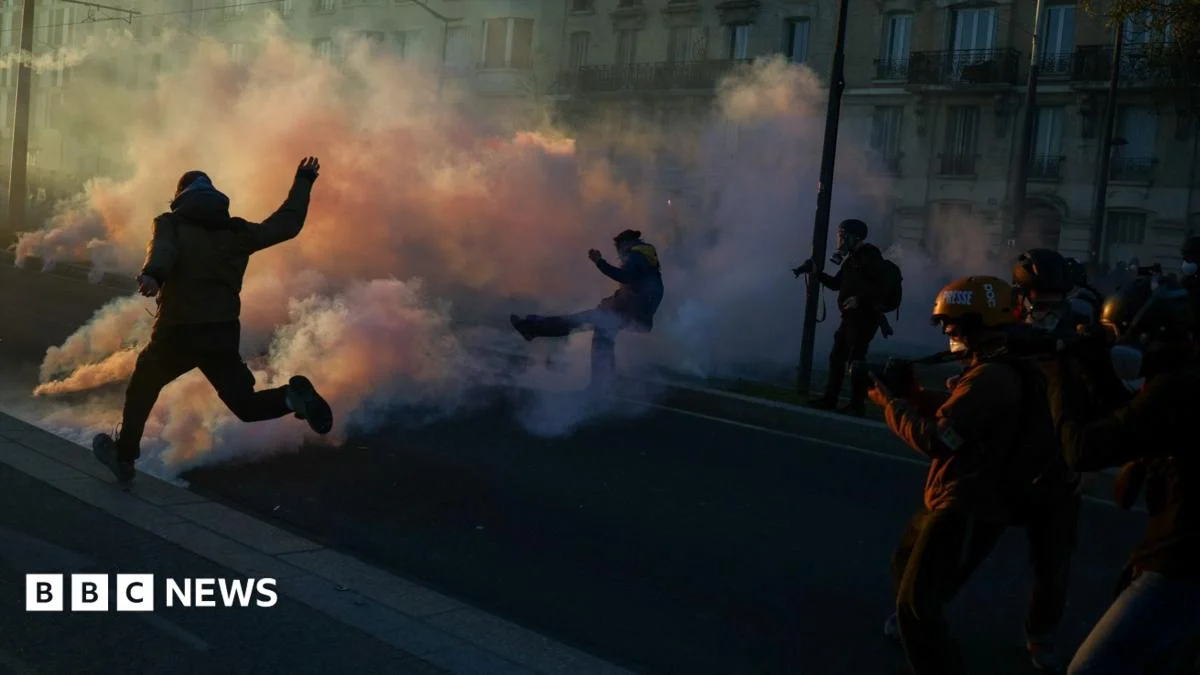
Paris, France – A palpable tension simmered and then erupted on the periphery of the French capital this past Saturday, as law enforcement deployed tear gas and engaged in running skirmishes with demonstrators. This marked the third consecutive weekend where a significant portion of the French populace took to the streets in a widespread wave of protest, voicing their profound discontent over the escalating cost of living and the perceived deterioration of essential public services across the nation. The demonstrations, which have gained momentum with each passing weekend, have transformed from isolated expressions of frustration into a sustained national outcry, reflecting deep-seated anxieties about economic precarity and the accessibility of vital public resources.
According to official figures released by France’s Interior Ministry, the nationwide mobilization on Saturday saw an impressive turnout, with an estimated 320,000 individuals participating in demonstrations across various cities and towns. This substantial figure underscores the breadth and depth of public dissatisfaction. The ministry also reported a significant number of arrests, stating that at least 290 protesters were taken into custody throughout the country. While the majority of these arrests were for public order offenses, such as vandalism and resisting arrest, the sheer volume highlights the intensity of the confrontations. In Paris alone, police estimates placed the number of demonstrators at approximately 70,000, a formidable gathering that stretched police resources and tested their preparedness.
The authorities, acutely aware of the potential for unrest, had meticulously planned and executed their security strategy to prevent a recurrence of the severe violence, widespread rioting, and wanton looting that marred similar demonstrations two weeks prior. The earlier events, which saw iconic Parisian landmarks and commercial areas subjected to vandalism and destruction, had cast a long shadow over the current protest movement, prompting concerns about public safety and the impact on the city’s infrastructure and economy. The Ministry of the Interior had deployed a considerable contingent of police officers, including specialized riot control units, across key strategic locations in Paris and other major urban centers. Barricades were erected, public transport routes were altered, and a heightened security presence was visible from the early morning hours, all aimed at containing potential outbreaks of violence and protecting property.
The grievances fueling these protests are multifaceted and deeply rooted in the current socio-economic climate of France. At the forefront is the relentless surge in the cost of living, which has disproportionately affected lower and middle-income households. Inflationary pressures, particularly on essential goods such as food, energy, and housing, have eroded purchasing power, forcing many families to make difficult choices between necessities. The price of fuel, a critical component of daily life and economic activity, has been a recurring flashpoint, with many protesters demanding immediate government intervention to cap price increases. Beyond the immediate financial pressures, there is a widespread sentiment that public services, once the bedrock of the French welfare state, are underfunded and overstretched. Concerns about the quality of healthcare, the accessibility of education, and the reliability of public transportation are frequently voiced, contributing to a growing sense of public neglect and frustration.
The economic policies implemented by the current government have also come under intense scrutiny. Critics argue that certain reforms have favored corporations and the wealthy at the expense of ordinary citizens, exacerbating income inequality. Protesters are calling for a more equitable distribution of wealth and a greater investment in social programs that directly benefit the population. The perceived disconnect between the government’s priorities and the lived realities of many citizens has fueled a sense of alienation and has empowered grassroots movements to demand a more responsive and inclusive political system. The slogan "pouvoir d’achat" (purchasing power) has become a rallying cry, encapsulating the core demand for economic relief and a fairer economic system.
The nature of the demonstrations has also evolved. While initially characterized by a broad coalition of unions, student groups, and social justice organizations, the movement has increasingly seen the participation of individuals who may not be affiliated with any formal group but are driven by personal hardship and a desire for change. This organic growth, while a testament to the widespread discontent, also presents challenges in terms of organization and unified messaging. However, the shared experience of economic strain and the perceived failings of public services have created a powerful sense of solidarity among the diverse participants.
The clashes that occurred on the outskirts of Paris on Saturday were particularly intense in certain areas where demonstrators attempted to march towards the city center or key government buildings. While the majority of protests remained peaceful, pockets of confrontation emerged, fueled by a combination of frustration and, in some instances, a deliberate intent to disrupt. The deployment of tear gas and water cannons by police was met with resistance from some protesters, who responded with projectiles and makeshift barricades. The scenes that unfolded were reminiscent of previous periods of social unrest in France, evoking both historical memories and contemporary anxieties about the nation’s stability.
The response from the French government has been a delicate balancing act. On one hand, officials have acknowledged the legitimacy of some of the protesters’ concerns, particularly regarding the cost of living. The government has announced a series of measures aimed at providing some relief, including energy subsidies and targeted aid for low-income households. However, these measures have been criticized by some as insufficient and too late to address the root causes of the discontent. On the other hand, the government has adopted a firm stance against violence and disorder, emphasizing the need to maintain public order and protect property. This dual approach has been met with mixed reactions, with some commending the government’s efforts to de-escalate tensions while others accuse it of failing to address the fundamental issues at play.
The role of social media in these protests cannot be overstated. Platforms like X (formerly Twitter) and TikTok have been instrumental in organizing demonstrations, disseminating information, and mobilizing participants. Hashtags related to the protests have trended nationally, allowing for rapid communication and coordination among disparate groups. However, these platforms have also been a source of misinformation and have sometimes amplified instances of violence, contributing to a polarized public discourse. The rapid spread of information, both factual and otherwise, has created an environment where public opinion can be quickly shaped and amplified.
Looking ahead, the sustained nature of these protests suggests that the underlying issues are unlikely to be resolved in the short term. The government faces the formidable challenge of appeasing public anger while also navigating complex economic realities and maintaining fiscal discipline. The protests have exposed deep divisions within French society and have highlighted the urgent need for meaningful dialogue and policy reforms. The coming weeks and months will likely see continued pressure on the government to demonstrate a more robust and effective response to the concerns of its citizens. The current wave of unrest is not merely a fleeting moment of discontent but a symptom of deeper societal fissures that require sustained attention and a commitment to equitable solutions. The resilience of the protest movement, now entering its third weekend of significant national mobilization, suggests that the French public is prepared to continue voicing its demands until tangible changes are realized. The question remains whether the government can bridge the widening gap between its policies and the aspirations of its people, or if the cycle of protest and confrontation will persist. The future trajectory of these demonstrations will undoubtedly be shaped by the government’s capacity to demonstrate empathy, implement impactful reforms, and foster a renewed sense of shared prosperity and social justice.

 Nakalama John

 atisusanti
 Ramos Leo

 Roy Suryo
 Nana Banana
