George Anjay
Brazilian Senator Flávio Bolsonaro, who landed in Miami after his father, former President Jair Bolsonaro, lost the presidential election on Sunday, has vehemently denied any intention of permanently leaving his homeland. In his first public statement since arriving in the United States, Flávio asserted, "I did not flee Brazil; I left for the sake of Brazil." This declaration comes amidst a whirlwind of speculation regarding his whereabouts and a crucial period for his family’s political standing.
The United States government, under the administration of then-President Donald Trump, facilitated Flávio Bolsonaro’s entry and that of his family. Trump himself confirmed this, stating to reporters, "We gave him a pass to come into the country." This move has drawn criticism from the newly reelected President Luiz Inácio Lula da Silva, who commented, "those who have nothing to hide have nothing to fear." Lula’s sentiment echoes the concerns of many Brazilians who view the former president’s departure and his son’s subsequent relocation as an evasion of accountability.
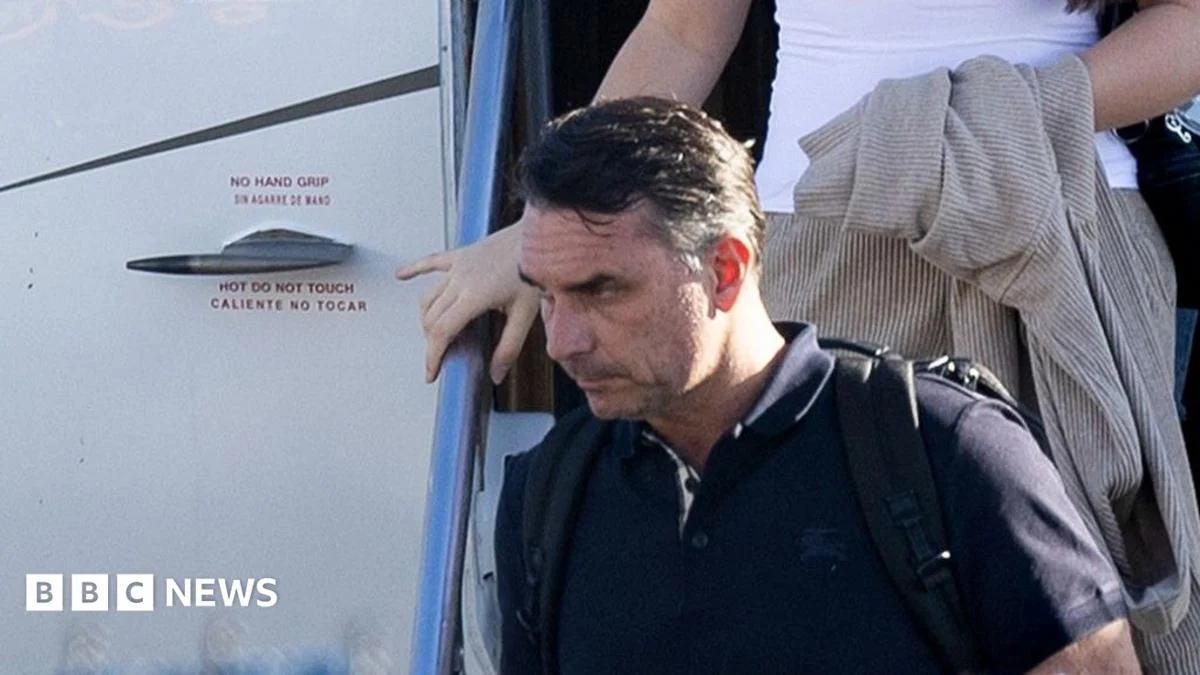
Flávio Bolsonaro’s arrival in Florida concluded days of considerable confusion and conflicting reports about his location. Initially, there were claims that he had traveled to Argentina, followed by premature reports of his entry into the US as early as Tuesday. The narrative finally solidified when he was photographed disembarking at Miami-Opa Locka Executive Airport.
In a statement distributed by Paulo Figueiredo, a prominent right-wing Brazilian influencer, Bolsonaro expressed gratitude to both the presidents of Argentina and the United States, as well as to the American public, whom he characterized as sharing "the same values as the good people of my own country." He reiterated his assertion that it was "never my intention to leave my homeland," but added a cryptic warning: "I know exactly where this is heading. I departed from a regime of exception so that I could become the leader my people deserve."
Bolsonaro framed his departure as a measure taken to protect his family and alleged that he was a victim of a "coup d’état" and "political persecution." He doubled down on unsubstantiated claims of "electoral fraud," describing the election outcome as a "mathematical impossibility." These allegations, which have been consistently refuted by Brazil’s electoral authorities, remain a central plank of the Bolsonaro family’s narrative.
Then-President Donald Trump, when questioned about Bolsonaro’s allegations, declined to engage directly, stating, "I won’t get involved. It was a very strange election, that’s for sure." He did, however, express sympathy for the Bolsonaro family, adding that he thought they "and his family were treated very unfairly." This statement from Trump further fueled the perception of a political alliance and mutual support between the two leaders.
The election itself saw Luiz Inácio Lula da Silva narrowly defeat Jair Bolsonaro in the second round by a margin of over four million votes. This victory was attributed to a significantly higher voter turnout and Lula’s success in persuading undecided voters. The legitimacy of the result was formally confirmed by the president of Brazil’s Superior Electoral Court, who was appointed by Jair Bolsonaro’s father, further complicating the narrative of electoral impropriety.
The confusion surrounding Flávio Bolsonaro’s movements began when an Argentine news site reported that he had crossed the land border from Brazil into Argentina, subsequently boarding a private plane destined for the United States. Brazilian police took these rumors seriously, conducting checks at border crossings early Tuesday but finding no evidence of his departure. Argentine officials also initially reported no record of his crossing.
For a brief period, it seemed plausible that Bolsonaro might simply be observing an uncharacteristic period of silence following his father’s unexpected defeat. However, his failure to surrender his passports within a mandated 24-hour deadline, a requirement following an election loss, led Brazilian authorities to cancel his documents and instruct police to monitor border posts. With Bolsonaro’s lawyers unable to confirm his whereabouts, speculation about his departure intensified.
The situation took a more concrete turn when Argentine migration authorities posted a tweet confirming that Flávio Bolsonaro, accompanied by his wife and two daughters, had indeed crossed into Argentina by land on Tuesday night. Flight tracking data, later verified by the BBC, indicated that the family departed from Puerto Iguazú in Argentina at 12:18 local time on Wednesday, heading to Guayaquil, Ecuador. After a brief layover, the same private jet transported them to Miami-Opa Locka Executive Airport, where they were photographed disembarking shortly before 09:30 local time. Photographers, eager to end the speculation, surrounded Bolsonaro as he exited the airport, with his team attempting to shield him with umbrellas.
Flávio Bolsonaro’s journey to the United States is not unprecedented within his family. His father, Jair Bolsonaro, also sought refuge in Florida in December 2022, prior to Lula’s inauguration. Jair Bolsonaro remained in the US during the January 8th attacks on Brazil’s government buildings and Supreme Court by his supporters. He later cited his absence from the country as a factor in his defense during his coup trial, which resulted in a conviction and a 27-year sentence.
Eduardo Bolsonaro, another son of Jair Bolsonaro, has been residing in Texas, having taken leave from his congressional duties in Brazil. While in the US, Eduardo engaged in lobbying efforts aimed at influencing the coup trial of his father. This action led to the US imposing punitive tariffs on Brazil and sanctions on key officials. Eduardo was subsequently convicted in absentia by Brazil’s highest court earlier this year for these actions.
The ultimate destination and intended duration of Flávio Bolsonaro’s stay in the US remain unclear. He is currently facing two investigations pending before Brazil’s Supreme Federal Court. The first concerns alleged irregularities in the transfer of nearly $70 million from the private bank Banco Master to "Dark Horse," a film produced as a biopic about his father. The second investigation relates to alleged money laundering. Flávio Bolsonaro denies all charges in both cases. His parliamentary immunity is set to expire on January 31st, marking the end of his eight-year Senate term. This impending loss of immunity will likely intensify scrutiny on his legal situation and potential future actions.

 atisusanti
 Roy Suryo

 Nana Banana
 Nakalama John