
 George Anjay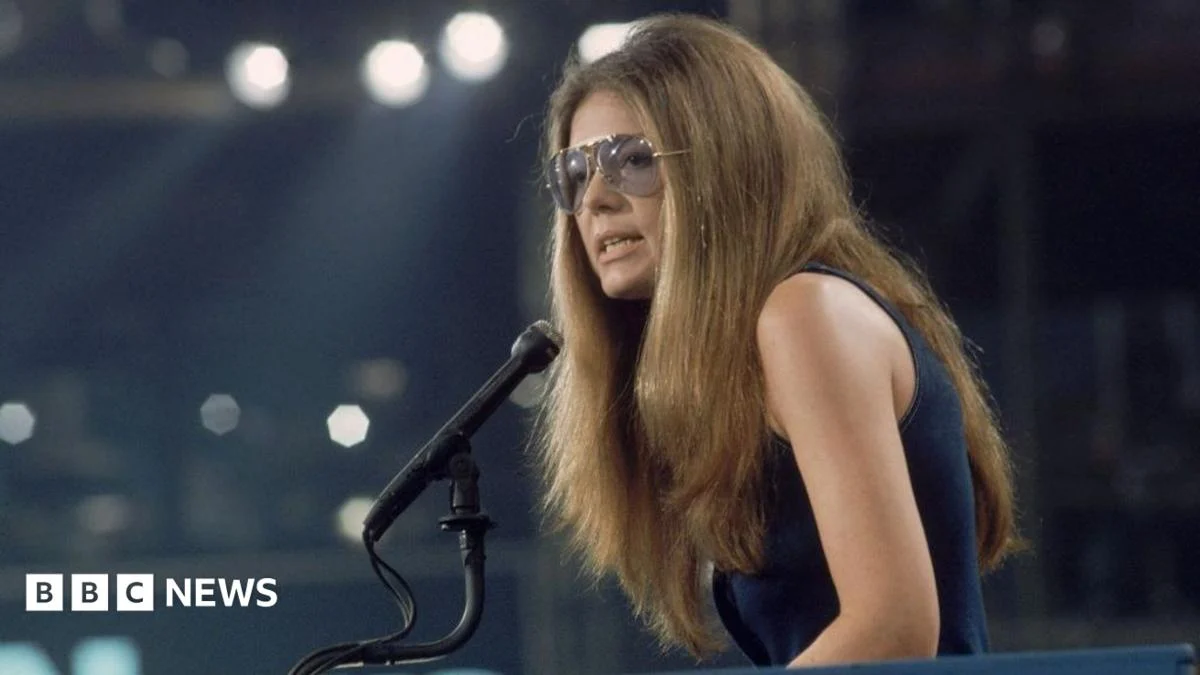
Gloria Steinem, a towering figure of the women’s liberation movement and a relentless advocate for social justice, has passed away at the age of 92. Her foundation announced her peaceful departure from her New York City home on Wednesday, surrounded by loved ones, a testament to the profound impact she had on countless lives. Steinem’s legacy is etched not only in the pages of history but in the ongoing fight for equality, a battle she championed with unwavering dedication until her final days.
Born on March 25, 1934, in Toledo, Ohio, Steinem’s early life was marked by a nomadic existence, her family frequently moving due to her father’s fluctuating business fortunes. This instability meant she did not attend school full-time until the age of 12, a challenging start that perhaps forged the resilience and independent spirit that would define her future. After graduating from college in the late 1950s, a pivotal experience awaited her: a research scholarship that took her to India. For two years, she immersed herself in the country’s vibrant culture, working in various capacities, most notably assisting village women in organizing non-violent protests against government policies. This direct engagement with grassroots activism ignited a passion that would become the driving force of her life.
Returning to the United States, Steinem settled in New York City in the early 1960s, embarking on a career as a freelance writer. Her sharp intellect and incisive prose quickly garnered attention, and a significant breakthrough came with her groundbreaking exposé of the exploitative working conditions faced by "Playboy Bunnies." This early work demonstrated her courage in tackling uncomfortable truths and her commitment to giving voice to the marginalized. She eventually became a columnist for New York Magazine, further honing her journalistic skills and establishing herself as a prominent voice in the burgeoning feminist discourse.
However, Steinem’s most enduring contribution to media was her co-founding of Ms. Magazine in 1972. In an era when women’s publications predominantly focused on domesticity and beauty, Ms. Magazine dared to be different. It provided a platform for serious discussion of women’s issues, from reproductive rights and workplace equality to political activism and personal liberation. Steinem envisioned Ms. Magazine not just as a publication but as a tool for consciousness-raising and empowerment, a space where women could explore their identities and challenge societal norms.
Steinem’s activism extended far beyond the editorial pages. She became a leading voice in the women’s liberation movement, advocating fiercely for reproductive rights. Her personal experience of obtaining an illegal abortion in London at the age of 22 at 22 years old, a harrowing journey in a time when such procedures were criminalized, deeply informed her lifelong commitment to bodily autonomy. She celebrated the landmark 1973 Roe v. Wade Supreme Court decision, which legalized abortion nationwide, a victory she witnessed and fought for. Tragically, she also lived to see the reversal of this fundamental right nearly half a century later, a stark reminder of the ongoing struggle for gender equality.
Her advocacy was multifaceted, encompassing a broad spectrum of civil rights and social justice issues. Steinem was a staunch supporter of LGBTQ+ rights, speaking out in favor of same-sex marriage long before it was widely accepted. She relentlessly campaigned for equal pay and opportunities for women in all spheres of life, challenging the systemic inequalities that held women back. Her commitment to human rights extended to protesting the death penalty and speaking out against the abhorrent practice of female genital mutilation. She understood that liberation was interconnected, and that true equality required dismantling oppressive structures wherever they existed.
For many years, Steinem famously eschewed marriage, a stance that reflected her commitment to individual autonomy and her critique of traditional patriarchal institutions. However, in 2000, she married David Bale, a South African-born entrepreneur and environmentalist, and the father of actor Christian Bale. Their union, though tragically cut short by Bale’s death from brain lymphoma three years later, offered a poignant glimpse into her personal life. When questioned about her change of heart on marriage, Steinem offered a characteristically insightful response: "I didn’t change. Marriage changed." This statement underscored her belief that societal definitions and expectations, rather than her core principles, had evolved.
Steinem’s profound influence and unwavering dedication were recognized with numerous accolades throughout her life. In 2013, then-President Barack Obama bestowed upon her the Presidential Medal of Freedom, the United States’ highest civilian honor, acknowledging her "extraordinary contributions to the nation." This award was a fitting tribute to a woman who had consistently used her platform to amplify the voices of the unheard and to push for a more just and equitable world.
Her foundation’s statement painted a vivid picture of Steinem’s final years, emphasizing her continued engagement and her commitment to fostering community. She remained active until the very end, a testament to her indomitable spirit. "Gloria’s greatest gift was her ability to listen to others, to make others feel seen and heard," the foundation stated. "Her words, actions and example gave people permission to be their truest selves. Gloria lived true to her independent spirit, always with curiosity and a great sense of humour." She transformed her home into a sanctuary for dialogue and connection, hosting "Talking Circles" where guests were welcomed into her home, a tradition designed to continue her legacy of shared wisdom and mutual respect.
The foundation also highlighted Steinem’s ongoing work and a forthcoming book, "An Unexpected Life," as further testaments to her enduring impact. These endeavors, they suggested, were part of her hope to create "ripple effects for generations to come," a reflection of her forward-looking vision and her deep belief in the power of collective action.
Tributes poured in from across the globe following the news of her passing. Writers, feminists, and public figures shared their gratitude and grief on social media, many recounting how Steinem had profoundly shaped their lives. Meghan Markle, in a heartfelt Instagram post, celebrated her "friend and mentor," sharing intimate details of their relationship. Markle described Steinem not only as a force for change in the world but as an even more remarkable person in private, offering counsel, sharing laughter, and nurturing their bond with "extraordinary advice and perspective with a cup of tea and an unrivaled cheekiness and wit." Markle proudly displayed a bracelet Steinem had gifted her, inscribed with the powerful message, "we are linked, not ranked."
Former US Secretary of State Hillary Clinton reflected on Steinem’s pivotal role in dismantling barriers for women, calling her "one of the architects of the entire structure of women’s equality." Clinton emphasized Steinem’s inherent optimism, stating, "Her activism was rooted in optimism, and that’s a moral choice, and she made it every day." This enduring optimism, coupled with her fierce intellect and unwavering commitment, defined Gloria Steinem’s extraordinary life and ensured her legacy will continue to inspire movements for justice and equality for generations to come.



 Nakalama John
 Ramos Leo
 atisusanti
 Roy Suryo