
 Roy Suryo
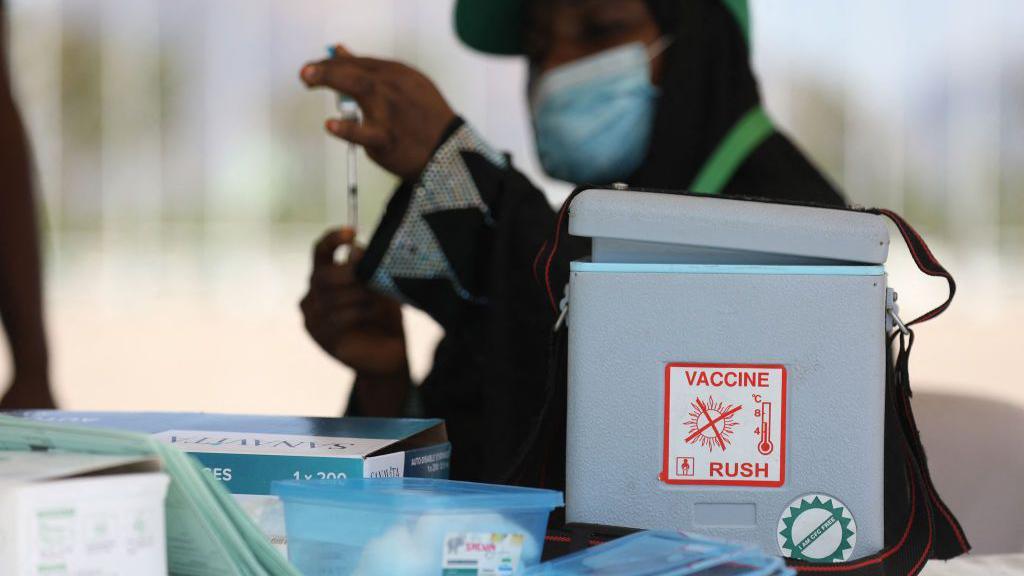
Vaccines that do not need to be kept cool in a fridge have been successfully trialled in patients for the first time, according to groundbreaking research by UK scientists. This innovation holds immense potential to combat the staggering waste of approximately half of all vaccines produced globally each year, a significant portion of which becomes unusable due to breaches in the crucial "cold chain" – the stringent temperature control required from manufacture to administration. The pioneering trial, involving 60 volunteers, saw the company Stablepharma transform a liquid tetanus-diphtheria vaccine into a "fridge-free" version. This was achieved by stabilizing the vaccine as a dry powder for an entire year at room temperature, before it was reconstituted with water for injection.

The concept behind this revolutionary approach is elegantly inspired by nature, specifically by the remarkable resilience of resurrection plants. These extraordinary plants possess the ability to appear lifeless and desiccated during prolonged droughts, only to spring back to vibrant life with the arrival of rain. This survival mechanism is attributed to their production of a specific sugar, trehalose, which acts as a powerful stabilizer for the plant’s cellular structures under extreme environmental stress. Scientists have harnessed this natural principle, drying out the tetanus-diphtheria vaccine and incorporating trehalose to meticulously protect its vital components from degradation.
Professor Saul Faust, director of the NIHR Clinical Research Facility in Southampton and a lead investigator in the trial, reported that the "fridge-free" vaccine elicited immune responses "equivalent" to its conventionally stored counterpart. Crucially, the experimental vaccine was also found to be "safe and well tolerated" in these early-stage studies. Professor Faust emphasized the profound implications of this breakthrough, stating, "This obviously has potential to remove cold chain dependence, reduce wastage and improve access." The success of this initial trial has paved the way for a larger study involving 160 participants, scheduled to commence in the coming months. This next phase will be the final step in the research process, as the original tetanus-diphtheria vaccine is already approved and licensed. This means large-stage trials, typically mandated for novel vaccines, are not required, accelerating the path to potential widespread adoption.

The research is directly aligned with the World Health Organization’s (WHO) ambitious goal of developing vaccines that can withstand temperatures of up to 30°C (86°F) with 75% relative humidity. However, the research team’s findings extend even further, with separate data indicating that the components of their stabilized vaccine can survive significant temperature fluctuations, cycling between -20°C (-4°F) and +40°C (104°F). This robustness suggests the vaccine could remain viable even after being transported in the cold hold of an aircraft and subsequently exposed to the heat of a truck, a scenario that currently poses a severe threat to vaccine efficacy.
The wastage of vaccines is a complex issue with multiple contributing factors. While damage during transport, expiration, and the discarding of unused doses from multi-dose vials all play a role, failures in maintaining the cold chain are estimated by the WHO to be a major driver, leading to the loss of approximately half of all vaccines globally. This challenge is particularly acute in the poorest and most remote regions of the world, as well as in conflict zones, where access to reliable refrigeration and electricity can be severely limited.

The implications of this "fridge-free" technology are particularly significant for global health equity. Professor Sir Jonathan Van-Tam, former deputy chief medical officer for England and an advisor to Stablepharma, shared his firsthand experience working in remote field clinics. He recalled the logistical nightmares of transporting vaccines in cool boxes over inhospitable terrain, where unpredictable journeys often led to anxiety about maintaining the cold chain and ensuring vaccines reached waiting children in time. The development of reliable, temperature-stable vaccines could alleviate these critical challenges, enabling life-saving immunizations to reach millions more people, regardless of their geographical location or the infrastructure available.
While the current "fridge-free" approach is not applicable to all vaccine types, notably the newer mRNA vaccines, it holds promise for a wide range of existing vaccines that rely on traditional formulations. Furthermore, the technology’s potential extends beyond vaccines to other temperature-sensitive medicines, such as monoclonal antibodies, which also require strict refrigeration.
The findings of this groundbreaking research have been published in eClinicalMedicine, a respected journal within the Lancet group, underscoring the scientific rigor and significance of the study. Professor Tuck Seng Wong, director of the UK-Southeast Asia Vaccine Manufacturing Research Hub, who was not involved in the study, hailed the work as "very exciting" and a "significant breakthrough in UK science." However, he also pointed out areas requiring further investigation, including the vaccine’s stability under regularly fluctuating temperatures and its efficacy across larger and more ethnically diverse populations.
Ephrem Tekle Lemango, associate director of immunization at Unicef, highlighted the critical role of refrigeration in immunization services, stating, "this innovation could help us vaccinate more children and pave the way for a future of fridge-free vaccines." This sentiment was echoed by Dr. Bruce Roser, the founder of Stablepharma, who declared, "Reliable and safe fridge-free vaccines could be a game-changer for global health – helping life-saving vaccines reach millions more people, wherever they live, and making immunisation programmes more sustainable, reliable and equitable for future generations." This innovation represents a powerful stride towards a future where access to vital vaccines is no longer constrained by the limitations of temperature control, promising a more equitable and effective global health landscape.




 Nakalama John
 atisusanti
 Ramos Leo
