Nakalama John
UK motorists are once again bracing themselves for a significant surge in fuel costs, driven by escalating geopolitical tensions in the Middle East. The conflict, reportedly involving the US and Israel against Iran, which began on February 28th, has sent shockwaves through global energy markets, directly impacting the prices consumers pay at the pump. Wholesale oil and gas prices have experienced a sharp uptick as the production and transportation of energy resources across the volatile Middle East region face severe disruptions due to missile strikes and drone attacks. This instability in a crucial oil-producing region invariably translates into higher global energy prices, and historically, the first and most visible manifestation of this increase is at the fuel pump, before rippling through the wider economy.
The direct link between wholesale oil prices and the cost of petrol and diesel is undeniable. Crude oil, the raw material extracted from the earth, is the fundamental ingredient from which both petrol and diesel are refined. Consequently, any significant increase in the wholesale cost of crude oil makes the process of producing and distributing these refined fuels inherently more expensive. Since the onset of the conflict, the price of a barrel of Brent crude, which serves as the international benchmark for oil prices, has leaped from $73 (£55) to exceeding $100 a barrel. This dramatic increase reflects the market’s anxiety over potential supply disruptions and reduced output from the region. Energy analysts widely agree that for every $10 increase in the price of a barrel of crude oil, pump prices typically climb by approximately 7p per litre. This rule of thumb highlights the direct and rapid transmission of wholesale price changes to the forecourt.
Recent data from the motoring organisation the RAC paints a stark picture of the immediate impact. Since the purported start of the conflict, average petrol prices across the UK have already risen by a substantial 16.6p, reaching 149.44p per litre. Diesel prices have seen an even sharper increase, jumping by 33.4p to an average of 175.73p per litre. These figures are not static; given the typical time lag between movements in the global oil markets and their reflection at the pumps – usually around two weeks due to shipping, refining, and inventory cycles – these prices are widely expected to climb further in the coming days and weeks. While some fuel retailers have faced accusations of "price gouging" during periods of market volatility, they typically deny such claims, attributing increases solely to wholesale cost rises. The official markets regulator, the Competition and Markets Authority (CMA), has previously investigated and continues to monitor such issues to ensure fair competition and pricing practices within the fuel sector.
The UK’s energy security and its susceptibility to global price fluctuations are rooted in its heavy reliance on oil and gas imports. Although the UK has domestic production from the North Sea, the lion’s share of its energy needs is met by imports, primarily from stable partners like the US and Norway. Even North Sea oil, while extracted domestically, is often exported for refining elsewhere due to the specific crude types produced and the existing infrastructure of UK refineries, meaning the country still purchases refined products or other crude types on the global market. Therefore, it is the global price of oil, dictated by international supply and demand dynamics and geopolitical events, that ultimately determines how much the UK pays for its fuel, regardless of the direct origin of every barrel.
Concerns about potential oil shortages in the UK, while raised by some, are generally mitigated by official assurances and strategic reserves. The International Energy Agency (IEA), an intergovernmental organisation that advises on energy policy, has indeed suggested a range of measures to reduce energy and fuel consumption in response to global conflicts, including promoting working from home, encouraging carpooling, and even advocating for lower speed limits. However, both the UK government and industry bodies like Fuels Industry UK have maintained that Britain’s fuel supplies are "resilient." Fuels Industry UK has explicitly advised Britons to continue purchasing fuels as normal, discouraging panic buying. This resilience stems from several factors. According to the Department for Energy Security and Net Zero, oil constitutes approximately 35% of the UK’s total energy supply. Crucially, as a member of the IEA, the UK is mandated to hold 90 days’ worth of net oil imports in strategic reserves, a requirement it currently exceeds, providing a significant buffer against short-term supply shocks.

The debate surrounding new drilling licences in the North Sea often resurfaces during periods of high energy prices. Proponents argue that easing restrictions on new exploration could enhance energy independence and potentially shield households from global price spikes. However, critics, including the Oxford University’s Smith School of Enterprise and the Environment, contend that a "drill, baby, drill" approach would be unlikely to significantly reduce immediate energy prices for the public. They argue that new fields take many years to come online, and even then, the oil extracted would still be sold on the global market at international prices. Instead, they suggest that investing in a fully renewable UK energy system would offer more sustainable and ultimately cheaper long-term solutions for households.
Beyond the immediate impact on vehicle tanks, rising oil prices have broader implications for the cost of living, particularly affecting food prices. More expensive petrol and diesel directly inflate the transport costs for businesses responsible for moving goods and products across the country. These increased logistical expenses are almost inevitably passed on by shops and supermarkets to the consumer, leading to higher prices for a wide array of goods, from fresh produce to manufactured items. Furthermore, the connection extends to agriculture itself. Certain derivatives of crude oil, notably natural gas, are crucial ingredients in the production of fertilisers. An escalation in crude oil prices can therefore lead to higher fertiliser costs, which in turn drives up the cost of food production. Benjamin Godwin, a partner at investment advisory firm PRISM Strategic Intelligence, highlighted this potential cost implication for food prices. However, he also noted that if the current conflict proves to be short-lived, the immediate and widespread impact on food prices might be contained, with a longer, sustained period of high oil prices being necessary for a significant and lasting increase in food costs.
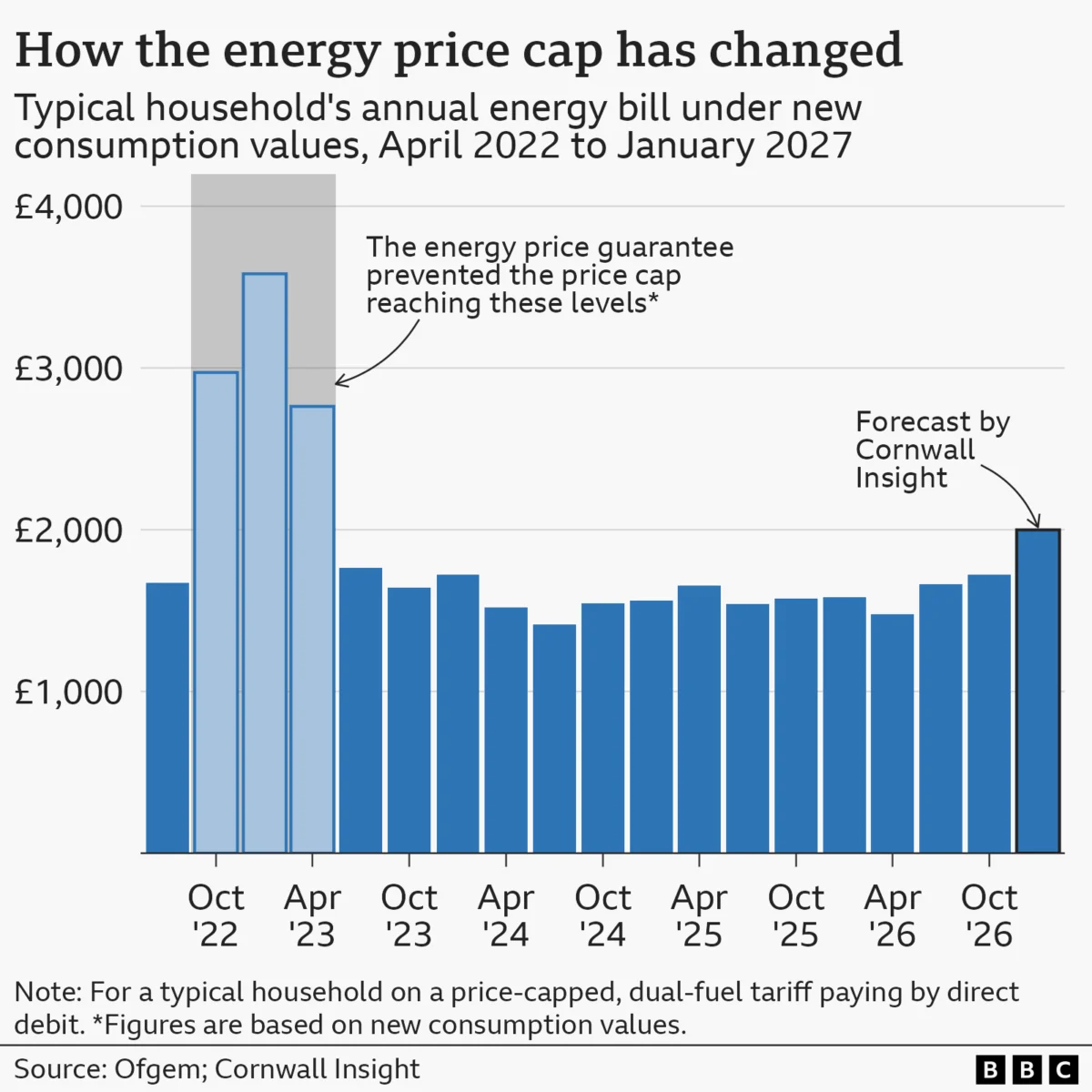
The ripple effect of surging energy prices also extends to domestic energy bills, albeit with a crucial time lag for most households. In the short term, millions of UK householders whose gas and electricity bills are governed by the energy price cap are shielded from any immediate impact of the rising wholesale costs. The unit prices for the three-month period from April have already been set by the energy regulator Ofgem. However, the duration of the conflict and the sustained level of high wholesale prices will be critical factors in determining the next price cap adjustment for the three months starting in July. If wholesale prices remain elevated, households could see a significant increase in their bills from summer onwards. For those who have previously secured fixed energy tariffs, their prices will remain stable for the duration of their contract. Yet, suppliers have already begun to reconsider their offerings, pulling cheaper fixed deals off the market as the uncertainty of future wholesale costs makes long-term price guarantees untenable. Households in Northern Ireland and some rural areas, which often rely on heating oil, face a more direct and immediate impact. Heating oil prices fluctuate much more directly in response to global crude oil prices, leading to immediate cost increases for those needing to refill their tanks. In response, the Prime Minister has announced a £53 million support package aimed at assisting these households particularly hard hit by the sharp increase in heating oil costs.
Finally, the resurgence of high energy prices poses a significant threat to the UK’s macroeconomic stability, specifically impacting inflation and interest rates. UK inflation, which measures the overall pace of price rises, had shown signs of easing after the peaks experienced following Russia’s full-scale invasion of Ukraine. It was widely anticipated to continue its downward trajectory this year, potentially paving the way for interest rate cuts by the Bank of England. The Bank’s primary mandate is to keep inflation close to its 2% target, using interest rates as its key tool to manage economic demand. However, if higher energy costs permeate the economy and push up prices more broadly, the hoped-for fall in inflation may stall or even reverse. This scenario throws any prospective interest rate cuts into serious question, at least for the foreseeable future. The uncertainty has already affected the financial markets, with mortgage lenders, who price their products based on expectations of the Bank of England’s future interest rate decisions, beginning to increase their own lending rates. This means anyone looking to remortgage or take out a new mortgage is likely to encounter slightly higher rates than they would have prior to these recent geopolitical events, adding another layer of financial pressure on UK households and potentially dampening the housing market.
Additional reporting by Emer Moreau, Kevin Peachey, and Dearbail Jordan.


 Roy Suryo