Roy Suryo
BBC News presenter Maryam Moshiri has bravely revealed she is living with a rare and treatable form of blood cancer, polycythaemia vera (PV), a diagnosis she received in November 2024. The 49-year-old, a familiar face to millions as one of the corporation’s most respected news anchors, has chosen to share her personal health journey to significantly enhance public understanding of the disease. "It’s been two years since my diagnosis and I’ve felt that I’ve started to understand the disease a lot better and the way it affects my life," Moshiri explained. "I’ve got a handle on it to a degree now, so I felt it was really important to raise awareness." She candidly acknowledged the lifelong nature of her condition, stating, "I’m going to have to spend the rest of my life being treated for this."
Polycythaemia vera, while incurable, is a manageable condition. In PV, the bone marrow produces an excessive number of red blood cells, leading to a thickening of the blood. This increased viscosity elevates the risk of serious complications, including blood clots that can result in strokes, heart attacks, or deep vein thrombosis (DVT). Symptoms of PV can be varied and often insidious, encompassing headaches, confusion, dizziness, and blurred vision. Moshiri highlighted the often-subtle nature of the disease, noting, "Mostly I had no symptoms and that’s one of the problems with this disease." Her own diagnosis was a testament to proactive medical care. "The only reason mine was caught was because my GP was so fastidious in the way she did my routine blood tests and immediately sent them for further diagnosis," she recounted.
The initial stages of Moshiri’s treatment involved a series of "debilitating" venesection sessions, a procedure designed to reduce blood thickness by drawing blood out. These hour-long treatments, repeated seven to eight times over a five-month period, had a significant impact on her iron levels, exacerbating her exhaustion. "So you can imagine my iron levels hit the floor and I felt even more exhausted," she recalled. As her condition progressed, she experienced worsening fatigue, hair loss, and generalized itching, with fatigue being the most prominent symptom.
A turning point in her treatment came with the introduction of interferon, an immunotherapy accessible through the National Health Service (NHS). Following adjustments to her treatment plan, Moshiri reported a marked improvement in her well-being. "I’ve only needed one venosection in about 15 months, so that’s been really good," she shared. "The last couple of months have been better than the last two years." This shift has allowed her to regain a sense of normalcy and optimism. "I think it’s really important people understand that this blood cancer is incurable but it’s manageable with the right treatment and you can lead a relatively healthy life," she emphasized. "It’s just a question of finding the right treatment and making sure it works for you." While acknowledging that she is "not the person I was two years ago," she expressed feeling "much better."
The potential long-term implications of PV were also addressed, with information from the charity Blood Cancer UK noting that in a minority of cases, PV can progress to myelofibrosis, another form of blood cancer, and even more rarely, to acute myeloid leukaemia (AML).
The impact of living with a chronic illness has necessitated significant adjustments for Moshiri, a mother of three. There are times when exhaustion prevents her from participating in family events or engaging in activities with her children. She described the profound nature of her fatigue: "It’s the kind of fatigue that is not like I’m just tired and I didn’t get a good night’s sleep, you feel like someone has removed your battery completely, and however much sleep you get makes no difference." The uncertainty of the future is also a consideration, as she admitted, "Even though I feel the best I have in two years, I don’t know how I’m going to be in six months, one year, two years." Furthermore, the heightened risk of stroke, heart attack, or DVT associated with PV is a constant awareness. "People with PV have a higher chance of stroke, heart attack or FVT, so it’s something I always have be aware of and make sure I mitigate."
Despite these challenges, Moshiri has maintained a demanding career, continuing to travel globally and report on major international events for the BBC over the past two years. Her assignments have included anchoring coverage from Qatar during the US-Israel war with Iran, reporting on the selection of a new Pope from the Vatican, and accompanying Vice-President JD Vance on a visit to Greenland. She attributes her ability to navigate these professional and personal demands to the unwavering support of her husband, Jonathan, the understanding of her management at the BBC, and the resilience of her children – Iris, 13, Vivienne, 11, and Caspian, 9. "It took me a long time to be able to tell them about this illness, because I don’t want to worry them, but they have been so understanding," she said. "When I say things like ‘mummy is too tired to play with you’, they get it and they don’t push it."
Helen Rowntree, chief executive of Blood Cancer UK, expressed profound gratitude for Moshiri’s openness. "We’re so grateful to Maryam for bravely sharing her story," Rowntree stated. "When public figures speak openly about their diagnosis, it cuts through the silence that so often surrounds blood cancer – the UK’s fifth most common cancer and third biggest cancer killer." Rowntree echoed Moshiri’s sentiment about the often-elusive nature of blood cancer symptoms, describing it as a "silent" cancer that can present with vague, hard-to-detect signs. She underscored the reality for many patients who manage their illness, treatment, and side effects while balancing work and family life. "We urgently need continued public and government support to fund the next generation of kinder, more effective treatments with fewer side-effects – so that more people with blood cancer can live well, spend less time dealing with the impact of treatment and be there for the moments that matter," she urged.
Looking ahead, Moshiri remains hopeful about ongoing advancements in medical research. "There is a lot of research going into blood cancer and scientific advancement to look forward to," she concluded. "Hopefully they’ll be some sort of advancement that will help even more than these medications I’ve been given." Moshiri joined the BBC in 2003, establishing herself as a trusted and prominent voice in broadcast journalism.



 Nakalama John
 George Anjay
 Ramos Leo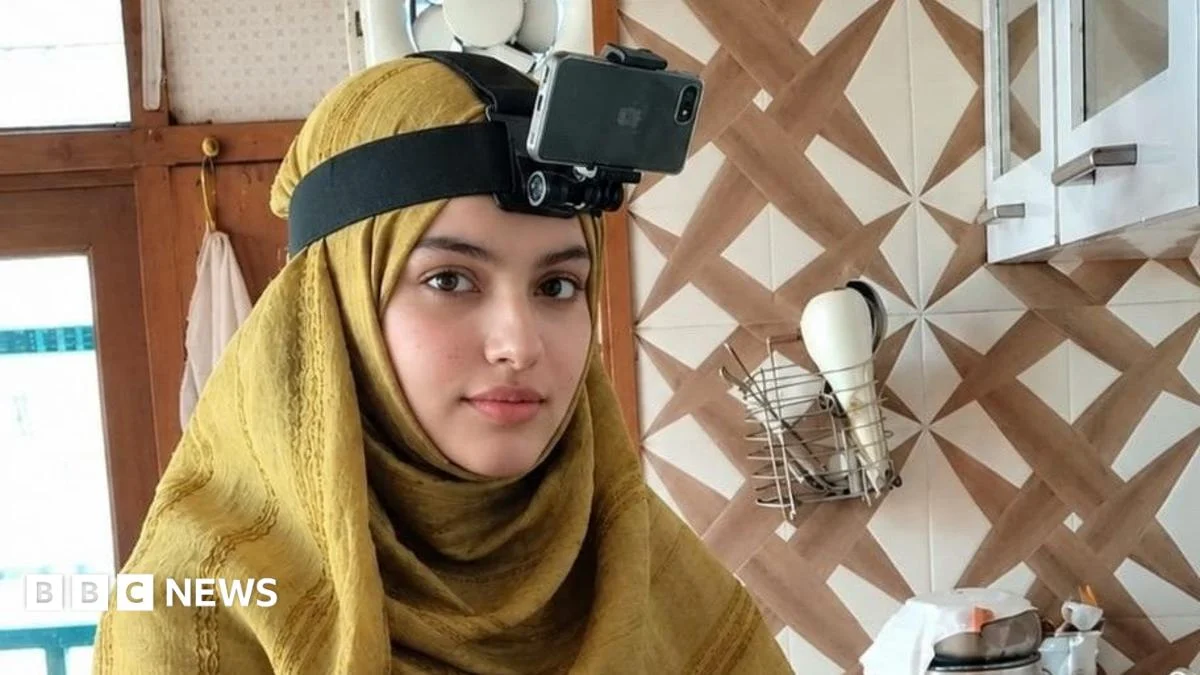
 atisusanti