
 Nakalama John
The investigation uncovered a pervasive instruction among managers: "take the mail for a ride." This euphemism, widely understood by postal staff, refers to the act of removing mail from sorting offices during inspections or visits from higher-ranking officials, only to return it later, undelivered. One worker explained the process: "Say we have a senior manager coming in from outside the delivery office, any mail that has been left would get hidden by the line managers. It gets put into a york (a trolley) and taken somewhere, and brought back to you the next day." The objective, he clarified, is to make it appear as though rounds have been cleared and targets met, even when the reality is a growing backlog.
When posties raise concerns about their overwhelming workload, particularly the pressure to prioritize parcels over letters, they are often met with the directive to "take the mail for a ride." This strategy ensures that "if inspections were carried out at the delivery office the first class mail would not be in the frame," as another worker detailed, thereby allowing the round to be "classed as complete… to manipulate the delivery success of the office." A postal worker in Wales confirmed this manipulative tactic, stating, "It just means that our boss can say that all rounds went out the door, knowing full well they are not going to be delivered." The consequence is that posties are forced to carry first-class mail out on their routes, knowing they will bring it back, adding to their stress and the company’s operational dishonesty.
These allegations surface as Royal Mail faces intense scrutiny over its declining service quality. The company holds a legal obligation to deliver first-class post six days a week, a commitment that staff say is increasingly impossible to uphold. The core issue, according to postal workers, lies in a severe imbalance: a lack of additional employees, drastic cuts to overtime hours, and relentless pressure to deliver the more profitable parcels. Letters, particularly second-class mail, often bear the brunt of these operational constraints, leading to significant delays.
The impact on the public has been profound and often critical. Customers report missing vital communications, including hospital appointments, official documents, and other time-sensitive letters. Anthony Lobo, a pensioner residing in Welling, Kent, has become so exasperated by the erratic deliveries that he now takes a weekly bus trip to his local Bexleyheath Delivery Office to collect his mail himself. "I shouldn’t have to do it but [I do] in order to save me the hassle as I receive a lot of mail. And if I don’t go, it will just be sitting there," Lobo lamented. On his most recent trip, he collected a stack of 20 letters, some from the NHS, highlighting the serious implications of the delays. Despite his complaints to Royal Mail, he feels his concerns as "a small ant" against a "huge company" have fallen on deaf ears, leaving him no choice but to take matters into his own hands.
Royal Mail, in response to the BBC’s investigation, stated that it takes claims of posties hiding letters "very seriously" and asserted that such practices "do not reflect how our delivery operations work." The company maintained that 92% of letters are delivered on time and pointed to its "range of measures to monitor service performance across our network, including… around 100 unannounced spot checks every week to make sure reporting is accurate." However, these official statements starkly contrast with the testimonies of multiple workers who describe the hiding of mail as a commonplace, instructed occurrence. Royal Mail did add that it would "investigate the specific cases raised… where there are local issues, we focus on restoring normal service as quickly as possible and supporting customers."
The communications regulator, Ofcom, has already imposed significant penalties on Royal Mail for its subpar performance, fining the company £37 million in recent years. Ofcom has also issued warnings that further fines are "likely to continue" if there is no discernible improvement in service. The company’s own figures for the 2024-25 financial year underscore its struggles: it delivered only 77% of first-class mail and 92.2% of second-class mail on time, falling considerably short of its respective targets of 93% and 98.5%.
The growing crisis prompted Royal Mail bosses, including its owner, Czech billionaire Daniel Kretinsky, to face questions from MPs at the House of Commons Business and Trade Committee on Tuesday. Kretinsky expressed that he was "deeply sorry" for any late letters but controversially denied that the quality of the postal service had declined. "The quality of service is not where we want it to be," he conceded, but emphatically added, "the statement that it is declining… it is not true."
This denial was met with outrage from frontline staff. "Jessica," an anonymous postie, directly challenged Kretinsky’s narrative, stating he was "denying [her] every single day." She highlighted the immense "stress and pressure we are under to hit certain targets with tracked parcels," finding it "disgusting that [Kretinsky] is running with this narrative, that they’re not really failing on the letters."

Royal Mail has also presented written evidence to the Business and Trade Committee, attributing many of the delays to outdated delivery rules and proposing reforms to its Universal Service Obligation (USO). A cornerstone of their proposed solution is to reduce the frequency of second-class mail deliveries. The company has secured permission from Ofcom to pilot this new system, claiming it has yielded positive results in the trial areas.
However, staff working in these pilot areas strongly dispute Royal Mail’s claims of success. Three employees informed the BBC that "nothing has really improved, it’s gotten worse." They accused management of shifting blame: "It feels each week that the line managers are looking for a new way to blame any failures of the new delivery system on the posties, rather than looking at what the failures actually are." Morale among staff has plummeted to "an all-time low," with workers reporting feelings of "flogging a dead horse" and an inability to complete their assigned workload, which they describe as "impossible." Jessica was adamant that Royal Mail’s proposed reforms would not work and predicted that "from a customer’s point of view it’s only going to get worse." She added, "We’re already struggling with people going off sick, with stress, leaving, that’s only going to get worse as well."
The Communication Workers’ Union (CWU), representing postal staff, echoed these sentiments, attributing the systemic failures to "low wages and poor conditions" which have fostered a severe "recruitment and retention crisis." A CWU spokesperson condemned the "devaluing of a postal worker’s job, combined with a toxic managerial culture," asserting that it "has created chaos and demoralisation in almost every workplace across the country." The union’s stance reinforces the narrative of a service in distress, not merely due to external factors, but from internal mismanagement and a disregard for its workforce.
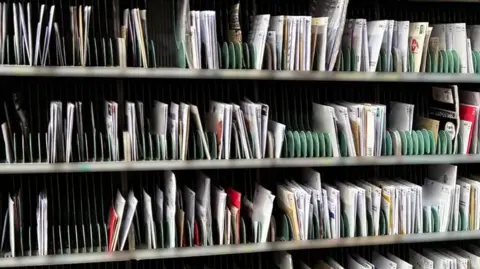
The ongoing saga at Royal Mail paints a grim picture of a vital public service struggling under pressure, with frontline workers caught between impossible targets and alleged directives to mislead. The conflict between official assurances and the stark reality on the ground continues to erode public trust and raises serious questions about the future of postal deliveries in the UK. Without a genuine resolution to the underlying issues of staffing, workload, and management culture, the problems faced by both postal workers and the millions who rely on their service are unlikely to abate.



 George Anjay
 atisusanti
 Ramos Leo
 Roy Suryo
 Nana Banana