George Anjay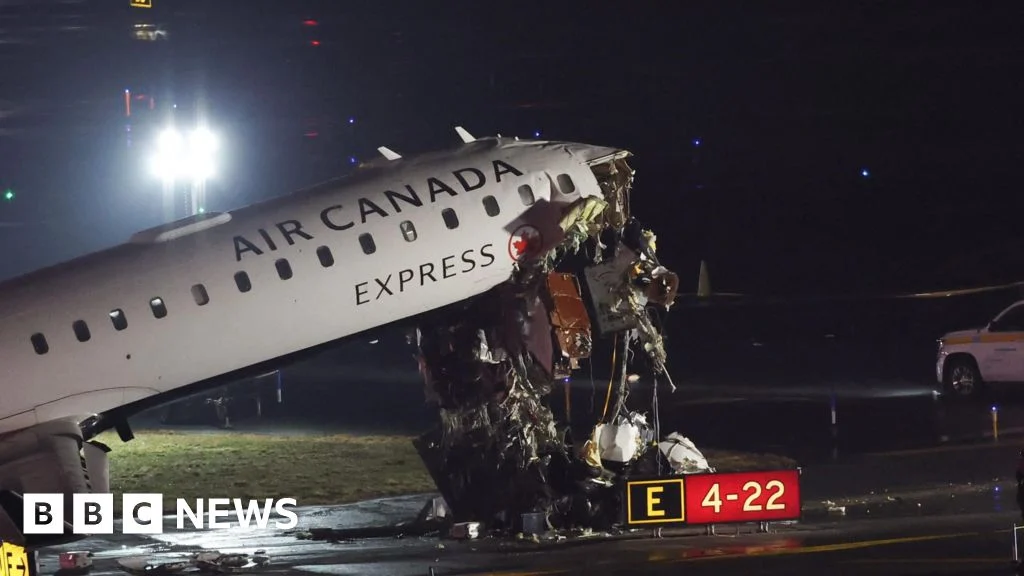
Tragedy struck New York’s LaGuardia Airport on Sunday night when an Air Canada plane, arriving from Montreal, collided with a Port Authority Aircraft Rescue and Firefighting vehicle, resulting in the deaths of two individuals and multiple injuries. The devastating incident occurred as the aircraft had just landed and was taxiing at a reduced speed of approximately 24 mph. While the exact circumstances leading to the collision are under intense investigation by the National Transportation Safety Board (NTSB), initial reports suggest the firefighting vehicle was responding to a separate incident at the time of the impact.
CBS News, citing a law enforcement source with intimate knowledge of the ongoing investigation, confirmed the fatalities. The same source also reported several injuries, including two firefighters who were part of the ground crew. The Federal Aviation Administration (FAA) swiftly responded to the critical situation by issuing a ground stop for LaGuardia Airport late Sunday night. This measure, designed to halt all air traffic in and out of the airport, was put in place to allow emergency responders to manage the scene and ensure the safety of other aircraft and operations. The FAA cautioned that the ground stop had a "high" likelihood of being extended, underscoring the severity of the disruption and the ongoing assessment of the airport’s operational status.
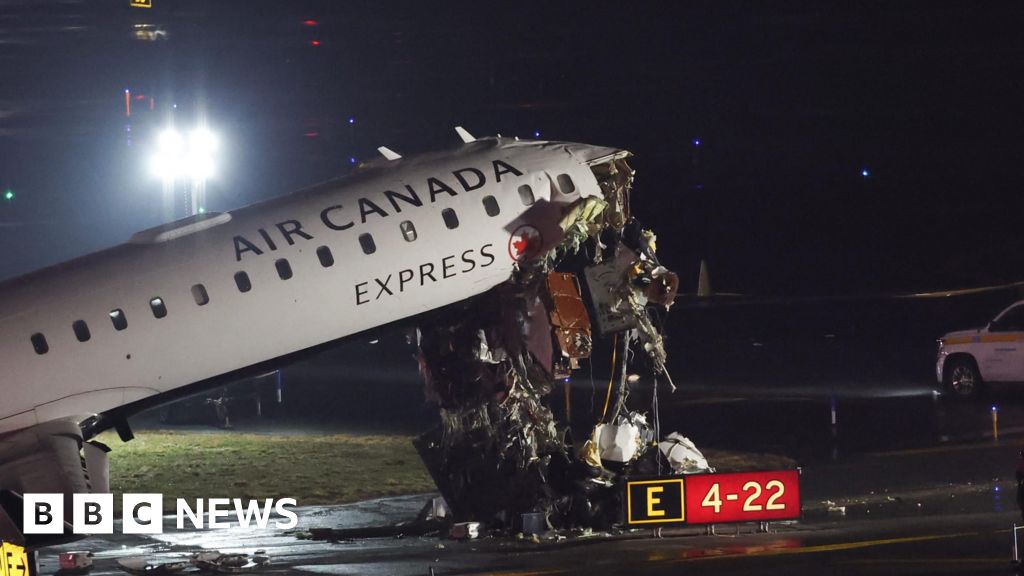
The aircraft involved was a CRJ 900 model operated by Jazz Aviation, Air Canada’s regional partner. On board were approximately 70 passengers and four crew members, bringing the total number of people on the plane to 76, according to a statement released by Jazz Aviation. The collision inflicted significant damage to the aircraft. Video footage that quickly circulated on social media platforms depicted the plane at a standstill, with its nose appearing upturned, a stark visual testament to the force of the impact. The Port Authority of New York and New Jersey, which manages LaGuardia Airport, confirmed the incident in an official statement. The statement elaborated that the aircraft "struck a Port Authority Aircraft Rescue and Firefighting vehicle that was responding to a separate incident." This detail highlights the unfortunate confluence of events that led to the fatal crash.
In response to the emergency, LaGuardia Airport’s emergency response protocols were immediately activated. The Port Authority Police Department, along with the agency’s Chairman and Executive Director, were on the scene to oversee the response and begin the initial assessment of the situation. The New York City Police Department (NYPD) also issued advisories via X (formerly Twitter), urging the public to "expect delays and avoid the area if possible." The NYPD further announced that "Due to an emergency incident at LaGuardia Airport, all streets and highway exits into the airport are closed until further notice," emphasizing the extensive disruption to transportation in and around the airport. The New York City Fire Department also posted on X, warning of "expect cancellations, road closures, traffic delays and emergency personnel near LaGuardia Airport" and advising commuters to "Use alternate routes."
The NTSB has already dispatched an investigation team to the scene. Their mandate will be to thoroughly examine all aspects of the crash, including the operational procedures of both the airline and the airport’s emergency services, the condition of the aircraft and the vehicle, and any potential contributing factors such as weather or human error. The investigation is expected to be extensive and will aim to determine the precise sequence of events that led to this tragic accident, with the ultimate goal of preventing similar incidents in the future. The CRJ 900 is a popular regional jet aircraft known for its reliability, and Jazz Aviation is a well-established operator within Air Canada’s network. The fact that the aircraft had just landed and was moving at a relatively slow speed suggests that the collision was not a high-speed impact in the traditional sense of an aircraft accident, but rather a devastating ground-level collision.
The presence of a firefighting vehicle responding to a separate incident at the same time the Air Canada plane was taxiing raises critical questions about airport safety protocols and the coordination of emergency services. It is standard procedure for airport emergency vehicles to have their own response plans and for ground traffic to be managed accordingly. However, the specifics of this particular situation will be a focal point of the NTSB’s inquiry. The FAA’s decision to implement a ground stop is a critical safety measure, preventing further complications while the scene is managed and the extent of the damage and the operational impact on the airport are assessed. LaGuardia Airport, one of the busiest airports in the United States, handles a significant volume of air traffic, and a prolonged closure or disruption can have far-reaching consequences for travelers and the broader aviation system.
The image accompanying the reports shows emergency services surrounding the damaged Air Canada plane, highlighting the immediate and extensive response to the incident. The visual evidence of the damaged aircraft underscores the severity of the collision and the critical nature of the situation. The Port Authority of New York and New Jersey, as the operator of the airport, bears significant responsibility for ensuring the safety of all operations. Their statement confirming the collision with a vehicle responding to a separate incident indicates a willingness to be transparent about the known facts while the investigation unfolds. The public’s attention will undoubtedly be focused on the findings of the NTSB investigation, as it seeks to provide answers and implement measures to enhance safety at LaGuardia and other airports. The loss of life in such an incident is a profound tragedy, and the ensuing investigation will aim to shed light on how such a catastrophic event could have occurred. The full passenger manifest and the identities of the deceased will likely be released once next of kin have been notified, adding a human element to the unfolding news. The impact on air travel will be significant, with many passengers facing cancelled or delayed flights. The recovery of the damaged aircraft and the thorough examination of the crash site will be complex operations. The NTSB’s final report will be crucial in understanding the contributing factors and in formulating recommendations to prevent future occurrences.




 Nakalama John
 Ramos Leo
 Nana Banana