George Anjay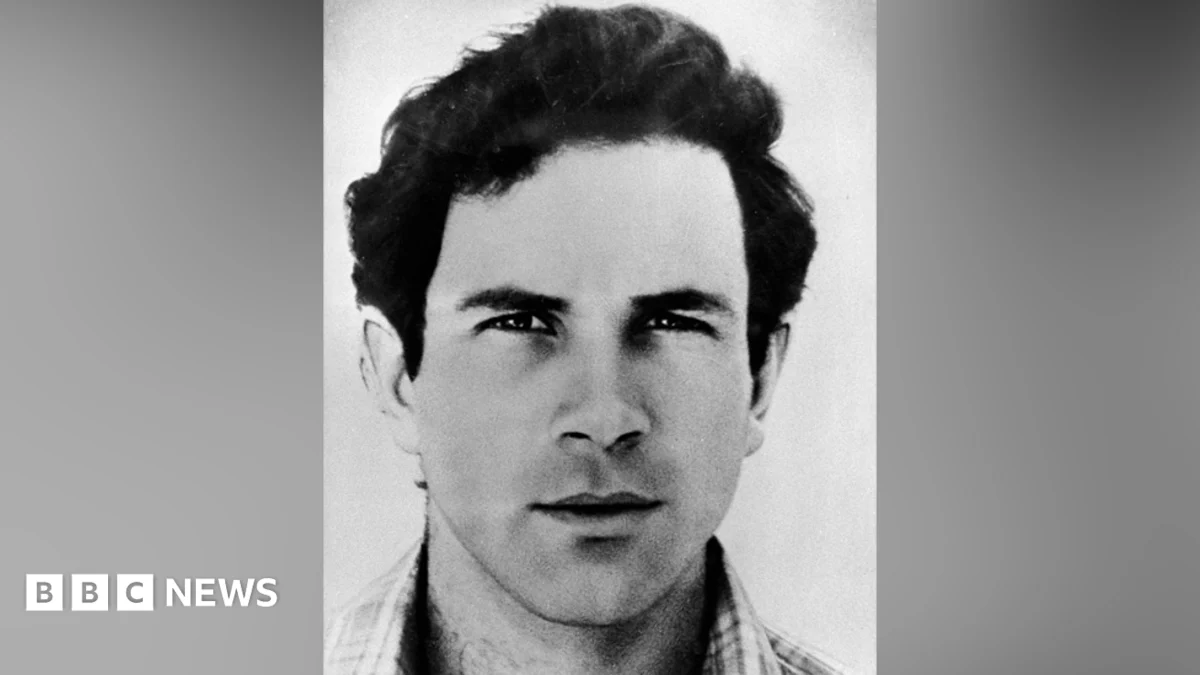
Uganda has unveiled a prominent statue commemorating Yonatan Netanyahu, the courageous older brother of Israel’s current Prime Minister Benjamin Netanyahu, who tragically lost his life during the daring Entebbe hostage rescue mission exactly 50 years ago. The unveiling ceremony, attended by high-ranking officials from both nations, served as a poignant reminder of the historic events of July 1976 and the enduring legacy of sacrifice and bravery.
Gen. Muhoozi Kainerugaba, the Commander of the Land Forces of the Uganda People’s Defence Force and son of President Yoweri Museveni, delivered a stirring tribute, stating that the monument was erected to honor Netanyahu’s exceptional courage and his selfless dedication to duty. Kainerugaba emphasized that Netanyahu’s actions during the rescue operation, which ultimately saved over 100 hostages, represent a pivotal moment in modern history, forging a bond between Uganda and Israel that has evolved into a remarkably close and cooperative relationship.
The Entebbe hostage crisis began on June 27, 1976, when an Air France Airbus A300 airliner, en route from Tel Aviv to Paris, was hijacked shortly after a stopover in Athens. The aircraft, carrying 248 passengers and 12 crew members, was commandeered by four individuals – two from the Popular Front for the Liberation of Palestine (PFLP) and two from the German Revolutionary Cells. The hijackers forced the plane to divert to Libya for refueling before proceeding to Entebbe International Airport in Uganda, where they were welcomed by the regime of then-President Idi Amin.
Upon arrival in Entebbe, the hijackers issued a chilling ultimatum: the release of 53 imprisoned militants held in prisons across Israel, France, Germany, Switzerland, and Kenya, along with a $5 million ransom. In a calculated move, the hijackers began to separate hostages, releasing non-Israeli and non-Jewish passengers in stages on June 30 and July 1. However, they deliberately held the Israeli and Jewish hostages captive, creating an increasingly tense and desperate situation.
The Israeli government, facing immense pressure and unwilling to negotiate with terrorists, meticulously planned and executed a daring rescue operation. After extensive reconnaissance and preparation, an elite unit of Israeli commandos, known as Sayeret Matkal, launched Operation Thunderbolt (later renamed Operation Entebbe). On the night of July 3-4, 1976, the commandos, disguised as airport ground crew, landed at Entebbe in unmarked C-130 Hercules transport aircraft, flying in from Israel via Kenya, which had covertly facilitated the operation.
The rescue operation itself was remarkably swift and precise, lasting less than 90 minutes. The commandos stormed the airport terminal where the hostages were held, engaging the hijackers and their accomplices in a fierce firefight. During the intense exchange of gunfire, Yonatan Netanyahu, then 30 years old and leading the assault team, was tragically struck by a bullet and succumbed to his injuries. He was the sole Israeli soldier to be killed during the operation.
The raid was a resounding success in its primary objective: the liberation of the vast majority of the hostages. Over 100 individuals were safely rescued, a testament to the skill and bravery of the Israeli forces. However, the operation was not without its casualties beyond Netanyahu. Three Israeli hostages – Jean-Jacques Mimouni, Pasco Cohen, and Ida Borochovitch – were killed by the hijackers during the chaos of the rescue. Furthermore, Dora Bloch, an elderly Israeli woman who had been hospitalized in Kampala due to illness, was later murdered in her hospital bed by Ugandan soldiers, an act of brutal reprisal.
The hijackers and three accomplices who had joined them in Uganda were also eliminated during the raid. The operation also resulted in significant losses for the Ugandan army, with at least 45 soldiers killed in the ensuing fighting with the Israeli commandos.
Gen. Kainerugaba, while acknowledging the bravery of the Ugandan soldiers who fought, also issued a stark condemnation of the regime they served. He stated that these soldiers "fought valiantly… in what they believed was a justified cause. Of course, today, we know that the government of Idi Amin, which they served, was a brutal dictatorship which did not represent the Ugandan people." This admission marks a significant shift in Uganda’s historical narrative regarding the Entebbe raid, distancing the current government from the atrocities of the Amin era.
The statue of Yonatan Netanyahu, depicted in a powerful stance with a machine gun in his hands, striding forward, now stands as a permanent fixture outside the old Entebbe airport terminal, the very site where the historic rescue unfolded. It serves as a tangible symbol of defiance against terrorism and a reminder of the high cost of freedom.
The successful execution of Operation Entebbe was hailed as a monumental triumph in Israel, bolstering national morale and solidifying its image as a nation capable of protecting its citizens, no matter the distance or the odds. Conversely, the raid represented a profound humiliation for Idi Amin’s regime, exposing its vulnerability and complicity with terrorist organizations.
Prime Minister Benjamin Netanyahu, who has spoken movingly about his late brother’s legacy, visited Entebbe a decade ago and reflected on the lessons learned from Yonatan. He famously stated, "I learned from my brother that you need two things to defeat the terrorists: clarity and courage."
Gen. Kainerugaba, in his address, referred to the events of half a century ago as "a painful chapter in our history." However, he emphasized that the relationship between Uganda and Israel has transcended this painful past, evolving into a robust "partnership characterised by mutual trust, respect and co-operation." This new era of diplomatic ties is further underscored by the joint unveiling of the statue, symbolizing a shared commitment to remembering the past while building a stronger future.
The hijacking of the Air France flight was a meticulously planned act by extremist groups seeking to exert political pressure through extreme violence. The PFLP, a Palestinian nationalist and Marxist-Leninist organization, aimed to leverage the crisis to advance their cause for Palestinian liberation. The involvement of German militants, the Revolutionary Cells, highlighted the growing internationalization of terrorist networks during the era.
The initial demands of the hijackers were clear: the release of a significant number of incarcerated militants. The refusal of Israel to capitulate to these demands underscored a firm stance against yielding to terrorist blackmail, a policy that has largely characterized Israel’s approach to hostage situations. The subsequent decision to mount a military rescue operation demonstrated a willingness to take extreme risks to save lives and uphold national principles.
The strategic importance of Uganda under Idi Amin’s rule cannot be overstated. Amin’s regime, known for its brutality and erratic policies, provided a safe haven for the hijackers, allowing them to consolidate their position and prolong the ordeal of the hostages. The complicity of the Ugandan authorities turned a hijacking incident into a complex international crisis requiring a sophisticated and daring military response.
The legacy of Operation Entebbe extends beyond the immediate rescue. It has become a case study in counter-terrorism, inspiring military strategists and policymakers worldwide. The operation showcased the effectiveness of meticulous planning, rapid execution, and unwavering resolve in confronting and defeating terrorist threats. It also highlighted the crucial role of intelligence gathering and international cooperation, as evidenced by Kenya’s covert assistance in facilitating the Israeli operation.
The unveiling of Yonatan Netanyahu’s statue in Uganda is a powerful symbol of reconciliation and remembrance. It acknowledges the shared history, the sacrifices made, and the enduring strength of the human spirit in the face of adversity. The monument serves not only as a tribute to an individual hero but also as a reminder of the collective effort and courage that can overcome even the darkest of times. The close ties between Uganda and Israel, forged in the crucible of tragedy, now stand as a testament to the possibility of turning historical wounds into foundations for lasting peace and cooperation. The memory of Yonatan Netanyahu, and all those who perished, will continue to inspire future generations in their pursuit of peace, justice, and human dignity, as Gen. Kainerugaba eloquently stated.




 Nakalama John
 Ramos Leo
 Nana Banana