George Anjay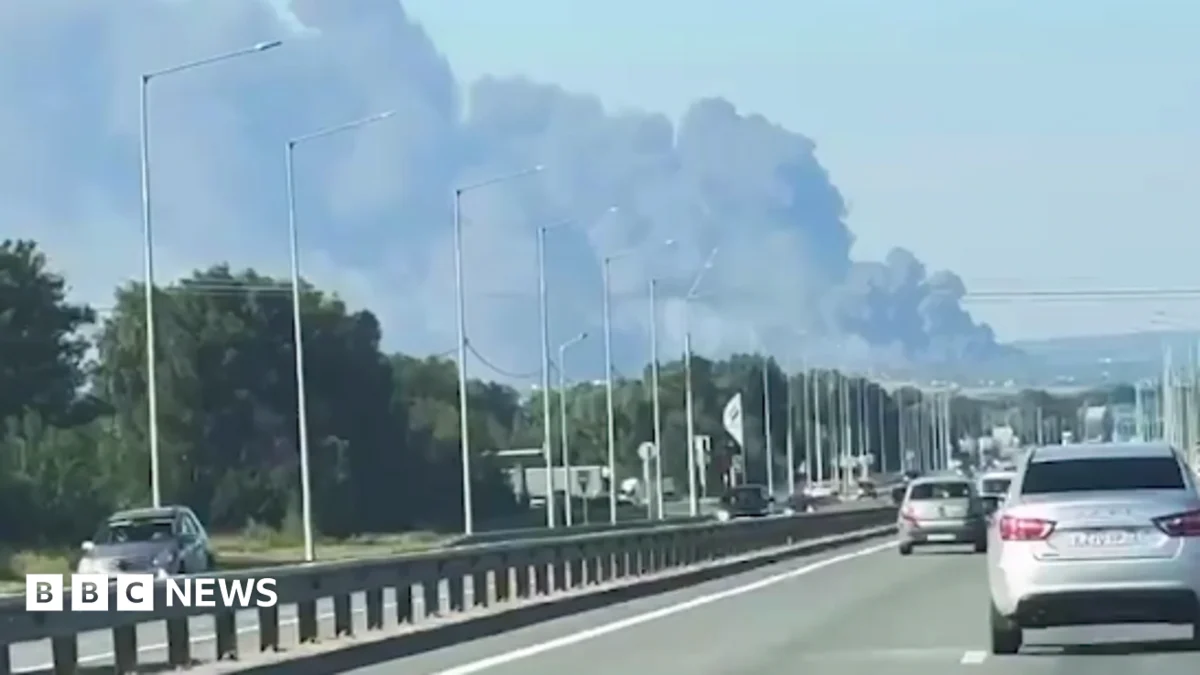
Ukraine has declared a significant escalation in its long-range strike campaign, announcing it successfully targeted a major Russian oil refinery and a strategic airfield deep within Russian territory overnight. President Volodymyr Zelensky revealed that both the Engels airfield, a critical hub for Russia’s strategic aviation, and a significant oil refinery in the Saratov region, approximately 600 kilometers (373 miles) from Ukraine’s border, were struck. The Ukrainian military further elaborated that the attack on the Engels airfield ignited a blaze, highlighting its importance as one of the primary bases from which Tu-95MC and Tu-160 bombers regularly launch missile strikes against Ukraine. In addition to these key targets, Ukraine also reported striking an oil depot in the Kaluga region and a drone launch site in Bryansk, demonstrating a coordinated and widespread offensive.
In response, Russia claimed that eight people were killed in the Ukrainian strikes, and asserted that 635 drones were either shot down or intercepted. Moscow also reported another strike on a warehouse belonging to Wildberries, Russia’s largest online retailer, describing it as "yet another terrorist act" by Ukraine. The governor of the Samara region, Vyacheslav Fedorishchev, confirmed the attack on the Wildberries logistics hub, which resulted in a fire. While no casualties were reported in this specific incident, these strikes on Wildberries warehouses have become a recurring theme in recent weeks, with Ukraine justifying them as legitimate targets providing the Russian military with crucial components for drones, navigation equipment, and other military hardware. Wildberries, often referred to as Russia’s Amazon, is a significant employer with approximately 48,000 staff members, and its disruption is reportedly having a notable impact on the Russian economy, particularly affecting hundreds of small and medium-sized businesses that rely on the platform.
The escalating tit-for-tat attacks underscore a recent intensification of military actions by both Russia and Ukraine, with a pronounced focus on major cities, critical energy infrastructure, and logistical hubs. This surge in strikes comes as the vast front line in Ukraine remains largely static, and diplomatic efforts, including those led by the United States, have failed to yield a breakthrough in ending the conflict. Russian President Vladimir Putin initiated the full-scale invasion of Ukraine in February 2022.
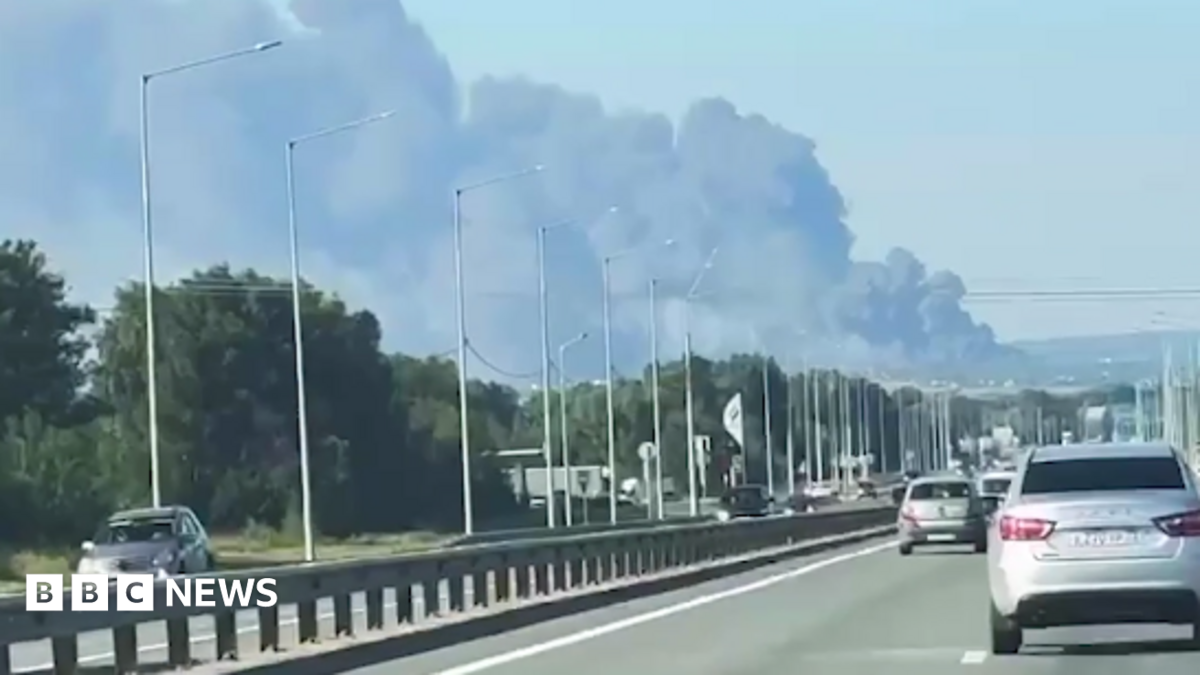
President Zelensky, in a social media post on Sunday, characterized the latest Ukrainian strikes as "our long-range sanctions" aimed at Russian facilities that he believes finance Moscow’s ongoing war effort. He explicitly designated the Engels airfield and the Saratov oil refinery as "strategic facilities," underscoring their importance to Russia’s military capabilities. The Saratov regional Governor, Roman Busargin, acknowledged that "a drone attack caused damage to civilian infrastructure in Saratov and Engels," and later confirmed that two people had lost their lives in the incident.
Beyond the Saratov region, the casualty reports from Russia paint a grim picture of the overnight assaults. Separately, three individuals were reported killed in a Ukrainian drone attack on a civilian vehicle in Russia’s Udmurtia region. Additionally, another three fatalities were reported in the Belgorod region, which shares a border with Ukraine. These figures, when combined with the casualties in Saratov, bring the total reported deaths on the Russian side to eight, as stated by Moscow.
Meanwhile, the conflict also continued on other fronts. Moscow announced that its forces conducted overnight attacks targeting two Ukrainian ports and two vessels in the Black Sea. This action is likely a response to Ukraine’s continued efforts to disrupt Russian maritime activities and its use of the Black Sea for logistical and military purposes.
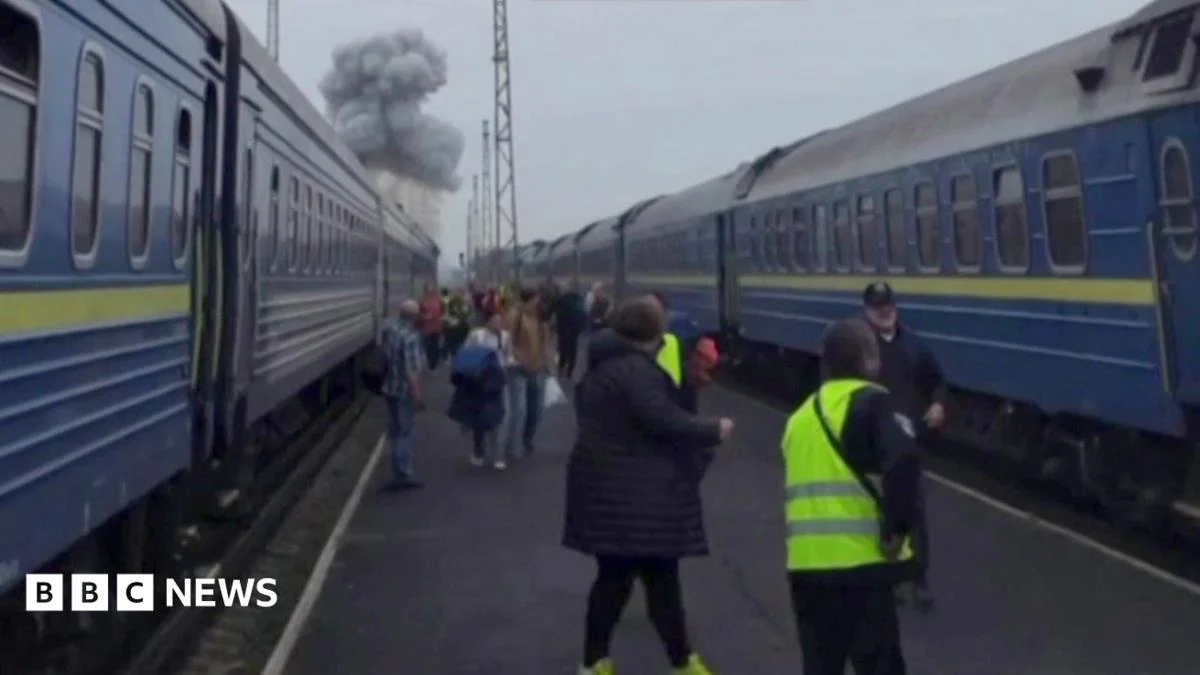
Later on Sunday, Ukraine reported that one person was killed in a Russian strike on a postal terminal located near the northeastern city of Kharkiv. This incident highlights the ongoing danger faced by civilians in Ukrainian cities, even as Ukraine attempts to strike deep within Russian territory.
The recent pattern of attacks on both sides suggests a strategic shift towards degrading the enemy’s economic and logistical capabilities. For Ukraine, targeting oil refineries and airfields that house strategic bombers directly impacts Russia’s ability to sustain its war effort and project power. The targeting of Wildberries warehouses, while seemingly commercial, serves a dual purpose of disrupting the Russian economy and potentially hindering the supply of dual-use goods to the military.
Conversely, Russia’s attacks on Ukrainian ports and logistical facilities, including those of postal companies like Nova Poshta and online retailers like Rozetka, aim to cripple Ukraine’s ability to import goods, distribute essential supplies, and maintain its economic stability. Rozetka, another major Ukrainian online retailer, confirmed that its largest warehouse was hit by Russian drones overnight, though it also reported no injuries.
The ongoing exchange of long-range strikes signifies a dangerous escalation of the conflict, potentially drawing more resources and attention away from the static front lines. It also raises concerns about the potential for further civilian casualties and damage to critical infrastructure on both sides. The international community continues to monitor the situation closely, with ongoing calls for de-escalation and a peaceful resolution, yet the current trajectory suggests a prolonged and increasingly destructive conflict. The strategic importance of the Engels airfield, a known base for Russia’s nuclear-capable bombers, makes Ukraine’s reported strike particularly significant, potentially signaling a new phase in the war’s strategic calculus. The impact of these attacks on global energy markets and the broader Russian economy will also be closely watched in the coming days and weeks.



 Nakalama John
 Ramos Leo
 Nana Banana