
 George Anjay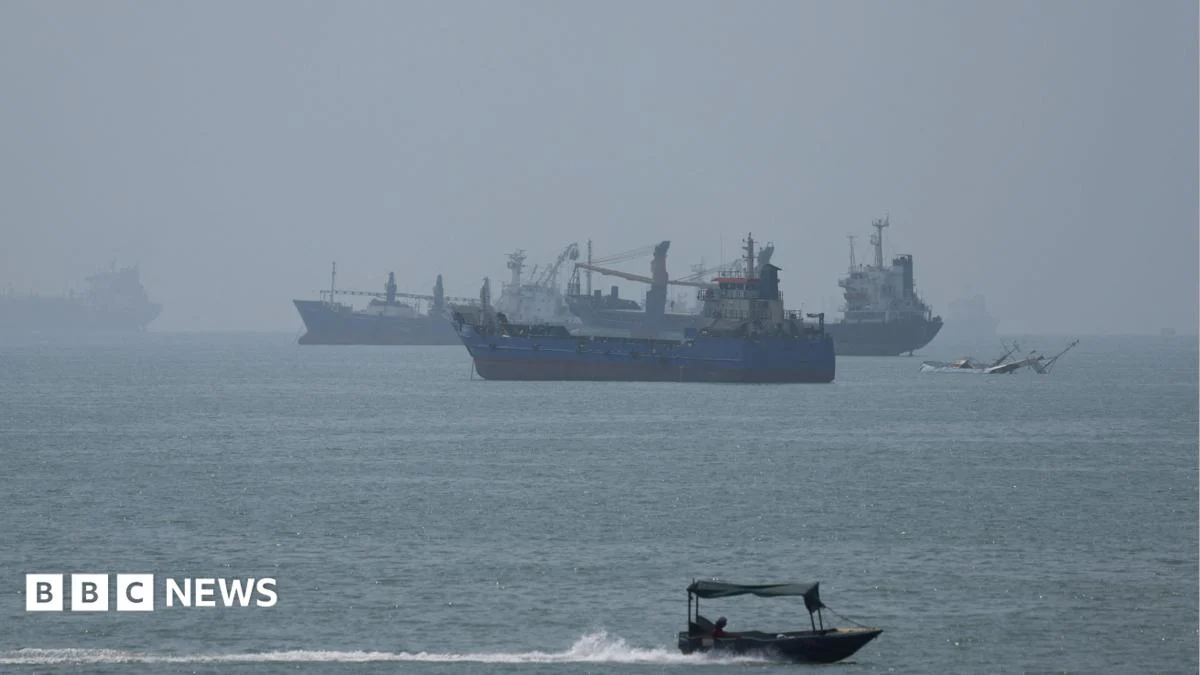
In a significant escalation of tensions, the United States has reportedly carried out a targeted strike on missile launchers located on Iran’s Larak Island, marking the first known direct military action against Iran in several weeks. The attack, details of which are still emerging, has drawn immediate condemnation from Tehran and has prompted retaliatory actions, further igniting the simmering conflict that has now entered its seventh month. The incident underscores the volatile geopolitical landscape surrounding the Strait of Hormuz, a critical artery for global energy supplies, and highlights the ongoing strategic chess match between the US and Iran.
The US strike, which occurred on Monday, prompted a swift response from Jordan’s army. Shortly after statements from Iran’s Islamic Revolutionary Guard Corps (IRGC), the Jordanian military announced that its air defense systems had intercepted eight missiles that breached the Kingdom’s airspace at dawn. "Air defense systems intercepted eight missiles that breached the Kingdom’s airspace at dawn today, Monday," Jordan’s armed forces stated, as reported by the state Petra News Agency. This interception suggests a broader retaliatory strike from Iran, potentially targeting bases in allied nations.
The strike on Larak Island represents a notable departure from the recent de-escalation efforts, as it is the first known attack on Iranian soil since President Donald Trump announced a pause on a renewed military campaign in late July. This pause was perceived by some as an attempt to de-escalate regional tensions, but the current strike suggests a shift back to a more assertive posture.
Larak Island, strategically situated just offshore from the vital port of Bandar Abbas, occupies a pivotal position within the Strait of Hormuz. This narrow waterway is indispensable for global shipping, carrying a significant portion of the world’s oil and liquefied natural gas. Prior to the recent conflict, an estimated 20% of the world’s oil and LNG passed through this chokepoint. The island’s proximity to this critical passage makes it a sensitive and strategically important location. Recent reports indicated that Iran was leveraging its control over the area, forcing tanker traffic to pass by Larak Island for inspection and allegedly demanding significant fees for passage.
In response to the Larak Island strike, Hossein Mohebbi, the IRGC’s spokesman, issued a stern warning, labeling the attack a "strategic and fatal mistake by the Trump regime." He asserted that "the enemy will pay the consequences of this miscalculation in both the economic and military fields." This rhetoric underscores Iran’s determination to retaliate and suggests that the repercussions of the US strike will extend beyond immediate military exchanges.
Initial reports from Iran’s Tasnim news agency, which is affiliated with the IRGC, indicated that the attack on Larak Island was carried out by drones. These reports also suggested casualties, stating that two people were killed and two others injured. The precise nature of the targets and the extent of the damage are still being assessed, but the implication is that the US aimed to neutralize Iranian missile launch capabilities in the region.
Hours after the Larak Island incident, Iranian state media broadcast a statement from the IRGC announcing a retaliatory strike. According to the IRGC, Iran launched ballistic missiles targeting US bases at King Hussein and al-Azraq in Jordan. This move represents a direct response to the perceived aggression on Larak Island and signals Iran’s willingness to engage US assets and its allies in the region. The IRGC claimed to have inflicted "heavy damage" on these bases, specifically targeting "technical infrastructure, maintenance facilities, and enemy fighter jet positions," as translated by the AFP news agency. This alleged damage could have significant implications for US operational capabilities in the region.
The current events unfold against a backdrop of heightened tensions and strategic posturing. Last week, President Trump had claimed that all mines placed in the Strait of Hormuz by Iran, as part of its efforts to blockade the route, had been detonated or removed. He had also issued a stark warning that any vessel deploying new mines would be destroyed. However, Iran’s Deputy Foreign Minister Kazem Gharibabadi dismissed Trump’s claim as mere "propaganda" and a deception. This exchange highlights the deep mistrust and conflicting narratives that characterize the US-Iran relationship.
The economic dimension of the conflict remains a significant factor. Iran is currently facing renewed economic pressure following the announcement of a fresh sanctions campaign by Washington on August 24th. This campaign aims to further isolate Tehran and expand secondary sanctions against its allies. Iranian officials and state media have largely dismissed these sanctions as a continuation of previous US economic measures, arguing that they followed Washington’s perceived military failures in the recent conflict. This framing attempts to reframe the economic pressure as a sign of US weakness rather than strength.
The broader context of the "Iran war," as it has been referred to, is crucial to understanding the current escalation. The conflict between the US and Israel on one side, and Iran on the other, erupted on February 28th. Iran responded by attacking Israeli targets, US bases, and allied states in the Gulf, effectively closing the Strait of Hormuz to marine traffic. This conflict has now crossed its six-month mark, indicating a prolonged period of instability and hostilities. The economic and strategic implications of this protracted conflict are far-reaching, impacting global energy markets, regional security, and international trade routes. The strike on Larak Island and Iran’s subsequent retaliation suggest that the war is far from over and that the cycle of escalation and retaliation is likely to continue. The strategic importance of Larak Island and the Strait of Hormuz cannot be overstated, and any disruption to shipping in this vital waterway has significant global economic ramifications. The actions of both the US and Iran in this region are closely watched by the international community, which remains concerned about the potential for a wider regional conflict.



 Nakalama John
 atisusanti
 Ramos Leo
 Roy Suryo
 Nana Banana