
 atisusanti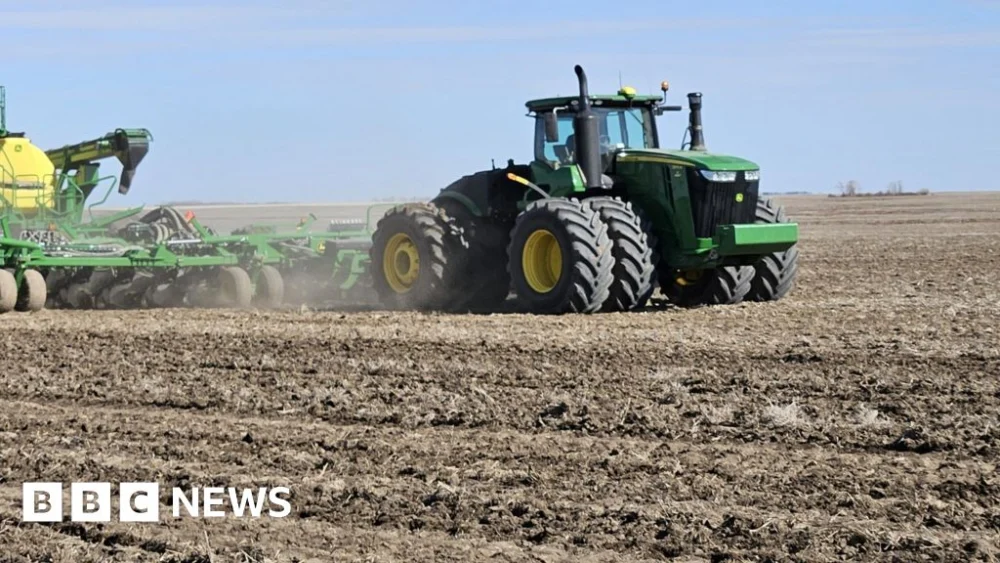
David Silverberg, Technology Reporter
Getty Images
The US has fewer but more "tech dense" farms according to a government report.
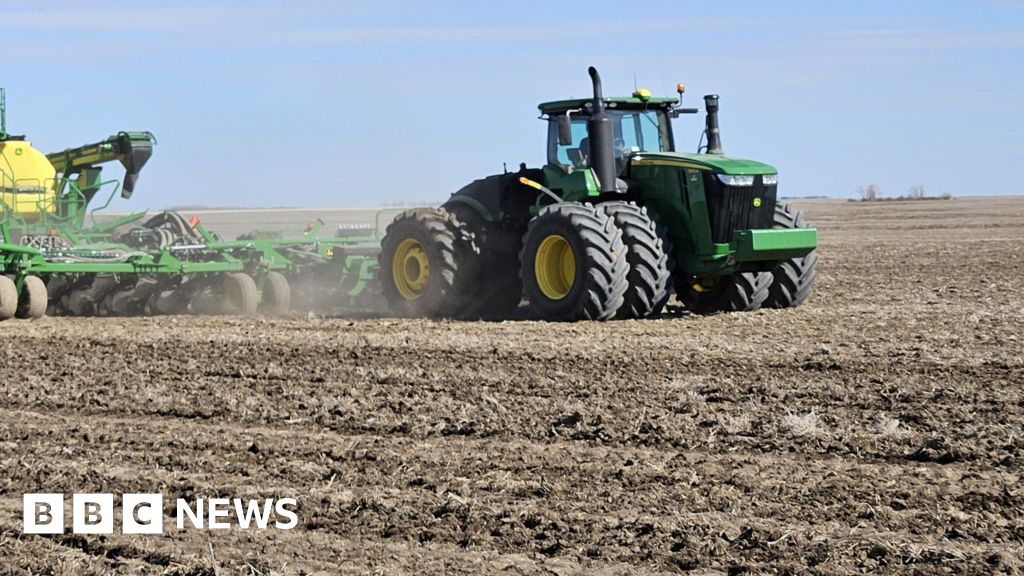
Jake Leguee, a third-generation farmer operating on 17,000 acres in Saskatchewan, Canada, has witnessed a profound transformation in agriculture since his grandfather first purchased the land in 1956. Generations of the Leguee family have cultivated crops like canola, wheat, flax, and green lentils. As a child, Jake observed his father and grandfather meticulously sowing seeds and spraying crops from their tractor, their shirts often drenched in sweat from long, arduous days under the sun. "It was a lot less efficient back then," Leguee reflects. "Today, technology has vastly improved the job that we do."
To maintain his farm’s competitiveness in an ever-evolving agricultural landscape, Leguee has embraced numerous technological innovations, particularly in the realm of crop spraying. By integrating advanced software and remote cameras onto his John Deere tractor, he can now eradicate weeds with remarkable efficiency, a critical step farmers undertake before planting seeds. "It can look down and spray a nozzle when the sensors pick a weed, while we’re going around 15 miles an hour," Leguee explains. This precision application significantly reduces the amount of pesticide used, as the nozzles are only activated when weeds are detected, a stark contrast to the broad, blanket spraying methods of the past. Leguee emphasizes that the return on investment for these technological upgrades is often substantial. "There are low-cost solutions that won’t be as expensive as new spraying tech, and they could be an app to help you better keep your records, for example," he adds, highlighting the accessibility of these advancements.
Jake Leguee’s farm in Saskatchewan has been in the family since the 1950s.
This paradigm shift is not unique to Leguee’s operation; it’s a lesson being adopted by farmers across North America. A comprehensive 2024 McKinsey survey revealed that a significant 57% of North American farmers are inclined to experiment with new yield-increasing technologies within the next two years. This trend is further substantiated by a 2022 report from the US Department of Agriculture, which indicated that while the overall number of farms in the country is declining, the remaining farms are becoming increasingly "tech dense."
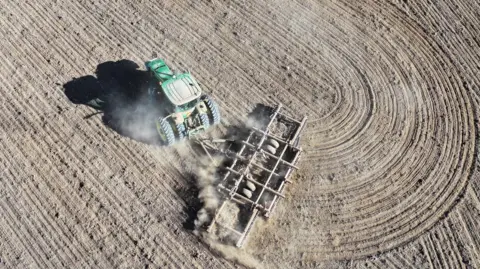
Norah Lake, proprietor and farmer at Vermont’s Sweetland Farms, underscores the cyclical nature of crop farming, describing it as a constant process of "looking forward and then backwards and then forwards and then backwards." In the past, Lake relied on tools like Microsoft Excel to meticulously record and analyze data from previous harvests, comparing yields from different years. "I’d want to know that if we planted 100 bed feet of broccoli, what did we actually produce?" she asks. More recently, Lake, who cultivates a diverse range of vegetables including asparagus, tomatoes, and zucchini, alongside raising pastured meat, has transitioned to using software and a dedicated app from a company named Tend. Her objective was to digitize and streamline these previously labor-intensive tasks into a manageable technological solution accessible via her cellphone or computer.
Now, Lake can seamlessly input harvest numbers into Tend, and the software provides detailed insights and actionable advice on optimizing crop management for upcoming harvests. "We can use Tend to calculate the quantity of seed that we need to order based on the row feet of a particular crop that we want to harvest," she states, illustrating the precise planning capabilities now at her disposal.
Syngenta Group
Cropwise uses 20 years of weather data to help help advise farmers.
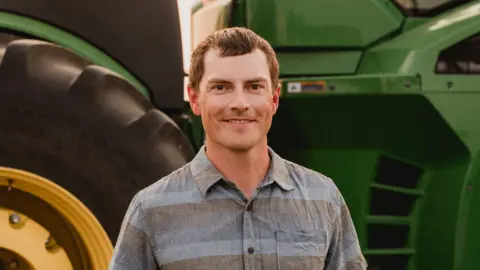
The agricultural technology sector is brimming with innovative solutions designed to assist farmers. Syngenta, a global agri-tech powerhouse headquartered in Switzerland, offers its farmers the Cropwise software. This platform leverages artificial intelligence and satellite imagery to provide farmers with guidance on their next steps, or to alert them to emergent issues. "It can tell the farmer that you need to visit the southeast corner of your field because something is not right about that section, such as a pest outbreak," explains Feroz Sheikh, chief information officer at Syngenta Group. He further elaborates on the system’s capabilities: "And the system also has 20 years of our weather pattern data fed into a machine learning model, so we know exactly what kind of conditions lead to what outcome." This sophisticated data analysis empowers farmers to proactively protect their crops, for instance, by preparing for an impending frost that could devastate a significant portion of their acreage.
In Germany, Jean-Pascal Lutze founded NoMaze with the mission of equipping farmers with a more profound understanding of how different crops perform under varying climate conditions. The company’s software, rolling out this year, is designed to provide predictive insights. "We did field tests in a variety of environments and then created simulations through our computer model to give clients better insight into, say, how much water to use, how to get the maximum yield," Lutze explains, highlighting the precision agriculture capabilities offered.
Getty Images
If the tech works then it could lead to lower food prices.
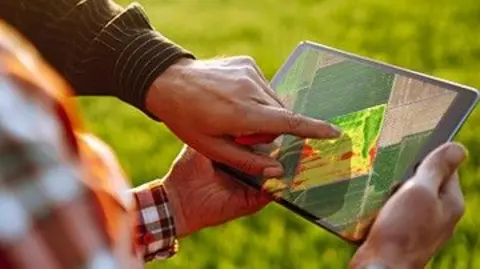
The widespread adoption of these advanced technologies holds the potential for significant benefits extending to the consumer, according to Heather Darby, an agronomist and soil specialist at the University of Vermont. By increasing food production and reducing crop failures, these innovations can contribute to more stable and potentially lower food prices at the grocery store. "When farmers get help to avoid crop failures, that could lead to a more controlled farm environment and a reliable and secure food system," Darby asserts.
Back in Saskatchewan, Leguee observes a generational divide in technology adoption, with younger farmers readily embracing new tools while older farmers may be more resistant to significant change. He stresses the importance of an open mindset. "After all, when you think about it, some of these farms are multi-million-dollar businesses that are supporting multiple families. We need to embrace technology that works for us." Leguee concludes with a poignant observation: "I heard someone say once: ‘If you treat farming as a business, it’s a great way of life, but if you treat your farming as a way of life, it’s a horrible business.’" This sentiment encapsulates the evolving nature of modern agriculture, where technological integration is not merely an option but a necessity for long-term viability and success. The "tech dense" farm is emerging not as a futuristic concept, but as a present-day reality shaping the future of food production.



 George Anjay
 Nakalama John
 Ramos Leo
 Roy Suryo
 Nana Banana