atisusanti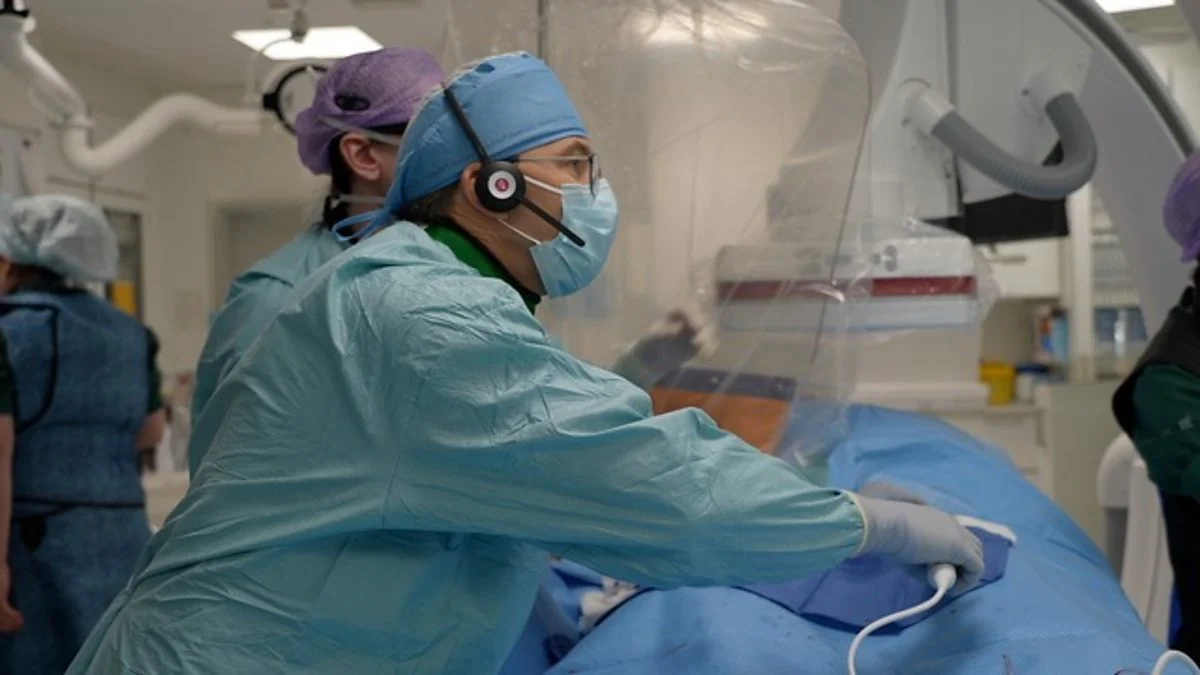
In the ever-evolving landscape of medical innovation, a revolutionary convergence of cutting-edge technology and life-saving cardiac procedures is redefining the boundaries of what’s possible. Adrienne Murray, a keen observer of technological advancements, delves into the transformative impact of new 3D-imaging technology, exploring its burgeoning role in supporting intricate heart surgeries. This sophisticated approach promises to usher in an era of enhanced precision, improved patient outcomes, and a deeper understanding of the human heart’s complex anatomy. Simultaneously, Andrew Rogers, a seasoned tech journalist, is on the ground at the prestigious London Gaming Festival, engaging with ambitious game developers who are poised to unveil the next seismic shifts in the interactive entertainment industry. Their innovative pitches, fueled by groundbreaking technologies and imaginative storytelling, signal a vibrant future for gaming, promising experiences that will captivate and immerse players in unprecedented ways.
The application of 3D-imaging technology in cardiac surgery represents a paradigm shift, moving beyond the limitations of traditional two-dimensional views. Historically, surgeons relied on a combination of X-rays, CT scans, and MRI scans, which, while invaluable, often presented a fragmented picture of the heart’s intricate structures. The advent of advanced 3D reconstruction and visualization tools has fundamentally altered this dynamic. These technologies allow for the creation of highly detailed, patient-specific three-dimensional models of the heart, encompassing its chambers, valves, major arteries, and veins. These models are not static representations; they are dynamic, allowing surgeons to virtually explore the heart from every conceivable angle, dissect its complex vasculature, and even simulate the effects of potential surgical interventions before setting foot in the operating room.
One of the primary benefits of this enhanced visualization is its profound impact on pre-operative planning. Surgeons can now meticulously plan complex procedures, identifying critical anatomical landmarks, potential challenges, and the optimal approach with a level of detail previously unimaginable. This meticulous planning phase significantly reduces the element of surprise during surgery, allowing for more efficient and confident execution of surgical steps. For procedures involving delicate valve repair or replacement, the precise mapping of valve structures and surrounding tissues is paramount. 3D imaging provides an unparalleled view, enabling surgeons to select the most appropriate prosthetic valve, determine the optimal placement, and anticipate any anatomical variations that might complicate the procedure.
Furthermore, the integration of 3D imaging extends beyond mere planning; it actively supports the surgical process itself. During an operation, these detailed 3D models can be displayed on high-resolution monitors in the operating room, providing real-time guidance to the surgical team. Augmented reality (AR) technology is also beginning to play a significant role, overlaying the virtual 3D heart model onto the patient’s actual anatomy during surgery. This allows surgeons to "see through" tissues and precisely locate critical structures, minimizing the risk of inadvertent damage to surrounding healthy tissue. This level of intra-operative guidance is particularly crucial in minimally invasive cardiac surgeries, where the surgeon’s view is often limited by small incisions.
The benefits for patients are substantial. Enhanced precision in surgical execution leads to reduced operative times, smaller incisions, and faster recovery periods. The ability to accurately assess and address complex congenital heart defects in children, for instance, is dramatically improved. These defects, which can be incredibly intricate, require a deep understanding of abnormal anatomy, which 3D imaging readily provides. Surgeons can better plan the sequence of repairs, anticipate the flow of blood, and ensure the most effective reconstruction for the developing heart.
Beyond the immediate surgical benefits, 3D imaging is also proving invaluable for medical education and training. Aspiring cardiac surgeons can now train on highly realistic virtual heart models, practicing complex procedures in a risk-free environment. This hands-on experience with virtual anatomy accelerates their learning curve and builds confidence before they operate on live patients. The ability to simulate various pathological conditions and surgical scenarios allows for comprehensive training that would be impossible with traditional methods.
The development of this sophisticated 3D imaging technology is not a monolithic process; it involves the collaboration of engineers, software developers, and medical professionals. The creation of these patient-specific models often begins with high-resolution CT or MRI scans, which are then processed by specialized software algorithms. These algorithms segment the various cardiac structures, creating a digital blueprint of the heart. Advanced rendering techniques then transform this data into interactive 3D visualizations that can be manipulated and explored. The ongoing refinement of these algorithms and visualization techniques is leading to even greater accuracy and detail, further enhancing their utility in clinical practice.
The potential applications of this technology are not limited to the operating room. 3D models can also be used to communicate complex cardiac conditions to patients and their families, fostering a better understanding of their health and the proposed treatment plan. This improved patient engagement can lead to greater adherence to post-operative care and a more positive overall experience.
Looking ahead, the integration of artificial intelligence (AI) with 3D imaging holds immense promise. AI algorithms could be trained to identify subtle abnormalities in the 3D models that might be missed by the human eye, flagging potential risks or suggesting optimal surgical strategies. AI could also assist in automating parts of the 3D model creation process, making the technology more accessible and efficient. The continued miniaturization and increased power of imaging hardware will also contribute to more detailed and rapid image acquisition.
Meanwhile, at the bustling London Gaming Festival, Andrew Rogers is immersed in a world of pixels, code, and boundless imagination. The festival serves as a crucial platform for independent game developers, offering them a chance to showcase their passion projects and secure the funding and recognition needed to bring their visions to life. The pitches being presented are not just about incremental improvements; they are about pushing the envelope of interactive entertainment, exploring new genres, and leveraging emerging technologies to create truly unique experiences.
One of the dominant themes emerging from the festival is the exploration of narrative depth and player agency. Developers are moving beyond linear storytelling, crafting games where player choices have meaningful consequences, shaping the narrative and influencing the game world. This is often achieved through sophisticated branching dialogue systems, intricate quest design, and dynamic world-building that responds to player actions. The aim is to create a sense of genuine immersion, where players feel like active participants in a living, breathing story, rather than passive observers.
The technical ambition on display is also striking. Developers are pushing the boundaries of graphical fidelity, utilizing advanced rendering techniques and sophisticated physics engines to create visually stunning and believable game worlds. Beyond the visual spectacle, there’s a strong emphasis on innovative gameplay mechanics. This includes the exploration of novel control schemes, the integration of procedurally generated content to ensure endless replayability, and the development of AI-driven non-player characters (NPCs) that exhibit more realistic and complex behaviors.
The rise of virtual reality (VR) and augmented reality (AR) continues to be a significant talking point at the festival. While VR has already made its mark, developers are refining the technology to create more comfortable and immersive experiences, focusing on intuitive controls and compelling content that fully leverages the unique capabilities of the medium. AR, on the other hand, is being explored for its potential to blend the digital and physical worlds in new and exciting ways, creating experiences that extend beyond the confines of a screen. Imagine games that use your real-world environment as a canvas for fantastical adventures or educational tools that bring historical artifacts to life.
Another key area of innovation lies in the realm of multiplayer and social gaming. Developers are focusing on creating robust online experiences that foster community and collaboration. This includes the development of sophisticated matchmaking systems, innovative social features that encourage interaction, and games designed from the ground up to be played with friends. The emphasis is on creating shared experiences that are not only entertaining but also foster meaningful connections between players.
The economic landscape of game development is also a significant consideration. Many of the pitches are addressing new monetization models, moving beyond traditional retail sales to explore subscriptions, in-game purchases, and even blockchain-based technologies for digital ownership. The challenge for developers is to implement these models in a way that is fair to players and does not detract from the overall gaming experience.
The London Gaming Festival, therefore, is not just a showcase of games; it’s a vibrant hub of creativity, innovation, and entrepreneurial spirit. The developers pitching their projects are not just seeking funding; they are seeking to shape the future of entertainment. Their passion, combined with the relentless march of technological progress, ensures that the world of gaming will continue to evolve in exciting and unpredictable ways, offering players ever more immersive, engaging, and unforgettable experiences. The convergence of advanced 3D imaging in medicine and the groundbreaking innovations in the gaming industry, though seemingly disparate, both underscore a shared human drive: to explore, to understand, and to push the boundaries of what is possible through technology.



 Nakalama John
 George Anjay
 Ramos Leo
 Roy Suryo