
 George Anjay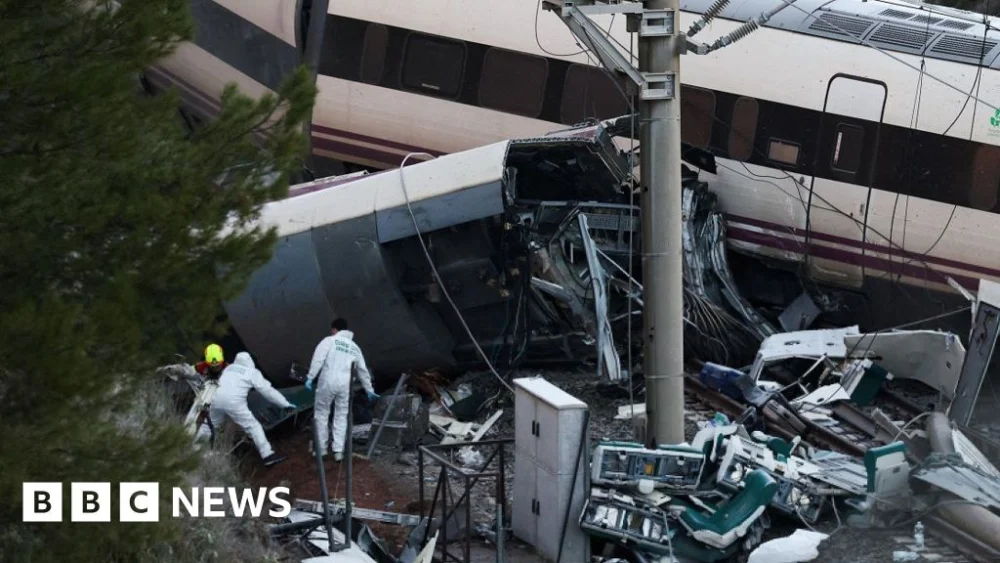
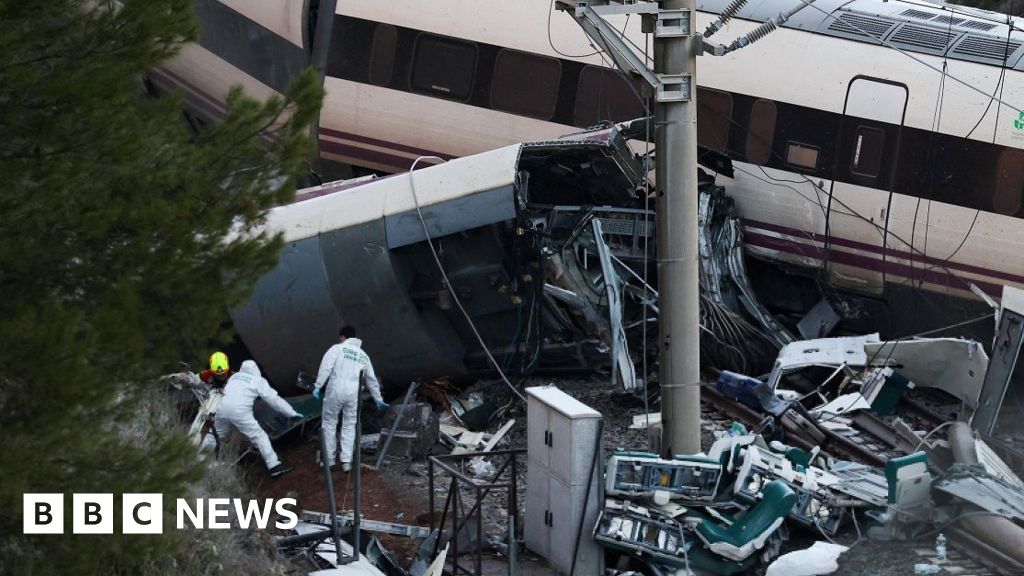
Heavy machinery is being used to assist in the painstaking recovery efforts following a catastrophic two-train collision in southern Spain, which has tragically claimed the lives of at least 41 people. The grim task has extended through a second night as rescue teams fear more bodies may be trapped within the mangled wreckage. The devastating incident occurred on Sunday evening when carriages of a Madrid-bound train derailed and inexplicably veered onto opposite tracks, directly colliding with an oncoming train near the town of Adamuz. The impact was so severe that it resulted in the deaths of 41 individuals and left over 120 others injured, with many still in critical condition.
At the heart of the ongoing investigation lies a potential "gap" in the rail, with a faulty or damaged weld being intensely scrutinized as a primary factor. This alarming detail, reported by Spanish media, has cast a shadow of doubt over the safety of the nation’s rail infrastructure. In response to the gravity of the situation, Prime Minister Pedro Sanchez has cancelled his planned attendance at the World Economic Forum in Davos, pledging a thorough and unwavering commitment to uncovering the truth behind Spain’s worst train disaster in over a decade. The nation is united in grief, with King Felipe and Queen Letizia set to visit the crash site later today, a somber testament to the profound impact of this tragedy. In a poignant display of national mourning, three days of official mourning have been declared across Spain.
Transport Minister Óscar Puente has cautioned that the death toll is "not yet final," underscoring the perilous nature of the recovery operations and the ongoing efforts to identify all the victims. He further stated that the comprehensive investigation into the crash could take at least a month to conclude, describing the incident as "extremely strange." The Spanish media has pinpointed a reported 30cm gap in one of the rails as the current focal point of the investigation. Technicians, speaking to the El Mundo newspaper, have suggested that a "bad" or "deteriorated" weld is "more than likely" the underlying cause of the derailment.
Ignacio Barron, the head of Spain’s Commission of Investigation of Rail Accidents (CIAF), articulated the complex nature of such inquiries, stating on RTVE that "What always plays a part in a derailment is the interaction between the track and the vehicle, and that is what the commission is currently [looking into]." However, El País newspaper has raised further questions, reporting that it remains unclear whether the alleged rail fault was a cause or a consequence of the catastrophic crash itself.
Adding another layer to the unfolding narrative, Renfe President Álvaro Fernández Heredia reportedly ruled out "human error" on Monday, explaining to the RNE programme Las Mañanas that "if the driver makes a mistake, the system itself corrects it." Heredia also asserted that both trains were operating well within the maximum speed limit on the specific stretch of track where the collision occurred. However, counter-narratives have emerged, with Spanish media reporting that train drivers had previously voiced concerns about the condition of the Madrid-Andalusia line as far back as August, and had consequently requested a speed limit reduction to under 250kph. In a letter addressed to Adif, the state-owned rail infrastructure administrator, the drivers’ union allegedly highlighted an increase in the number and weight of high-speed trains, which they claimed was leading to a greater incidence of failures.
The scale of the disaster is further emphasized by the fact that 400 passengers and staff were on board the two trains when the collision occurred. Emergency services responded heroically, treating 122 individuals. Tragically, 41 people, including several children, remain hospitalized, with 12 of those in intensive care units. Officials have confirmed that the majority of those killed and injured were in the front carriages of the Huelva-bound train, bearing the brunt of the initial impact.
Salvador Jimenez, a journalist for RTVE who was a passenger on one of the trains, described the terrifying moments of the crash, likening the impact to an "earthquake." He recounted, "I was in the first carriage. There was a moment when it felt like an earthquake and the train had indeed derailed." Disturbing footage captured at the scene vividly illustrates the devastation, showing some train carriages overturned on their sides. Rescuers are seen bravely scaling the precarious structures, working to extract passengers from the mangled doors and windows of the tilted carriages. Another passenger, José, speaking to public broadcaster Canal Sur, painted a harrowing picture of the immediate aftermath, stating, "There were people and screaming, calling for doctors."
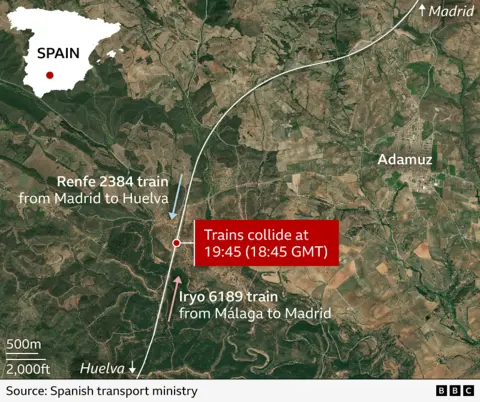
The rail network operator, Adif, confirmed that the collision took place at 19:45 local time (18:45 GMT) on Sunday. The incident occurred approximately an hour after one of the trains had departed Málaga, heading north towards Madrid. The train derailed on a seemingly straight stretch of track near the city of Córdoba. The immense force of the collision propelled the carriages of the second train into an embankment, a detail confirmed by the transport minister. As a direct consequence of this catastrophic event, all high-speed rail services between Madrid and the major southern cities of Málaga, Córdoba, Sevilla, and Huelva have been suspended until at least Friday, disrupting travel for thousands and highlighting the ongoing impact of this tragic accident. The investigation continues to unravel the complex chain of events that led to this devastating loss of life, with a focus on the integrity of the rail infrastructure and the procedures in place to ensure passenger safety.




 Roy Suryo

 Nakalama John
 atisusanti
 Ramos Leo
