George Anjay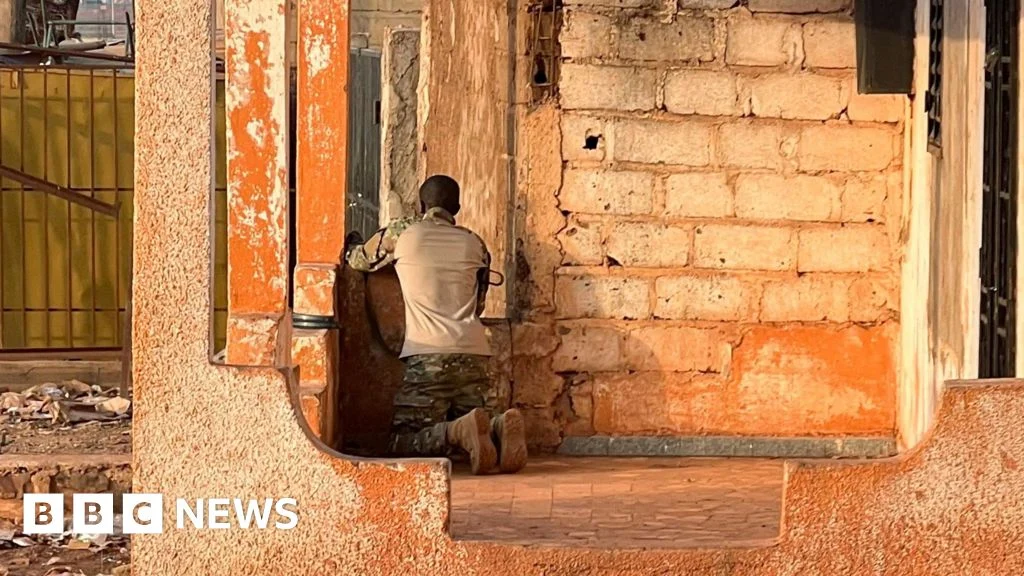
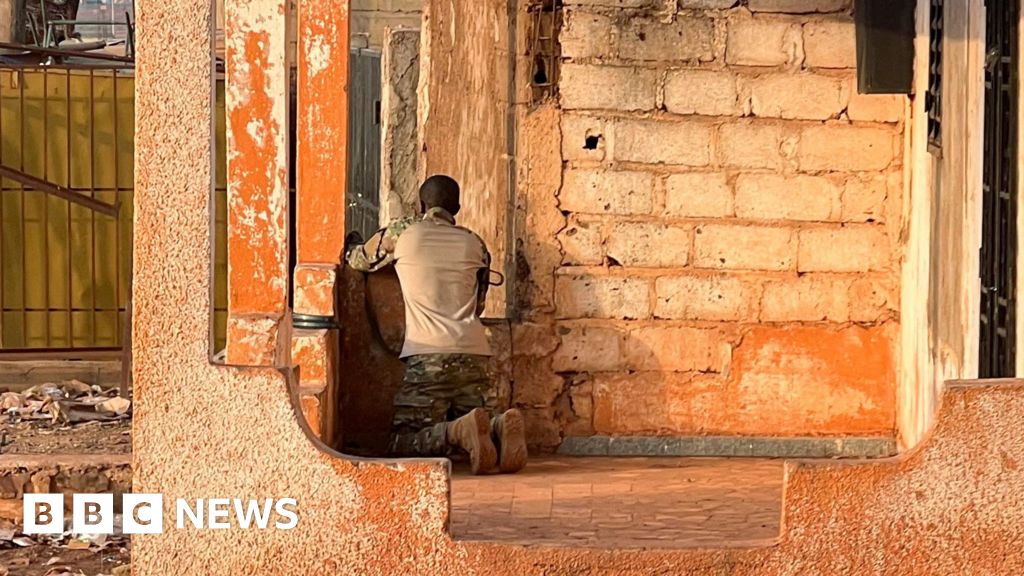
Explosions and sustained gunfire rocked Mali’s capital, Bamako, and reverberated across the nation as a complex network of armed groups launched a series of coordinated assaults on Sunday. The unprecedented scale and synchronization of these attacks signal a significant escalation in the ongoing conflict that has destabilized the West African nation for over a decade. While Mali’s military stated on Saturday evening that efforts to repel the assaults were underway and that some militants had been routed, reports from the ground suggest the fighting is far from over and has spread to key strategic locations.
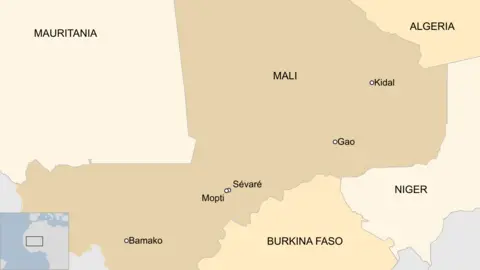
Fighting has been particularly intense around Kati, a town housing a major military base just outside Bamako, and has also been reported in the northern city of Kidal, the central cities of Sevare and Mopti, and the strategic hub of Gao. On Sunday morning, gunfire resumed in Kidal, according to multiple eyewitness accounts and local media. This widespread offensive marks a critical juncture in Mali’s protracted struggle against a multi-faceted insurgency.
For years, Mali has been a battleground for various armed factions, including groups affiliated with al-Qaeda and the Islamic State group, alongside a persistent separatist movement in the country’s vast northern regions. However, Sunday’s attacks reveal a new level of strategic coordination between these disparate groups.
Intelligence gathered and confirmed by multiple sources indicates that the assault involved a strategic alliance between the Azawad Liberation Front (FLA), a prominent separatist group seeking an independent Tuareg state in northern Mali, and the Jama’at Nusrat al-Islam wal-Muslimin (JNIM), an al-Qaeda-linked jihadist organization. This unprecedented collaboration appears to have been meticulously planned and executed.
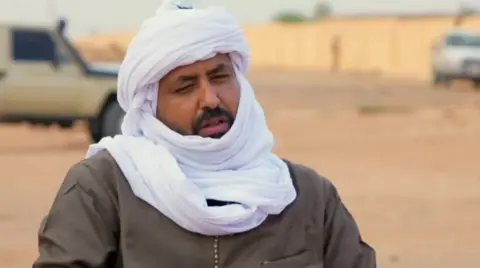
"We had been working on this operation for a long time, in a well-planned manner, and in fact, in alliance with [JNIM]," Mohamed Elmaouloud Ramadane, the spokesman for the FLA, stated in a direct communication to the BBC. He emphasized the critical nature of this alliance, adding, "It is difficult to find any solution without their participation, and there was co-ordination." JNIM has also issued a statement confirming the joint operation with the FLA, underscoring the strategic implications of this newfound unity.
One prominent analyst, speaking to the BBC, described the coordinated offensive as potentially the "largest jihadist attack in years," highlighting the significant capabilities and reach of the combined forces. This unified front poses a formidable challenge to the Malian government and its international partners.
Mali’s military initially claimed to have repelled the attacks, asserting that "terrorist groups" had been "routed" with "several hundred" militants killed. However, the BBC has not been able to independently verify these claims. Reports from areas affected by the fighting suggest that resistance continues, and the Malian army’s capacity to contain the widespread incursions remains uncertain.
Mohamed Elmaouloud Ramadane of the FLA offered a contrasting narrative. "We are in Kidal and it has not fallen completely," he said, acknowledging the continued presence of Malian army elements and Russian mercenaries in the city. However, he asserted that "All of Gao’s gates have fallen, but the camps of the army have not." He had earlier posted unverified footage on social media purportedly showing FLA forces taking control of a military camp occupied by the Malian army and Russian mercenaries in Kidal, as well as a military helicopter allegedly shot down near Gao.
An FLA field commander, who participated in the assault on Kidal, revealed to the BBC that their forces had been preparing for this offensive "for months." Their immediate objective was to disrupt supply lines, specifically by blocking the road between Kidal and Tessalit, to prevent Malian army reinforcements from reaching the embattled city. "Our main goal now is to control Gao and then Timbuktu will be easy to fall," the commander stated, outlining an ambitious territorial expansion plan.
On Sunday, fighting reportedly resumed in Kidal with the stated aim of "driving out the last Russian fighters," according to AFP news agency, citing Ramadane. A local official corroborated these reports, confirming to AFP that intense fighting had continued between the Malian army, Russian mercenaries, and the rebel forces, with residents hearing sporadic gunfire throughout the day.
The impact of these coordinated attacks has been felt acutely in Bamako. Checkpoints have been established on roads leading to the capital’s international airport, and vehicles are undergoing rigorous searches. In response to the escalating security situation, a curfew has been imposed in Bamako, effective from 21:00 to 06:00 local time for the next three nights, underscoring the government’s efforts to regain control and restore order.
The UK Foreign Office has issued a strong advisory, recommending against all travel to Mali in the wake of the attacks. They also confirmed that Bamako International Airport had been temporarily closed, disrupting travel and reinforcing the severity of the security crisis.
Ulf Laessing, head of the Sahel programme at the Konrad Adenauer Foundation in Mali, reiterated the significance of the event, describing it as the "largest co-ordinated jihadist attack on Mali for years." This assessment highlights the evolving threat landscape in the Sahel region, where extremist groups are demonstrating increasing sophistication and coordination.
The international community has reacted with alarm and condemnation. Mahmoud Ali Youssouf, Chair of the African Union Commission, expressed his "deep concern" and "strongly condemned these acts which risk exposing civilian populations to significant harm." He called for a unified response to address the escalating violence.
UN Secretary-General Antonio Guterres also condemned the "acts of violence," expressing his "solidarity with the Malian people." His spokesman stated that Guterres called for "coordinated international support to address the evolving threat of violent extremism and terrorism in the Sahel and to meet urgent humanitarian needs." The US State Department’s Africa bureau echoed these sentiments, strongly condemning the attacks and extending condolences to the victims and their families, affirming their solidarity with the Malian people and government.
The Azawad Liberation Front (FLA) has been a persistent force in northern Mali for years, advocating for the establishment of its own Tuareg homeland. While they currently exercise de facto control over significant portions of the north, this coordinated offensive appears aimed at consolidating their territorial gains and potentially expanding their influence.
Mali is currently governed by a military junta led by General Assimi Goïta, who came to power in a coup in 2020 with promises of restoring security and countering armed groups. Initially, the junta enjoyed popular support, fueled by widespread frustration with the persistent security crisis. However, the country has continued to grapple with instability, with large swathes of the north and east remaining outside government control.
The departure of UN peacekeepers and French forces, following the junta’s rise to power, coupled with the Malian military’s reliance on Russian mercenaries to combat insecurity, has altered the geopolitical landscape. This new alliance between separatist and jihadist groups, however, presents a complex and deeply concerning challenge for the Malian government and its allies, signaling a potential shift in the dynamics of the conflict. The coordinated nature of these attacks underscores the urgent need for a comprehensive and multifaceted approach to address the root causes of instability and violence in Mali and the wider Sahel region.

 Nakalama John
 Ramos Leo
 Nana Banana