George Anjay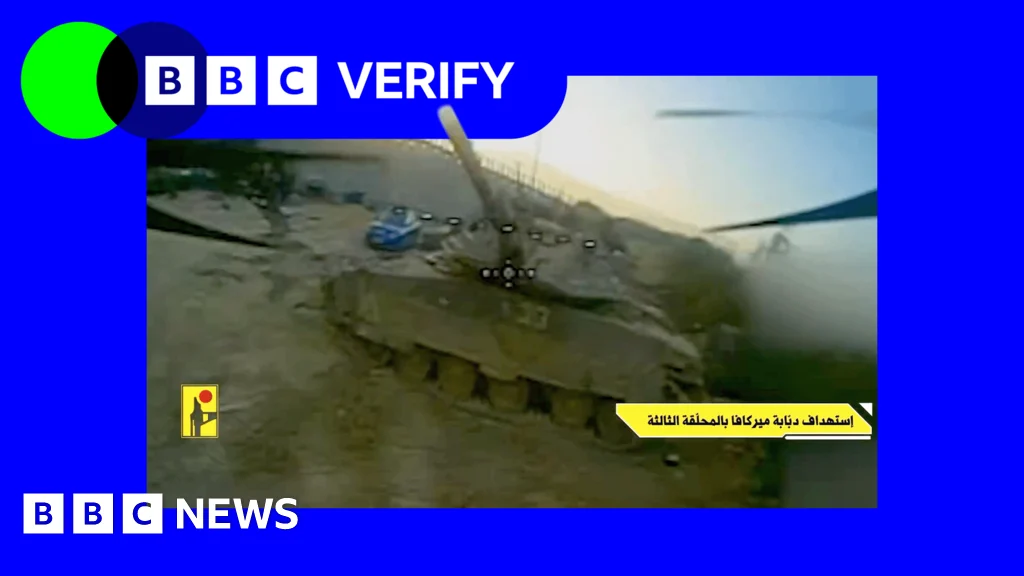
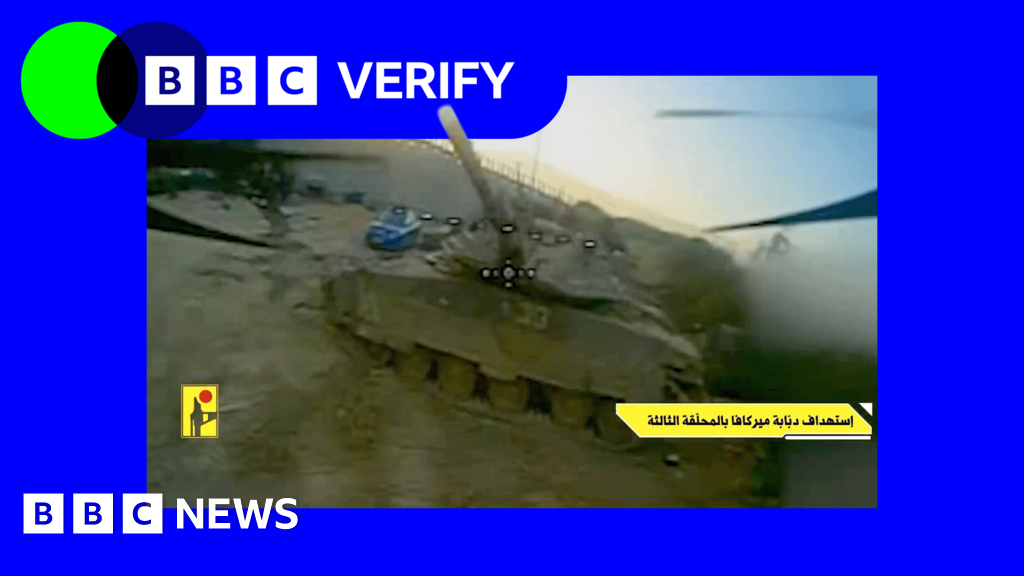
Hezbollah’s increasing deployment of small, first-person view (FPV) drones against Israel signifies a significant evolution in its combat strategies, posing a potent challenge to sophisticated air defense systems. These agile and inexpensive unmanned aerial vehicles, often controlled via fiber-optic cables to circumvent electronic jamming, have been meticulously documented by BBC Verify. Analysis of 35 geolocated videos, shared by the Lebanese armed group since March 26, reveals targeted strikes against Israeli soldiers, armored vehicles, and air defense installations within southern Lebanon and northern Israel.
Military analysts and security experts are highlighting the effectiveness of these FPV drones, noting that the Israel Defense Forces (IDF) has "so far been unable to develop any effective countermeasures." The small size and erratic flight paths of these drones allow them to bypass conventional detection systems with relative ease. Furthermore, their construction from readily available commercial and 3D-printed components makes them exceptionally cost-effective, especially when contrasted with the high-value targets they are capable of destroying. This makes the FPV drone a potent force multiplier for Hezbollah.
The widespread adoption of FPV drones has been a hallmark of modern warfare, as notably demonstrated during the Russia-Ukraine conflict. Their impact on battlefield dynamics is undeniable, forcing a reevaluation of defensive strategies. While the IDF has not publicly released comprehensive casualty figures, Israeli media reports indicate that at least four IDF soldiers and one civilian have been killed by FPV drone attacks, with dozens more sustaining injuries.
In response to this escalating threat, the IDF has acknowledged the gravity of the situation. A spokesperson informed BBC Verify that the military is allocating "significant resources" to bolster its defensive capabilities. This includes the development of "more effective alert models" and intensified training for soldiers to enhance their "readiness and increasing awareness of the threat." Concurrently, the Institute for National Security Studies has revealed that the IDF itself has been utilizing FPV drones for several years, employing them in ongoing operations in southern Lebanon and against Hamas in Gaza.
Hisham Jaber, a respected military analyst and former Lebanese army general, elaborated on the FPV drone’s tactical advantages. He stated that these drones are "undetectable by radar," and the "hundreds" that Hezbollah possesses have been effectively employed to disable heavily armored vehicles, including tanks. While Hezbollah has a history of deploying larger attack drones against targets in northern Israel, Jaber emphasized that the FPV drone represents an "entirely different category" of threat due to its specific characteristics and operational deployment.
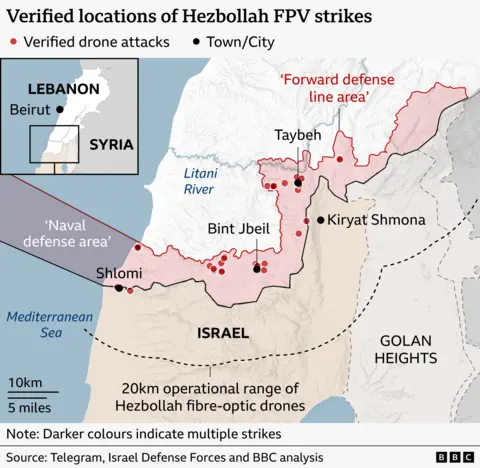
BBC Verify’s investigation uncovered nearly 100 apparent FPV attacks shared on Hezbollah’s Telegram channel since March 26, with 35 of these meticulously verified. Notably, no footage of similar strikes was shared by the group prior to the current conflict’s escalation on March 2. This indicates a deliberate and recent surge in the use of this specific drone type.
One verified video, released on Thursday, showcased a coordinated assault involving at least four FPV drones targeting an Israeli border outpost near Kiryat Shmona. The drones systematically engaged a series of military vehicles, with at least two visibly suffering heavy damage or destruction. Beyond these direct assaults on military hardware, BBC Verify has also documented FPV drone strikes in southern Lebanon, including at least two incidents on April 26 in the town of Taybeh. These videos depict soldiers being targeted, followed by a strike in close proximity to an IDF helicopter that was in the process of rescuing injured troops. Israeli media reports confirmed one soldier was killed and six others wounded in these specific incidents.
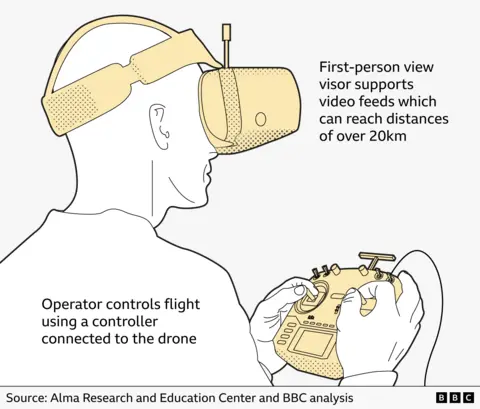
A critical element contributing to the FPV drones’ effectiveness is their reliance on fiber-optic cable connections for control, a departure from traditional radio or wireless signals. This wired approach renders them largely immune to interception by Israel’s current electronic countermeasures. Dr. Andreas Krieg, a security expert from King’s College London, explained to BBC Verify that the fiber-optic tethering renders Israel’s capacity to detect, jam, and intercept these drones "largely irrelevant." Furthermore, it significantly complicates efforts to locate the drone operators.
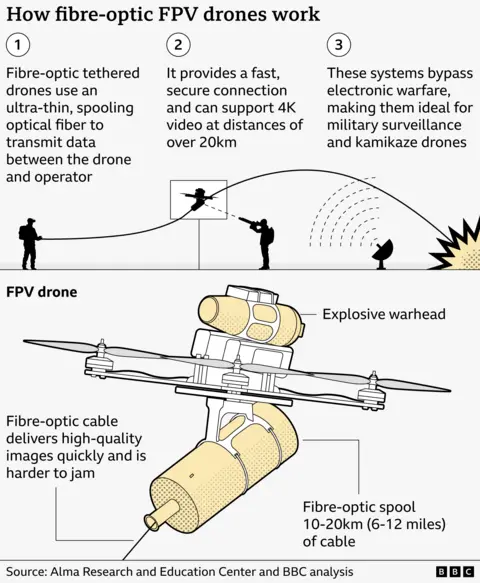
The strategic implications of this technological adaptation are profound. Dr. Krieg noted that Israeli troops are now compelled to "move more cautiously, harden positions, use physical protective measures such as nets and cages, and devote more attention to immediate local defense." This necessitates a fundamental shift in operational procedures and defensive postures.
Hezbollah is believed to be assembling these FPV drones locally, utilizing commercially available components sourced from international markets, primarily China. The estimated cost per drone ranges between $300 to $500 (£225-£375), a remarkably low figure compared to the potential damage they can inflict. Leone Hadavi, a senior investigator and weapons expert for the Centre for Information Resilience, further elaborated on the sourcing of these drones. He stated that tracing their components has proven exceedingly difficult due to their widespread availability and non-military nature. These FPV drones are typically armed with RPG (rocket-propelled grenade) warheads, of which there is an ample supply in southern Lebanon.
Hadavi also highlighted the significant "psychological implication" of the increasing FPV drone strikes on Israeli troops. Their capacity to threaten highly protected armored vehicles instills a heightened sense of vulnerability and anxiety, impacting morale and operational effectiveness.
The current escalation of hostilities between Israel and Hezbollah commenced on March 2, two days after a significant retaliatory strike by the United States and Israel in Iran, which resulted in the death of Supreme Leader Ayatollah Ali Khamenei. Following Khamenei’s demise, Hezbollah initiated rocket barrages into Israel, prompting widespread Israeli airstrikes in Lebanon and a subsequent ground invasion of southern Lebanon.
Lebanon’s health ministry has reported a tragic toll, with at least 2,896 individuals killed since the conflict began. This figure includes over 400 fatalities since US President Donald Trump announced a ceasefire in April. It is important to note that these figures do not differentiate between combatant and civilian casualties. The conflict has also led to a massive displacement crisis, with over one million people displaced within Lebanon. Israel, in turn, has reported the deaths of four soldiers and 18 civilians during the ongoing exchanges.
Additional reporting by Lamees Altalebi, Thomas Spencer, Deena Easa, Sherie Ryder and Paul Brown, graphics by Tom Shiel.



 Nana Banana
 Ramos Leo
 Nakalama John