
 George Anjay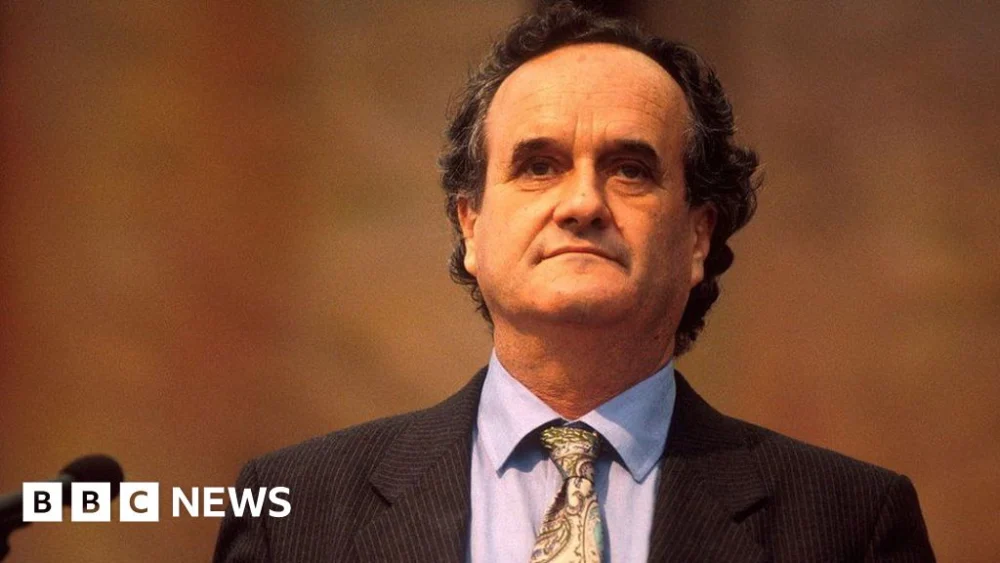
The broadcasting world and India have lost a titan with the passing of Sir Mark Tully, the esteemed journalist and former BBC correspondent, at the venerable age of 90. For over three decades, Sir Mark was the unwavering and beloved "voice of India" for the BBC, his rich, resonant tones becoming synonymous with insightful reporting from the subcontinent. His journalistic career was a tapestry woven with the momentous events of India’s modern history, from the stark realities of war and famine to the profound tremors of riots and assassinations. He fearlessly brought to life pivotal moments such as the devastating Bhopal gas tragedy and the controversial storming of the Sikh Golden Temple by the Indian army, providing a window for global audiences into the complexities of this vibrant nation.
Sir Mark’s dedication to his craft was not without personal peril. In 1992, in the North Indian city of Ayodhya, he found himself in a moment of acute danger. Witnessing the destruction of an ancient mosque by a fervent mob of Hindu hardliners, he was perceived with suspicion by some elements of the crowd. Chants of "Death to Mark Tully" echoed around him, and he was forced to take refuge in a room for several hours before local officials and a Hindu priest intervened to ensure his safety. This event, the demolition of the Babri Masjid, ignited the worst religious violence India had experienced in many decades, a tragedy Sir Mark later described as the "gravest setback" to the secular ideals of the nation since its hard-won independence from Britain in 1947.
Jonathan Munro, Interim CEO of BBC News and Current Affairs, paid a heartfelt tribute, stating, "We are sad to hear the passing of Sir Mark Tully. As one of the pioneers of foreign correspondents, Sir Mark opened India to the world through his reporting, bringing the vibrancy and diversity of the country to audiences in the UK and around the world. His public service commitments and dedication to journalism saw him work as a bureau chief in Delhi, and report for outlets across the BBC. Widely respected in both India and the UK, he was a joy to speak with and will be greatly missed."
India was not merely a place of reporting for Sir Mark; it was his birthplace. Born in Calcutta (now Kolkata) in 1935, he was a product of the British Raj era. His father was a businessman, and his mother hailed from a family with deep roots in Bengal, having served in India as traders and administrators for generations. His early upbringing was overseen by an English nanny who, in a revealing anecdote, once chided him for learning to count by mimicking the family driver, deeming it "the servants’ language, not yours." Ironically, Sir Mark would go on to master Hindi, an accomplishment that deeply endeared him to many Indians. He was affectionately known as "Tully sahib," a testament to his fluency and his genuine warmth and respect for the people he covered. His infectious good cheer and profound affection for India fostered enduring friendships and trust among the country’s political leaders, editors, and social activists.
Sir Mark navigated a delicate balance throughout his life: he was unequivocally English, yet he steadfastly resisted being labelled an "expat passing through." India was his home, the place where he chose to live for the majority of his remarkable life. Following World War Two, at the tender age of nine, he was sent to Britain for his education. He pursued history and theology at Cambridge University, and subsequently attended theological college with aspirations of becoming an ordained clergyman. However, both he and the church eventually decided against this path.
His association with the BBC in India began in 1965, initially as an administrative assistant. It was not long before his keen observational skills and articulate nature led him to a reporting role, where he truly found his calling. His broadcasting style was distinctive, marked by a unique cadence, yet it was the profound strength of his character and his deep understanding of India that captivated listeners. While some critics perceived his reporting as overly sympathetic to India’s endemic poverty and caste-based inequalities, many more admired his unwavering commitment to the principles of religious tolerance, which he saw as the bedrock of independent India. "It’s really important to treasure the secular culture of this country, allowing every religion to flourish," he stated in a 2016 interview with an Indian newspaper. "We must not endanger this by insisting on Hindu majoritarianism."
Sir Mark was never one to remain in the comfort of an armchair. He undertook relentless journeys across India and its neighbouring countries, often opting for the slower, more immersive experience of train travel. He gave voice to the aspirations and anxieties, the triumphs and tribulations, of both ordinary Indians and the nation’s elite. His adaptability was evident in his comfort both in traditional Indian attire, like a kurta, and in Western formal wear.
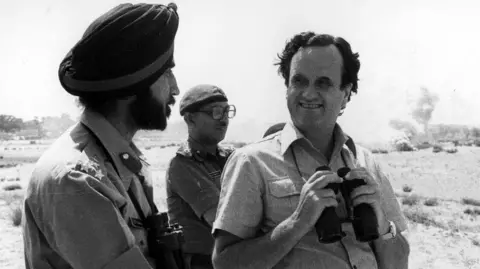
His career in India was not without its challenges. In 1975, during the imposition of a state of emergency by Prime Minister Indira Gandhi, he was summarily expelled from India with just 24 hours’ notice. However, his connection to the country remained unbroken, and he returned 18 months later, making Delhi his permanent base. For over two decades, he helmed the BBC’s Delhi bureau, overseeing not just reporting from India but also from across South Asia. His tenure encompassed seminal events such as the birth of Bangladesh, periods of military rule in Pakistan, the protracted conflict involving the Tamil Tigers in Sri Lanka, and the Soviet invasion of Afghanistan.
In 1993, Sir Mark delivered a powerful and widely publicized speech, accusing the then Director General of the BBC, John Birt, of fostering a culture of "fear" within the corporation. This marked a significant turning point in his relationship with the BBC, and he resigned the following year. Despite his departure from the BBC, his voice continued to resonate on its airwaves. He notably presented Radio 4’s "Something Understood," a program that allowed him to return to his early fascination with faith and spirituality.
In a rare honour for a foreign national, Sir Mark was bestowed with two of India’s most prestigious civilian awards: the Padma Shri and the Padma Bhushan. Britain also recognized his immense contribution to broadcasting and journalism, awarding him a knighthood in the 2002 New Year’s honours list. He humbly described this accolade as "an honour to India." He continued to enrich the literary landscape with his insightful books on India, encompassing essays, analyses, and even short stories, often in collaboration with his partner, Gillian Wright. He lived a modest life in South Delhi, remaining deeply connected to the country he so profoundly understood.
While Sir Mark retained his British nationality, he was also immensely proud to become an Overseas Citizen of India later in life. This dual status, he explained, made him "a citizen of the two countries I feel I belong to, India and Britain," a sentiment that perfectly encapsulated his lifelong dedication and profound connection to both nations.



 Roy Suryo

 Nakalama John
 atisusanti
 Ramos Leo
