atisusanti
Meta, the parent company of Facebook, is set to dramatically increase its investment in artificial intelligence (AI) this year, planning to nearly double its spending to an estimated $135 billion. This substantial financial commitment, primarily allocated to AI infrastructure, underscores Meta’s aggressive strategy to lead in the rapidly evolving AI landscape, even as some industry leaders express concerns about a potential market bubble. The company’s ambitious outlook, shared during a call with financial analysts discussing its 2025 financial results, signals a pivotal year for AI development and integration within Meta’s vast ecosystem.
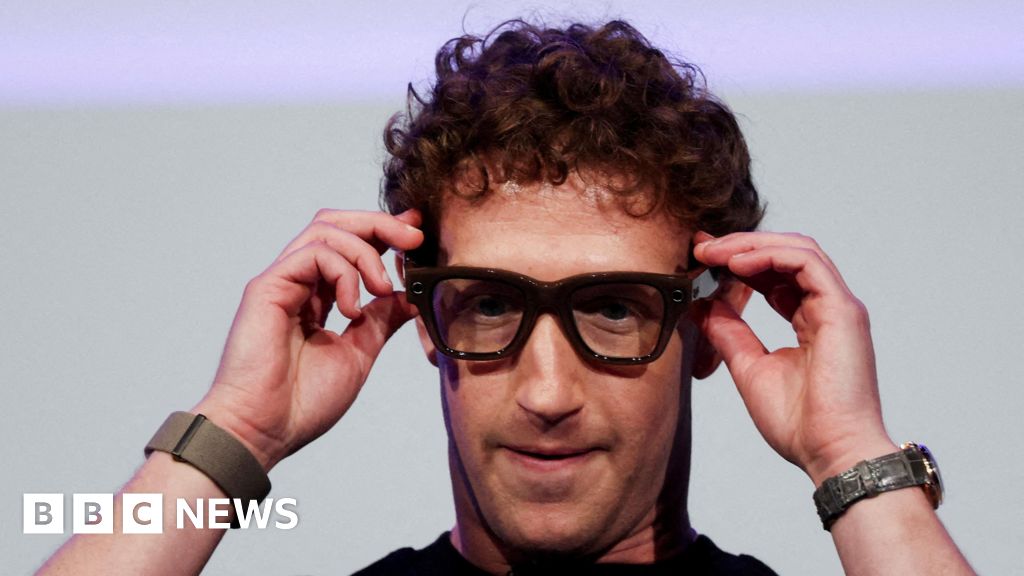
The projected expenditure of up to $135 billion for 2026 represents a significant leap from the $72 billion Meta allocated to AI projects and infrastructure in the previous year. Over the past three years, the tech giant has already invested approximately $140 billion in its pursuit of AI dominance, a testament to its long-term vision and commitment to staying at the forefront of technological innovation. Mark Zuckerberg, Meta’s CEO, articulated this vision by stating his expectation that "2026 will be the year that AI dramatically changes the way we work." This bold prediction comes at a time when Meta’s financial reports indicate that expenses have outpaced revenue growth in the final quarter of 2025, a factor that has compressed profit margins. Despite these financial pressures, Meta’s stock saw a positive reaction, rising by approximately 6.5% in extended New York trading following the announcement of its enhanced AI investment plans.
Beyond the sheer financial outlay, Zuckerberg’s commentary hinted at potential shifts in the company’s workforce structure, driven by AI-powered efficiencies. He observed that "projects that used to take big teams now can be accomplished by a single, very talented person," suggesting that AI tools are enabling unprecedented levels of individual productivity. This observation follows recent workforce adjustments, with Meta laying off several hundred employees earlier this year, primarily from its Reality Labs division, which is central to its metaverse ambitions, hardware development, and AI initiatives. The company is actively integrating AI tools across its operations to empower employees, particularly software engineers, to enhance their output. Zuckerberg emphasized the growing disparity in productivity between those who effectively leverage these AI tools and those who do not, stating, "there is a big delta between the people who do it and do it well and the people who don’t." He further elaborated on the profound impact of AI agents becoming increasingly functional, suggesting, "What we were talking about is, I think it’s very hard for anyone exactly to predict what the shape of how organisations working is going to feel, but I just think the fact that agents are really starting to work now is quite profound."
This aggressive push into AI by Meta, while promising for technological advancement, occurs against a backdrop of widespread industry apprehension regarding a potential AI bubble. Concerns echo the dot-com boom and bust of the early 2000s, where speculative investment led to inflated valuations and subsequent market corrections. Chuck Robbins, the Chairman and Chief Executive of Cisco Systems, voiced these concerns to the BBC, acknowledging AI’s transformative potential, stating it could be "bigger than the internet," but cautioned that "the current market is probably a bubble and some companies won’t make it." Similar sentiments have been expressed by Jamie Dimon, CEO of JPMorgan Chase, and Sundar Pichai, CEO of Google, who have pointed to a degree of "irrationality" in the current AI surge. Sam Altman, whose company OpenAI is widely credited with igniting the current AI frenzy, was more direct in his assessment last year, admitting, "Are we in a phase where investors as a whole are overexcited about AI? My opinion is yes."
The sheer scale of Meta’s planned investment in AI infrastructure, encompassing vast computing power, advanced hardware, and sophisticated software development, positions it to develop and deploy next-generation AI models and applications. This includes enhancing its existing social media platforms with more intelligent content moderation, personalized user experiences, and advanced advertising tools. Furthermore, the investment is crucial for the development of its metaverse initiatives, where AI is expected to play a key role in creating immersive virtual environments, realistic avatars, and intelligent virtual assistants. The company is also investing in AI for its hardware products, such as its virtual and augmented reality headsets, aiming to create more intuitive and responsive user interactions.
The implications of this massive investment extend beyond Meta’s internal operations and product development. It signals a significant shift in the global technology landscape, potentially dictating the pace of AI innovation and adoption across various industries. By pouring resources into AI, Meta aims to solidify its position as a leader in this transformative field, competing directly with other tech giants like Google, Microsoft, and Amazon, who are also making substantial AI investments. The company’s strategy appears to be one of "go big or go home," betting that early and substantial investment will yield long-term competitive advantages and market leadership.
However, the significant financial outlay also carries inherent risks. The substantial capital required for AI development, particularly for cutting-edge research and large-scale infrastructure, can be a drain on financial resources if returns are not realized as expected. The rapid pace of AI advancement means that technologies can become obsolete quickly, necessitating continuous investment to stay relevant. Moreover, the ethical and societal implications of advanced AI, including issues of bias, privacy, and job displacement, are becoming increasingly important considerations. Meta’s commitment to AI must therefore be balanced with responsible development and deployment practices.

The current financial climate, with rising interest rates and concerns about economic slowdowns, adds another layer of complexity to such large-scale investments. While Meta’s financial strength allows it to undertake such a bold initiative, the company will be under intense scrutiny to demonstrate tangible returns on its AI investments. The success of this strategy will not only depend on technological breakthroughs but also on Meta’s ability to effectively integrate AI into its business models and translate technological advancements into profitable products and services.
In conclusion, Meta’s decision to nearly double its AI spending in 2026 underscores its unwavering commitment to artificial intelligence as a core pillar of its future growth and innovation. This substantial investment signals a strategic imperative to lead in the AI revolution, even amidst broader industry concerns about market exuberance. The company’s vision, articulated by Mark Zuckerberg, points towards a future where AI fundamentally reshapes how we work and interact, with Meta aiming to be at the vanguard of this transformation. While the path forward is fraught with both immense potential and significant challenges, Meta’s aggressive pursuit of AI leadership is set to have a profound impact on the technology sector and beyond.




 Roy Suryo