atisusanti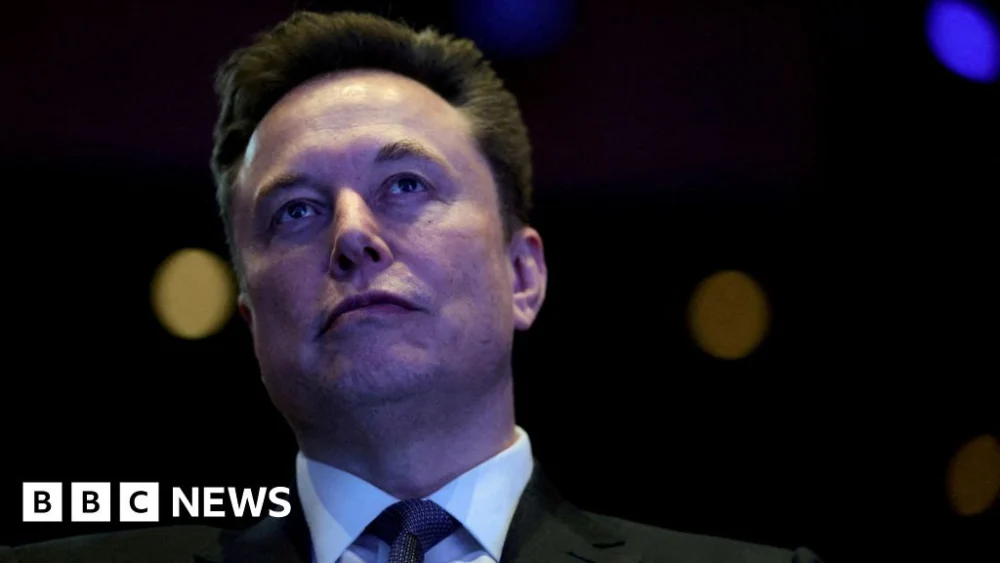
SpaceX, the pioneering aerospace company helmed by tech magnate Elon Musk, has submitted a groundbreaking application to the Federal Communications Commission (FCC) for the deployment of a staggering one million satellites into Earth’s orbit. This ambitious undertaking, revealed in a filing on Friday, is not for conventional satellite services but rather to establish "orbital data centres" designed to power the burgeoning field of artificial intelligence (AI). The company asserts that this revolutionary approach is the most cost-effective and energy-efficient solution to meet the exponentially growing demand for AI computing power, a demand that is rapidly outpacing current terrestrial capabilities.
Traditionally, data centres, the backbone of our digital world, are massive physical structures housing vast arrays of powerful computers. These facilities are crucial for processing, storing, and analyzing immense volumes of data. However, SpaceX’s application highlights a critical juncture: the sheer scale of computational needs driven by the widespread adoption and advancement of AI is pushing the limits of what can be accommodated on Earth. The company’s proposal suggests a paradigm shift, moving these vital computational resources into space.
The scale of this proposed constellation is immense, far exceeding SpaceX’s current Starlink network, which already comprises nearly 10,000 satellites. While Starlink has been instrumental in expanding global internet access, it has also faced accusations of contributing to orbital congestion. SpaceX has consistently refuted these claims, but the prospect of a million new satellites raises further questions about the sustainability and safety of the near-Earth orbital environment. The new network, envisioned as a constellation of solar-powered satellites, would operate at altitudes ranging from 500 to 2,000 kilometers (310 to 1,242 miles), similar to the Starlink satellites.
SpaceX’s rationale for this audacious plan extends beyond mere capacity. The company posits that these orbital data centres would deliver the computational power necessary to serve "billions of users globally," effectively creating a distributed, space-based AI infrastructure. Furthermore, the application frames this initiative as a significant step towards achieving "Kardashev II-level civilization," a theoretical benchmark proposed by astronomer Nikolai Kardashev in the 1960s. This classification signifies a civilization capable of harnessing the total energy output of its parent star. For SpaceX, this means leveraging the Sun’s full power through a vast network of solar-powered satellites.
Elon Musk himself commented on the vastness of the proposed deployment via his social media platform X, formerly Twitter. He emphasized the immense scale of space, stating, "The satellites will actually be so far apart that it will be hard to see from one to another. Space is so vast as to be beyond comprehension." This perspective underscores the sheer volume of the undertaking and the vastness of the environment in which these satellites will operate.
The concept of "orbital data centres" is not entirely novel; other companies are reportedly exploring similar avenues. SpaceX, however, appears poised to take the lead with its ambitious scale and existing launch capabilities. The company argues that this space-based approach offers a greener alternative to traditional data centres, which are notorious for their substantial energy consumption and significant water requirements for cooling systems. In an era of increasing environmental consciousness, the prospect of a more sustainable computational infrastructure is a compelling factor.
Despite the potential benefits, the challenges and concerns associated with such a massive satellite deployment are considerable. Experts have previously cautioned that launching hardware into orbit remains an inherently expensive endeavor. Moreover, the infrastructure required to protect, cool, and power these space-based data centres presents complex engineering hurdles. The growing problem of space debris also poses a significant physical risk to any hardware operating in orbit, potentially leading to catastrophic collisions.
Astronomers have also voiced concerns regarding the impact of large satellite constellations on scientific research. In 2024, complaints emerged that radio waves emitted by the Starlink network were interfering with and "blinding" astronomical telescopes, hindering valuable research. The potential for a million additional satellites to exacerbate these issues is a serious consideration for the scientific community.
Elon Musk has a history of challenging perceived limitations and has previously dismissed concerns about satellite congestion, asserting that the available space in orbit is far more extensive than often assumed. However, the sheer magnitude of the proposed one million-satellite constellation demands rigorous scrutiny and comprehensive planning to mitigate potential risks and ensure the long-term viability and safety of the near-Earth space environment.
The FCC’s review of SpaceX’s application will be critical in determining the future of space-based AI infrastructure. The decision will likely involve balancing the promise of technological advancement and global connectivity against the imperative to protect our orbital commons and preserve the integrity of astronomical observation. The implications of this application extend far beyond the realm of technology, touching upon questions of resource management, environmental sustainability, and humanity’s expanding presence in space. The successful realization of SpaceX’s vision for orbital data centres could fundamentally reshape the landscape of artificial intelligence and our relationship with the cosmos.




 Roy Suryo

 George Anjay
 Nakalama John
 Ramos Leo