
 atisusanti
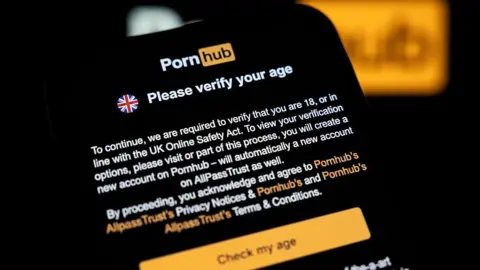
Pornhub is now restricting access for UK users, sparking debate about the effectiveness of the UK’s Online Safety Act and whether other adult websites will follow suit. The popular adult entertainment platform, along with others under its parent company Aylo, has begun limiting access for UK users from February 2nd, requiring age verification for explicit content. This move comes after the implementation of robust age verification measures in July 2025, mandated by the Online Safety Act. However, the law has faced criticism for its perceived loopholes, particularly the ease with which Virtual Private Networks (VPNs) can be used to circumvent geographical restrictions, creating a false sense of anonymity and location.
Aylo has stated that the current legal framework has inadvertently driven users towards less regulated sites, potentially increasing exposure to "dangerous or illegal content." Consequently, visitors to Pornhub’s UK site who have not previously verified their age will find themselves unable to access explicit material. While some content remains viewable, attempting to watch pornographic videos now prompts a login, a process only available to users who registered prior to the February deadline. This has raised questions about the true motivations behind Pornhub’s decision, with some experts doubting that child protection is the sole driver for these restrictions.

One prevailing theory is that Pornhub’s move is a strategic attempt to boost its registered user base. The decision to provide a specific date for the restriction, rather than an immediate withdrawal of access, has fueled speculation. Professor Clare McGlynn, a law researcher at Durham University, suggests that this tactic might be aimed at generating public and political pressure to influence legislation. She points to similar actions taken by Pornhub in 23 US states, where it has blocked access following the passage of age verification laws. "Their hope is to whip up political concern, anger of the public, to try to change the law," Professor McGlynn explained to the BBC.
Representatives for Aylo and its owner, Ethical Capital Partners (ECP), have vehemently denied that the UK restrictions are a ploy to increase sign-ups. Alex Kekesi, head of community and brand at Aylo, stated, "Our intention here is not to drive sign-ups. We’re going to further restrict our traffic, so if anything it’s a lovely gift to the abundance of other sites that are going to remain open and accessible that are continuing to not age verify in the UK." This suggests a belief that these measures will highlight the compliance of Pornhub and its affiliates in contrast to competitors. However, any potential fall in UK traffic may be offset by users employing VPNs, the prevalence of which remains a significant factor in circumventing these regulations.
The exact number of individuals using VPNs in the UK to bypass age checks is difficult to ascertain. Solomon Friedman of ECP has suggested that a more robust solution would involve device manufacturers like Apple and Google taking responsibility for user age verification. Data from Ofcom reveals a notable increase in VPN usage in the UK following the introduction of age verification rules. While the report indicates a subsequent decline in VPN usage after August, the overall figures remained higher than pre-regulation levels. This trend underscores the challenge of enforcing age restrictions when technological workarounds are readily available.

Professor McGlynn posits that Pornhub might prefer the widespread use of VPNs over the burden of moderating and regulating its content more stringently, especially as the UK government considers further restrictions. While an Aylo spokesperson has previously advised against using technology to bypass the law, the company’s actions suggest a complex relationship with such circumvention tools. Social media expert Matt Navara views Pornhub’s decision as potentially creating a "legal firewall" rather than a direct protest. He suggests that by blocking UK access, Pornhub might be attempting to sidestep regulatory costs and compliance while still retaining visibility for users who can bypass the restrictions.
Professor Lorna Woods, an internet law expert at the University of Essex, observes that by continuing to allow some UK users access, Pornhub remains subject to regulations concerning illegal content. She believes the company’s actions are primarily aimed at drawing attention to the situation. The data indicates that despite the Online Safety Act coming into effect in July 2025, not all adult services in the UK have implemented age checks. Ofcom reports that the top 10 adult websites, including Pornhub, have introduced these measures, accounting for approximately a quarter of all UK visits to such sites. More broadly, 77 out of the 100 most popular adult services in the UK have now implemented age checks, covering 86% of visitors to these top sites. This signifies a substantial increase in compliance.
However, this also means that nearly a quarter of the UK’s most popular adult websites are still not adhering to the new regulations. Ofcom has stated its commitment to investigating and taking action against non-compliant sites. Pornhub, meanwhile, appears to be hoping that other platforms will adopt similar strategies, thereby amplifying pressure on lawmakers to reconsider site-specific age verification methods. Iain Corby of the Age Verification Providers Association (AVPA) does not anticipate widespread adoption of Pornhub’s approach, suggesting that "the highest profile adult sites did suffer the greater loss of users, as many of their previous customer base was quite impulsive."
Corby speculates that Aylo might be attempting to provoke more comprehensive enforcement by Ofcom, a move supported by the AVPA. Ofcom, however, has declined to comment on specific enforcement plans, maintaining that its role is to "enforce the rules as they stand." As age assurance becomes a more prominent global discussion, it is probable that companies like Pornhub will continue to employ such tactics to influence regulatory outcomes, regardless of their underlying motives. The ongoing debate over online safety, age verification, and the balance between protection and access ensures that this is unlikely to be the last significant development in this evolving landscape. The question of whether other major adult entertainment platforms will follow Pornhub’s lead remains open, but the company’s bold move has certainly injected new dynamics into the conversation.




 George Anjay
 Nakalama John
 Ramos Leo
 Roy Suryo
 Nana Banana