
 George Anjay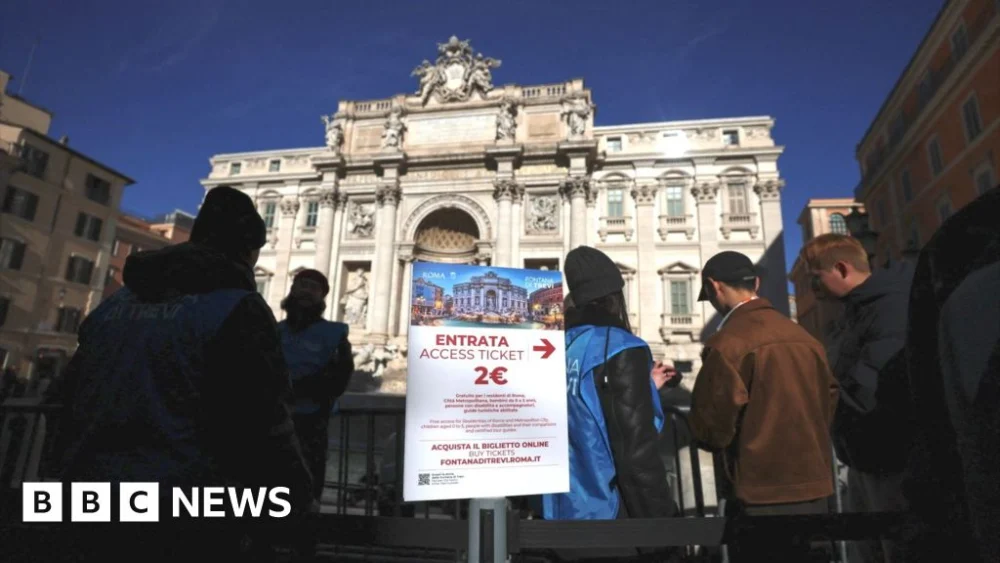
Rome, a city steeped in millennia of history and art, a perennial magnet for wanderlusters and culture seekers, has implemented a controversial new measure at one of its most beloved and breathtaking landmarks: the Trevi Fountain. In a move that has sparked a mixture of anticipation and grumbling, visitors are now required to pay a €2 fee to access the designated viewing area of this Baroque masterpiece. This once-free experience, a cherished ritual for millions who have tossed a coin over their shoulder, promising a return to the Eternal City, is now subject to a financial gate.
The rationale behind this novel charge, according to city officials, is twofold: a pragmatic effort to manage the overwhelming influx of tourists that often besieces the fountain, transforming the magical into the mundane, and a vital revenue stream to ensure the monument’s continued preservation and meticulous upkeep. The Trevi Fountain, a cascading symphony of marble and water, sculpted by Nicola Salvi and completed by Giuseppe Pannini, is a testament to artistic genius and a powerful symbol of Rome. However, its very popularity has become a double-edged sword, leading to overcrowding that can diminish the visitor experience and place undue stress on the ancient structure itself.
The introduction of the fee aims to create a more controlled and enjoyable environment for those who choose to engage with the fountain. By potentially reducing the sheer volume of people converging on the limited space around the fountain, authorities hope to alleviate the constant jostling and create a more serene atmosphere, allowing visitors to truly appreciate the grandeur of the artwork and the mesmerizing flow of its water. This controlled access could translate into more personal moments of awe, better photographic opportunities, and a generally more pleasant encounter with a world-renowned attraction.
However, as is often the case with such significant changes, the reception from tourists has been varied. A segment of visitors has expressed a degree of optimism, viewing the €2 charge as a worthwhile investment for an improved experience. These individuals are hopeful that the financial barrier, however small, will deter casual passersby or those less committed to a meaningful engagement with the fountain, thereby leading to a less congested and more aesthetically pleasing environment. The idea is that those who pay are more likely to linger, observe, and absorb the artistry, contributing to a more respectful and appreciative atmosphere. This perspective suggests a willingness to contribute to the upkeep of such cultural treasures, recognizing that their preservation comes at a cost.
Conversely, a more skeptical sentiment is palpable among some tourists. A visitor from Sicily, who preferred to remain anonymous, articulated a common feeling of resignation, stating they were prepared to "pay and smile" at the Italian landmark. This sentiment encapsulates a broader concern that such charges, even if ostensibly for noble purposes, represent a further commodification of public spaces and cultural heritage. For some, the joy of discovering and experiencing Rome’s wonders, including the Trevi Fountain, was intrinsically linked to its accessibility, its open invitation to all who wished to marvel at its beauty. The introduction of a fee, however modest, can feel like a subtle shift from an open embrace to a more transactional relationship with the city’s iconic sites.
This particular tourist’s comment, "pay and smile," carries a weight that goes beyond the simple act of payment. It suggests a sense of obligation, a feeling of having to comply with a new set of rules and expectations, even if one harbors reservations. The "smile" could be interpreted as a polite veneer masking a deeper dissatisfaction or a pragmatic acceptance of the inevitable. It hints at the potential for such charges to erode the spontaneous joy of exploration, replacing it with a more calculated and perhaps less authentic engagement.
The Trevi Fountain itself is more than just a tourist attraction; it is a living monument, a vibrant part of Rome’s identity. Its history is as rich as its sculpted figures. Designed by Nicola Salvi in 1732, it was completed by Giuseppe Pannini in 1762. The fountain depicts Neptune, the god of the sea, in his chariot, flanked by Tritons and other mythological figures, all set against a backdrop of a magnificent palace facade. The legend of tossing a coin into the fountain, ensuring a return to Rome, is a tradition deeply ingrained in the visitor experience, a symbolic act of connection and hope. This ritual, now potentially altered by the presence of a ticketing booth or an access point, raises questions about how such changes might impact the ingrained cultural practices associated with the site.
The financial implications of maintaining such a monumental structure are undeniable. The constant flow of water, the intricate stone carvings, and the sheer scale of the fountain necessitate ongoing, often costly, conservation efforts. The €2 fee, multiplied by the millions of visitors the fountain attracts annually, could indeed generate significant funds. However, the debate lies not only in the necessity of funding but in the method of its collection and the potential impact on the overall visitor experience and the perception of Rome as an accessible city.
Experts in heritage management and urban planning are divided on the efficacy of such entrance fees for historically significant, open-access sites. Some argue that it is a necessary step in the face of overwhelming visitor numbers and dwindling public funds, allowing for better control and a more sustainable model of preservation. Others express concern that it could create a tiered system of access, potentially alienating certain demographics or creating a perception that Rome’s treasures are increasingly reserved for those who can afford them. The principle of universal access to cultural heritage is a cornerstone of many public institutions, and deviations from this principle warrant careful consideration.
The €2 charge, while seemingly small, can accumulate for families or groups, and its introduction might prompt some visitors to re-evaluate their itinerary or their spending. It could also lead to a shift in behavior, with visitors potentially seeking out alternative, free viewing points or simply observing the fountain from a distance, thereby missing the immersive experience that the designated viewing area is intended to provide. This could, paradoxically, lead to increased congestion in the areas immediately outside the paid zone.
Furthermore, the logistical implementation of such a fee presents its own set of challenges. How will it be enforced? Will there be queues for tickets? What about individuals who wish to simply pass by the fountain without lingering? The aim is to manage crowds, but the introduction of a ticketing system itself can create new forms of congestion and bureaucratic hurdles. The city of Rome will need to ensure a seamless and efficient process to avoid creating further frustration.
The narrative of Rome’s Trevi Fountain now includes a new chapter, one marked by the introduction of a monetary toll. While the intention is to safeguard this magnificent monument and enhance the visitor experience, the sentiment of "pay and smile" from a visitor highlights the delicate balance between preservation, accessibility, and the commodification of public spaces. As Rome navigates this new approach, the true success of the €2 fee will be measured not only in the funds raised or the crowds managed but in whether it ultimately preserves the magic and wonder that the Trevi Fountain has offered to the world, or whether it introduces a subtle, yet significant, alteration to that timeless allure. The hope remains that the added cost will indeed lead to a more cherished and memorable encounter with this iconic symbol of Roman splendor, but the underlying sentiment of a necessary concession to a changing landscape of tourism persists.




 Roy Suryo

 Nakalama John
 atisusanti
 Ramos Leo
