
 atisusanti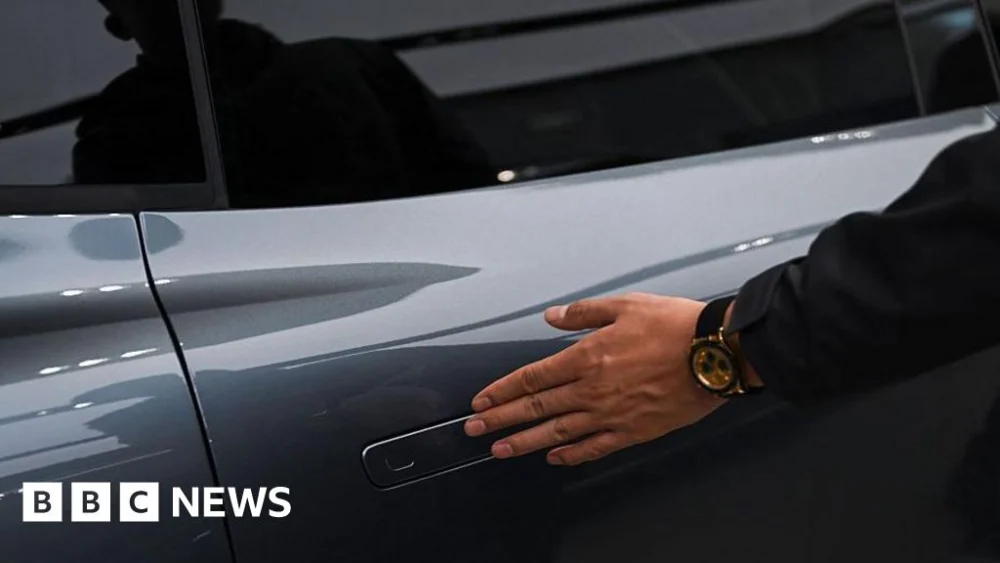
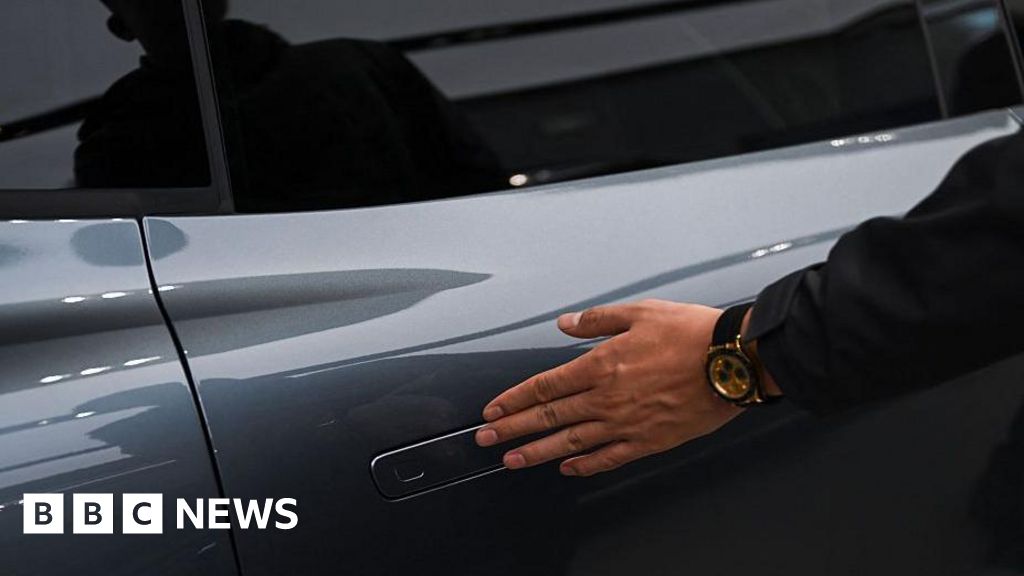
China has taken a decisive step to enhance automotive safety by implementing a nationwide ban on hidden door handles for electric vehicles (EVs), marking a significant regulatory shift and becoming the first country to officially outlaw the sleek, flush designs that have become a hallmark of modern automotive aesthetics, particularly popularized by pioneers like Elon Musk’s Tesla. This stringent new regulation emerges against a backdrop of increasing global scrutiny of EV safety, fueled by a series of tragic incidents. In China, recent fatal accidents involving Xiaomi EVs, where power failures were suspected of incapacitating the door mechanisms, have amplified concerns and prompted urgent governmental action.
Under the newly established regulations, vehicles will only be permitted for sale in China if they are equipped with a reliable mechanical release mechanism accessible from both the interior and exterior of their doors. These comprehensive rules are slated to take effect on January 1, 2027, providing manufacturers with a defined timeframe to adapt their designs and production lines. The Ministry of Industry and Information Technology, the governing body behind these new standards, has stipulated precise requirements for the exterior door handle access. Specifically, every passenger door, with the exception of the boot or trunk, must feature a recessed area measuring a minimum of 6 centimeters (approximately 2 inches) in length, 2 centimeters in width, and 2.5 centimeters in depth. This provision is designed to ensure that occupants can readily locate and operate the door handle even in challenging circumstances.
Internally, the regulations mandate the inclusion of clear and visible signage to guide occupants on how to open the doors. These internal indicators must measure at least 1 centimeter by 0.7 centimeters, ensuring they are easily discernible. For vehicles that have already received official approval and are in the advanced stages of entering the Chinese market, a grace period of an additional two years has been granted to implement the necessary design modifications. This phased approach acknowledges the logistical complexities involved in retooling and re-certifying existing models.
The prevalence of hidden door handles is particularly notable within China’s burgeoning New Energy Vehicle (NEV) market. This segment encompasses not only battery-electric vehicles but also hybrid cars and those powered by fuel cells, all of which are subject to these new safety mandates. Data cited by the government-controlled China Daily newspaper reveals that approximately 60% of the top 100 best-selling NEVs currently feature hidden door handles, highlighting the widespread adoption of this design element. While the immediate impact of these regulations will be confined to vehicles sold within the Chinese domestic market, the sheer scale and influence of China’s automotive industry on the global stage suggest that this move is likely to reverberate worldwide.
The implications of China’s ban are already being felt as other major automotive markets and regulatory bodies are independently investigating similar safety concerns. In the United States, the National Highway Traffic Safety Administration (NHTSA) initiated a probe into Tesla’s electric-powered door handles in November. This investigation was prompted by a series of alarming reports detailing instances where the handles malfunctioned, leaving occupants, including children, trapped inside their vehicles. The NHTSA’s investigation has so far received nine complaints specifically concerning the door handles in Tesla’s 2021 Model Y vehicles, which is the company’s flagship model. The severity of these incidents is underscored by the fact that in four of the reported cases, car owners were forced to resort to breaking their vehicle’s windows to escape.
Similarly, regulatory authorities in Europe are also contemplating the implementation of their own rules governing door handle designs, indicating a growing international consensus on the potential safety risks associated with flush-mounted and electronically actuated handles. The transition to hidden door handles, while aesthetically appealing and contributing to improved aerodynamics and reduced drag coefficients, has demonstrably introduced new layers of complexity and potential failure points into vehicle safety systems. The reliance on electronic actuators and the often-recessed nature of these handles can make them difficult to access or operate in emergency situations, particularly if the vehicle’s power supply is compromised or if there is a malfunction in the electronic control system.
The Chinese government’s proactive stance reflects a commitment to prioritizing occupant safety above design trends. The mandated inclusion of both external and internal mechanical release mechanisms ensures that even in the event of a power failure or electronic system fault, occupants will always have a fail-safe method to exit the vehicle. This dual-redundancy approach is a fundamental principle in safety engineering, designed to mitigate risks in critical scenarios. The detailed specifications for the recessed areas and internal signage further emphasize the government’s focus on user-friendliness and accessibility, ensuring that the emergency release is intuitive and easy to locate under stress.
The impact of this ban on the automotive industry will be far-reaching. Manufacturers will need to invest in redesigning their door handle systems, potentially incurring significant research and development costs. This may also lead to a reassessment of supply chains and manufacturing processes. For consumers, the shift towards more conventional, albeit still potentially integrated, door handle designs might mean a slight compromise in aesthetic sleekness but a significant enhancement in peace of mind regarding emergency egress.
The timing of this regulation is particularly pertinent given the rapid growth of the EV market. As more consumers transition to electric vehicles, ensuring the safety of these advanced machines becomes paramount. The incidents that have spurred this regulation serve as stark reminders that technological innovation must always be coupled with robust safety considerations. China’s move, therefore, sets a precedent and signals a potential future direction for automotive safety standards globally. The country’s substantial manufacturing capacity and its role as a major consumer of vehicles mean that adherence to these new standards by global automakers producing for the Chinese market will inevitably influence design choices and safety protocols worldwide. The era of purely aesthetic, hidden door handles may be drawing to a close, replaced by a renewed emphasis on functional, reliable, and, above all, safe access for all vehicle occupants.




 George Anjay
 Nakalama John
 Ramos Leo
 Roy Suryo
 Nana Banana