
 George Anjay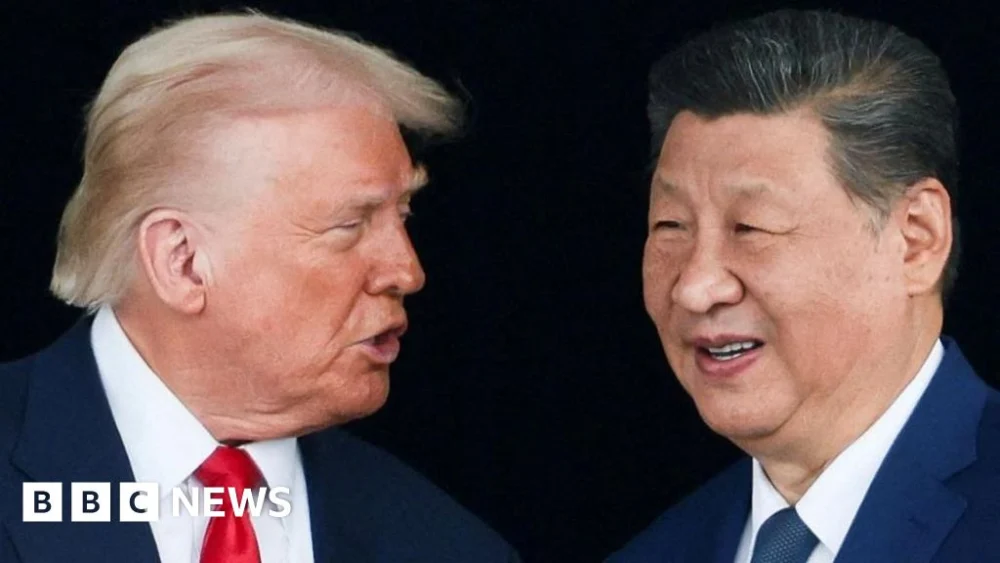
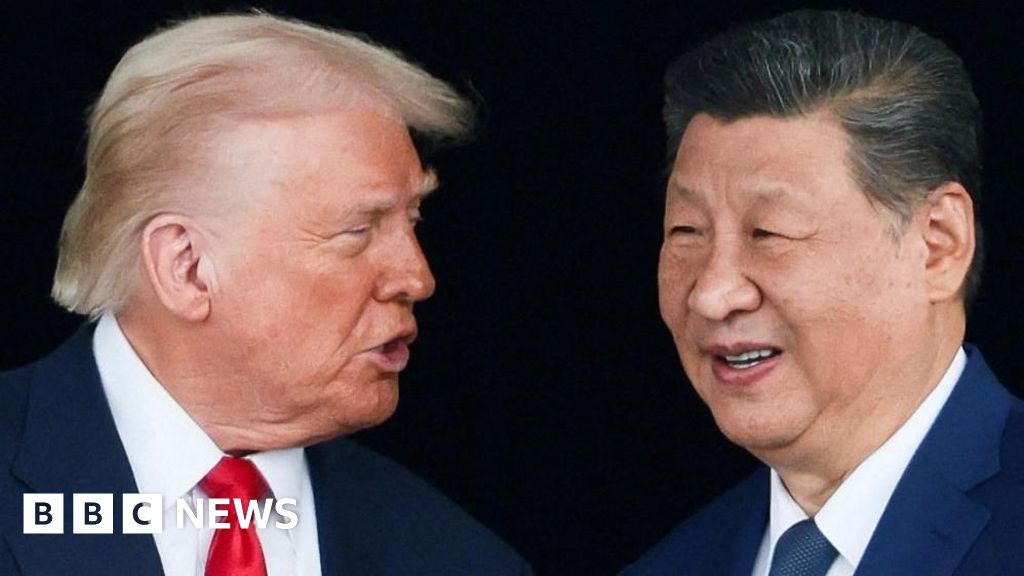
In a significant exchange that underscored the delicate geopolitical balance in the Indo-Pacific, Chinese President Xi Jinping urged US President Donald Trump to exercise extreme caution regarding arms sales to Taiwan, characterizing the self-governed island as "the most important issue" in Sino-American relations. The call, described by Trump as "excellent" and "long and thorough," occurred amidst a backdrop of recent diplomatic overtures from Western leaders toward Beijing and ahead of Trump’s anticipated visit to China in April.
During the conversation, President Xi emphasized the paramount importance he places on the bilateral relationship with Washington, expressing a hope that both nations could collaboratively find pathways to resolve their existing disagreements. This sentiment was echoed by Trump, who noted on his Truth Social platform that his personal relationship with Xi is "extremely good" and that both leaders recognize the critical need to preserve this positive dynamic. The discussion also touched upon pressing global issues, including Russia’s ongoing conflict in Ukraine, the volatile situation in Iran, and China’s procurement of oil and gas from the United States.
President Xi reiterated China’s long-standing position on Taiwan, asserting that the island is "China’s territory" and that Beijing has an unyielding obligation to "safeguard [Taiwan’s] sovereignty and territorial integrity." He directly conveyed his warning to Trump, stating, "The United States must handle the issue of arms sales to Taiwan with prudence." This admonition comes as China has consistently maintained its ambition to achieve "reunification" with Taiwan, a goal that Beijing has not ruled out pursuing through military means if necessary.
The United States, while maintaining official diplomatic ties with Beijing, has historically walked a complex diplomatic tightrope concerning Taiwan. Despite this, the US remains a crucial ally for the island and its principal supplier of advanced weaponry. The Trump administration, in particular, had previously announced a substantial arms package to Taiwan valued at approximately $11 billion, which included sophisticated rocket launchers, self-propelled howitzers, and a range of missile systems. Beijing had strongly condemned this move at the time, warning that such actions to "support [Taiwan’s] independence" would inevitably "accelerate the push towards a dangerous and violent situation across the Taiwan Strait."
President Xi articulated China’s perspective by noting that "just as the United States has its concerns, China for its part also has concerns." He proposed that by working in unison, guided by principles of "equality, respect and mutual benefit," both nations could effectively address each other’s apprehensions. In response, Taiwan’s leader, Lai Ching-te, conveyed to reporters that relations with the US remain "rock solid" and that "all ongoing co-operation projects are continuing," signaling a continued commitment to existing security and diplomatic arrangements.
The recent months have witnessed a noticeable improvement in US-China relations, a stark contrast to the preceding period marked by trade tariffs and disputes over critical resources like chips and rare earths. While these underlying economic tensions persist, the overall atmosphere appears to have de-escalated since the in-person meeting between Trump and Xi in South Korea in October. That summit resulted in a tentative agreement that led to a partial easing of tariffs and controls on rare earth exports. Furthermore, negotiators from both countries had reached a framework for a soybean deal, which would involve China lifting its ban on imports from the US, and a separate agreement concerning the social media platform TikTok, which was finalized the following month.
The phone call with Trump followed a series of high-level virtual meetings conducted by President Xi. Notably, hours before speaking with Trump, Xi engaged in a virtual discussion with Russian President Vladimir Putin, during which both leaders lauded the strengthening of ties between Beijing and Moscow. Russian media reported that Putin had accepted Xi’s invitation to visit China in the first half of the year. Chinese state media has framed these engagements with Trump and Putin as clear demonstrations of China’s commitment to acting as a "responsible and rational world power," particularly in contrast to what it portrays as bold and controversial actions by Trump on the global stage in January, such as the order for military intervention in Venezuela and intensified demands for the US to acquire Greenland.
Some analysts have suggested that the US military operation in Venezuela might embolden Beijing to consider more assertive action regarding Taiwan. However, other experts, like David Sacks from the Council on Foreign Relations, have expressed skepticism, predicting that "China will continue with its strategy of employing coercion to wear down Taiwan’s people." A commentary in the China Daily newspaper asserted that Xi’s conversations with Trump and Putin underscored China’s role as a "stabilizing force" amidst a global climate characterized by "confrontation and unilateralism." The editorial emphasized that Beijing is actively embracing its responsibilities, collaborating with major international stakeholders to promote global peace and stability through "responsible major-country diplomacy." The publication concluded that China is thus illustrating to other global actors the imperative of prioritizing "dialogue and coordination."
The exchange between Xi and Trump highlights the enduring significance of the Taiwan issue in US-China relations. While Trump’s presidency was marked by a more transactional approach to foreign policy, his administration’s stance on Taiwan, including substantial arms sales, represented a departure from previous US policy and a significant point of contention with Beijing. Xi’s direct appeal to Trump underscores China’s strategic imperative to prevent any actions that could be perceived as legitimizing or strengthening Taiwan’s de facto independence. The call also serves as a reminder of the complex interplay between economic interests, security concerns, and diplomatic maneuvering that defines the relationship between the world’s two largest economies. The continued dialogue, however fraught with underlying tensions, suggests a mutual, albeit cautious, recognition of the need for communication to manage potential flashpoints and maintain a degree of predictability in a rapidly evolving global landscape. The future trajectory of US-Taiwanese military cooperation and China’s response will remain a critical barometer of regional stability.



 Roy Suryo

 Nakalama John
 atisusanti
 Ramos Leo
