
 George Anjay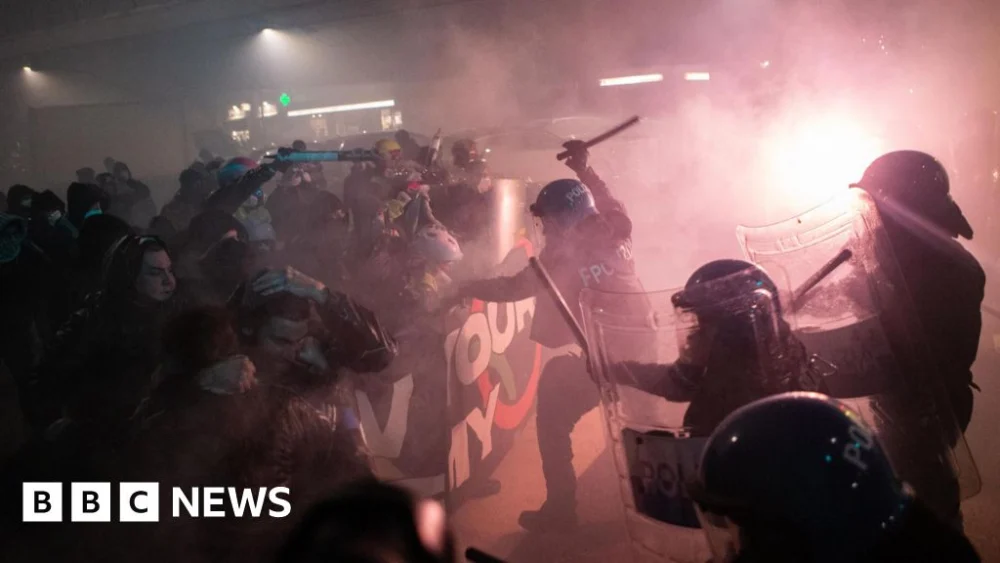
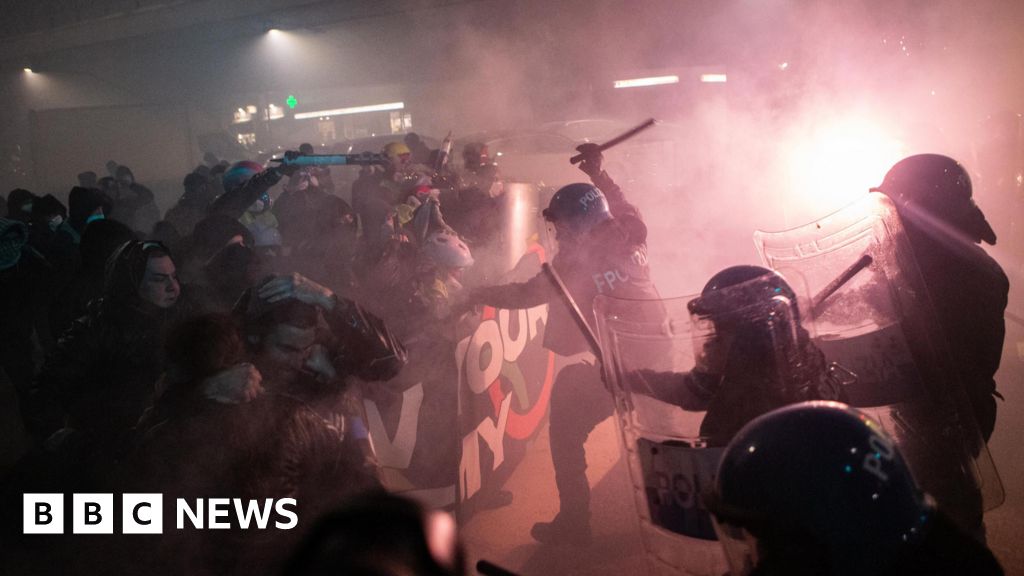
Six individuals were detained by Italian police following a significant confrontation with demonstrators in Milan, one of the co-host cities for the Winter Olympic Games, which commenced on Saturday. The clashes occurred on the opening day of the competition as thousands of people took to the streets of the northern Italian metropolis to voice their dissent on a spectrum of grievances, prominently including the escalating cost of living. During the protest, some participants resorted to firing flares and hurling stones at law enforcement officers, who subsequently deployed water cannons in response. This incident follows closely on the heels of a government decision to implement stricter protest legislation, a move precipitated by a demonstration in Turin the previous weekend that resulted in over 100 police officers sustaining injuries, according to official government figures.
Adding another layer of concern, authorities are currently investigating suspected acts of sabotage on northern Italy’s railway network that took place on Saturday. Deputy Prime Minister Matteo Salvini unequivocally condemned the individuals involved in the Milan confrontations, labeling them as "criminals." He articulated his frustration, stating, "Just days after the shameful violence in Turin, more clashes, more attacks on law enforcement. We’re proud to have pushed for a new security package that will allow for even more effective interventions against thugs and criminals."
The protest in Turin, which was initially organized in response to the eviction of an unofficial social center, began peacefully. However, the situation devolved into violence when armed groups engaged with police. In that incident, over 30 people were arrested. One officer was reportedly attacked with a hammer, an act that Prime Minister Giorgia Meloni characterized as an attempted murder. The recently enacted security package, fast-tracked into law on Thursday in direct response to the violence in Turin, grants police the authority to detain suspected troublemakers for up to 12 hours before demonstrations commence, aiming to preempt the spread of unrest. Critics of this new legislation, however, have denounced it as repressive and an infringement on civil liberties.
The majority of participants in Saturday’s protest in Milan maintained a peaceful demeanor. Francesca Missana, a protester interviewed by the AFP news agency, expressed her disillusionment with the Olympic Games, stating that they are "no longer sustainable from an environmental or a social point of view, their time is up." Echoing these sentiments, Alberto di Monte, an organizer of the protest, told AFP that the Games were "promoted as sustainable and cost-neutral." He further elaborated that the extensive dispersal of the Games across multiple locations necessitated billions of euros in infrastructure development, particularly for roads, at the expense of environmental protection measures for the mountains.
Adding to the day’s disruptions, Saturday also witnessed considerable chaos on some of Italy’s northern rail networks, with suspected attacks causing hours of delays for travelers. A fire affected rail infrastructure between Bologna and Venice, and police subsequently discovered severed cables and a rudimentary explosive device in nearby locations. Specifically, a track switch was reportedly set ablaze near Pesaro on the Adriatic coast, and electric cables were found severed near Bologna, accompanied by an improvised explosive device left near the tracks. Bologna’s central railway station is a critical transportation nexus, serving as a vital link for services connecting cities across the north and south, as well as east-west routes. RFI, the state-owned railway infrastructure manager, confirmed that services have since been restored to normal.
Matteo Salvini, who also holds the portfolio of Transport Minister, commented on the rail disruptions, stating on Saturday that "These actions of unprecedented seriousness do not in any way tarnish Italy’s image in the world, an image that the Games will make even more compelling." The Winter Olympics are scheduled to continue until February 22nd, with events taking place across a diverse range of locations. These include Milan, the picturesque resort town of Cortina d’Ampezzo, the Dolomite regions of Predazzo and Tesero, and the Alpine resorts of Livigno and Bormio. The protests and infrastructure disruptions highlight ongoing societal tensions and concerns surrounding the economic, social, and environmental impacts of hosting major international sporting events. The government’s firm stance and the introduction of stricter security measures underscore a commitment to maintaining order, even as civil liberties advocates voice their reservations. The juxtaposition of the celebratory atmosphere of the Olympics with the unrest serves as a stark reminder of the complex socio-political landscape within which such global spectacles unfold. The alleged sabotage on the railway network, in particular, raises serious questions about the motivations and capabilities of dissenting groups, and the potential for such actions to impact national infrastructure and public safety. The investigation into these incidents is ongoing, with authorities seeking to identify and apprehend those responsible. The successful staging of the Games, despite these challenges, will undoubtedly be viewed as a testament to Italy’s organizational capabilities and its resolve to project a positive international image.



 Roy Suryo

 Nakalama John
 atisusanti
 Ramos Leo
