
 George Anjay
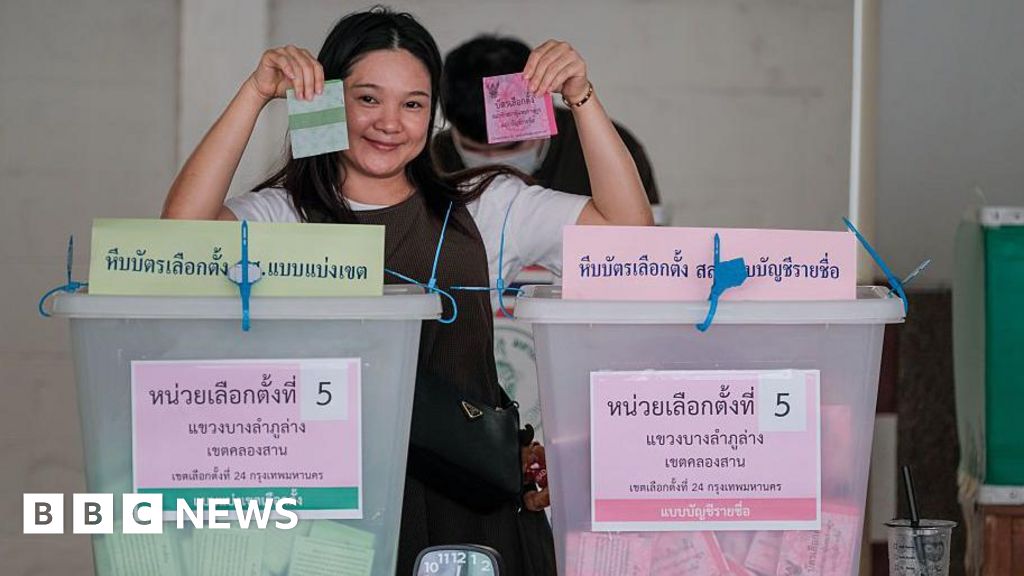
As dusk settled over Bangkok, polling stations across Thailand closed their doors on Sunday, marking the end of a pivotal general election that saw voters decisively choose between a path of radical reform and the entrenched conservatism that has long defined the nation’s political landscape. The election, called amidst a turbulent period of governance that has seen three prime ministers in as many years due to the repeated collapse of coalition governments, pitted the ambitious reformist agenda of the People’s Party against the conservative stronghold led by incumbent Prime Minister Anutin Charnavirakul. Early predictions and preliminary vote counts indicated a fiercely contested race, with neither major bloc expected to secure a clear majority, setting the stage for intricate coalition negotiations and the perennial influence of unelected powers.
The shadows of past interventions loomed large over this election. In the previous electoral cycle, the young reformers of the People’s Party, despite winning the popular vote, were thwarted in their bid to form a government by the military-appointed senate, and their party was subsequently dissolved by the constitutional court. This history underscores a recurring pattern in Thai politics: powerful, unelected forces have consistently intervened to obstruct parties that dare to challenge the established status quo, a reality that continues to shape the democratic aspirations of the nation. As the meticulous counting of ballots commenced, the nation held its breath, with results anticipated to become clear around 22:00 local time (15:00 GMT).
The People’s Party, a beacon of change for many disillusioned Thais, faced a formidable adversary in Anutin Charnavirakul. Anutin, the charismatic leader of the Bhumjaithai Party, affectionately known as "Thai Pride," has masterfully transformed his once modest, provincial party into the de facto standard-bearer for Thai conservatism. The latest opinion polls and the initial trickle of early vote counts suggested a fragmented parliamentary landscape, with no single party poised to command an outright majority. This outcome, if it solidifies, would likely see Anutin remain at the helm, navigating the complex political currents.
Preliminary tallies, with approximately 18% of the vote counted, offered an early indication of the electoral tide. These initial figures suggested a lead for Anutin’s Bhumjaithai party, which was projected to secure around 178 constituency seats, significantly outnumbering the People’s Party’s projected 70 seats. Anutin’s campaign strategy appeared to resonate with a segment of the electorate, particularly in the wake of two short border wars with Cambodia in the previous year. He skillfully invoked patriotic sentiment and pledged to safeguard the revered status of traditional Thai institutions, notably the monarchy and the military, which are deeply ingrained in the nation’s social and political fabric.
A third significant contender in this electoral contest was the Shinawatra family and its long-standing Pheu Thai Party – meaning "For Thais." Historically, Pheu Thai has dominated election cycles, buoyed by its well-marketed populist policies. This time, the party offered a distinctive pledge: to create nine new millionaires, measured in Thai baht, every day through a national prize draw. Both Bhumjaithai and Pheu Thai strategically employed the tactic of offering subsidies and direct cash handouts to voters, a familiar playbook in Thai elections aimed at securing electoral support.
However, Pheu Thai’s electoral fortunes appeared to be waning in this election. The party’s previous coalition administration faced considerable criticism for its perceived mishandling of the conflict with Cambodia. Furthermore, the legal troubles of its patriarch, former Prime Minister Thaksin Shinawatra, who was incarcerated, likely contributed to a significant erosion of its support base. This electoral setback for Pheu Thai, a party that once held immense sway, signals a potential shift in the political allegiances of its traditional voters.
Beyond the immediate electoral outcomes, the health of Thailand’s once dynamic economy has been a pervasive concern for voters. Political instability and a lack of decisive structural reforms have cast a pall over foreign investment, leading to a slowdown in economic growth. Rising costs of living have further exacerbated public anxieties. "I want the economy to improve and I don’t want big factories to relocate to our neighbouring countries," civil servant Phananya Bunthong articulated to the BBC, echoing a widespread sentiment of concern as Thailand appears to be losing ground to neighboring economies like Vietnam.
The People’s Party, under the leadership of Nattaphong Ruengpanyawut, has championed a platform of ambitious and far-reaching changes. Their proposals include curbing the influence of the country’s largest businesses and the military, streamlining an often cumbersome bureaucracy, and modernizing the education system. These are bold aspirations, aiming to dismantle entrenched power structures and foster a more equitable and efficient society. However, in the complex tapestry of Thai politics, even a clear electoral victory may not be sufficient to enact such profound transformations.
The specter of institutional intervention looms large. Two previous iterations of parties associated with the reformist movement have been dissolved by the constitutional court, resulting in their leaders being banned from political life. This is not an isolated phenomenon; Pheu Thai has also been subjected to such measures. Since 2008, five Pheu Thai prime ministers have been dismissed by the court, and two earlier incarnations of the party have suffered dissolution. This pattern highlights a systemic challenge to the democratic process, where judicial and other unelected bodies have wielded significant power to shape political outcomes.
Despite these obstacles, if the People’s Party manages to exceed the 151 seats it secured in the 2023 election, it may prove considerably more difficult to legally bar them from forming a government. This scenario, however, is met with considerable apprehension in conservative and royalist circles, who view the party’s radical agenda with deep unease. In such a situation, further intervention by the courts or other conservative institutions is widely anticipated, aimed at weakening or neutralizing the party as a political force. Conversely, if Anutin and the Bhumjaithai party can match or surpass the seat total of the reformists, with the backing of the conservative establishment, his continued tenure as prime minister appears highly probable.
Adding another layer of complexity to the electoral landscape, Thai citizens were also voting in a crucial referendum on the reform of the 2017 constitution. This charter, drafted under military rule, is widely criticized by many Thais and political analysts for granting excessive power to unelected entities, particularly the senate, effectively "handcuffing" the country’s democratic potential. The referendum represents a direct challenge to the existing power structures and offers voters a chance to influence the very framework of their governance.
"I want change. I don’t want things to be the same," declared 28-year-old Kittitat Daengkongkho to the BBC, encapsulating the sentiment of a generation yearning for a departure from the status quo. This sentiment, coupled with the desire for economic improvement and greater political stability, formed the core of the choice presented to Thai voters. In essence, this election presented a stark dichotomy: the promise of sweeping, transformative change, or the continuation of more of the same, with all the familiar political and economic challenges that entails. The outcome of this election will undoubtedly shape the trajectory of Thailand’s democratic journey for years to come.



 Roy Suryo

 Nakalama John
 atisusanti
 Ramos Leo
