George Anjay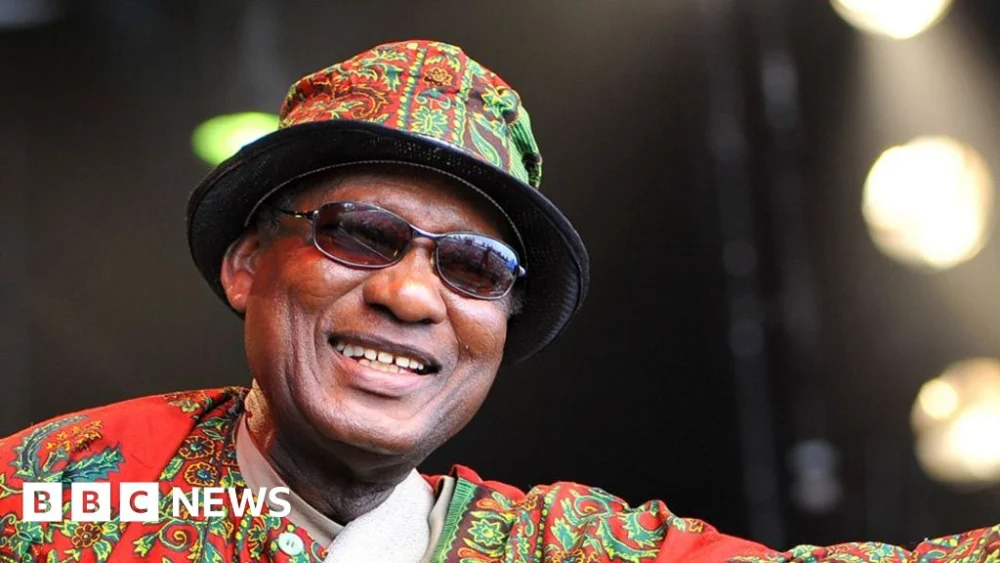
Ghanaian music legend Ebo Taylor, a towering figure in the evolution of highlife and a pivotal influence on Afrobeat, has passed away at the age of 90. His family confirmed the news, marking the end of a six-decade career that left an indelible mark on African popular music and resonated globally. Taylor, born Deroy Taylor in the coastal city of Cape Coast in 1936, emerged as a vibrant force in the late 1950s and early 1960s, a period when highlife music was solidifying its status as Ghana’s quintessential sound. His journey into music began in his teenage years, laying the groundwork for a career that would span continents and generations.
Taylor’s early musical education saw him perform with some of the era’s most celebrated ensembles, including the Stargazers and the Broadway Dance Band. It was during this formative period that he honed his distinctive guitar techniques and developed a reputation for his intricate and sophisticated musical arrangements. His artistry was not confined to a single genre; over his illustrious career, Taylor masterfully blended traditional Ghanaian rhythms with the pulsating energy of jazz, the infectious grooves of funk, and the raw intensity of early Afrobeat. This unique fusion captivated audiences and inspired countless musicians, both within Ghana and across the African continent.
A significant turning point in Taylor’s musical development occurred in the early 1960s when he relocated to London to pursue further musical studies. This period in the UK proved to be a fertile ground for artistic exchange. He collaborated with a diverse array of African musicians, most notably the iconic Nigerian artist Fela Kuti. Their musical dialogues and shared creative explorations are now recognized as instrumental in shaping the nascent Afrobeat genre, a genre Fela Kuti would later propel to international acclaim. Highlife, with its intricate rhythms and melodic complexity, served as a crucial foundational element in the development of Afrobeat, a testament to Taylor’s profound influence.
Upon his return to Ghana, Taylor cemented his position as a highly sought-after bandleader, arranger, and producer. He lent his talents to some of Ghana’s most respected artists, including the legendary Pat Thomas and CK Mann, further solidifying his reputation as a musical architect. Reflecting on his artistic journey in a 2014 interview with the BBC, Taylor articulated how the advent of James Brown and the burgeoning funk music scene provided him with a new canvas for highlife innovation. He drew a parallel between his own work and Fela Kuti’s, stating, "Fela did a lot of work introducing the funk into the Yoruba music while comparatively I did almost the same thing in Ghana."
Towards the latter part of the 20th century and the dawn of the new millennium, Taylor dedicated more time to music education, serving as a lecturer at the University of Ghana. He also continued to contribute to the work of other artists as a producer. However, his creative spirit remained undimmed. In the final 25 years of his life, a remarkable resurgence in interest in his music introduced him to a new global audience. Tracks like "Love & Death," a poignant reflection on relationships and mortality, became anthems for a fresh wave of devoted fans.
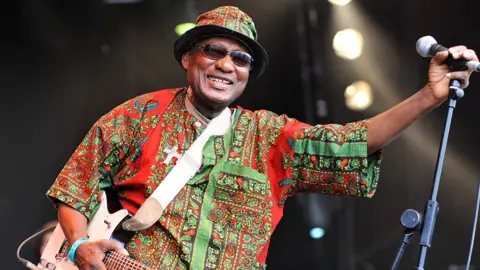
This late-career renaissance saw Taylor embark on extensive international tours, gracing stages across the United States and Europe. His performances in cities like Barcelona in 2016 were a testament to his enduring appeal and the timeless quality of his music. Albums such as "Love & Death," "Appia Kwa Bridge," and "Yen Ara" further cemented his legacy as one of Ghana’s most significant musical figures, reaffirming his status long after his initial rise to prominence.
Taylor’s influence extended far beyond the highlife and Afrobeat scenes. In recent decades, his innovative sound has been sampled by a diverse range of contemporary artists across hip-hop and R&B. Elements from his tracks, including "Heaven," "Odofo Nyi Akyiri Biara," and the aforementioned "Love & Death," have been woven into the fabric of songs by global superstars such as Usher, the Black Eyed Peas, Kelly Rowland, Jidenna, Vic Mensa, and Rapsody. This widespread sampling has introduced his rich musical heritage to entirely new generations of listeners worldwide.
Commenting on his renewed global recognition in his seventies, Taylor once mused, "I think I’ve had my day, though it came much later." His humility and enduring passion for music were a constant source of inspiration. Top Ghanaian music producer Panji Anoff fondly recalled Taylor’s affectionate nickname, "Uncle Ebo," and his remarkable ability to connect with people from all walks of life. "He would sit with us, eat with us, drink and chill with us, some nearly 50 years his junior, as though we were all peers," Anoff shared with the BBC. "He could relate with everybody, and if anybody ever needed a melody, Uncle Ebo would just plug in a guitar and show them the way."
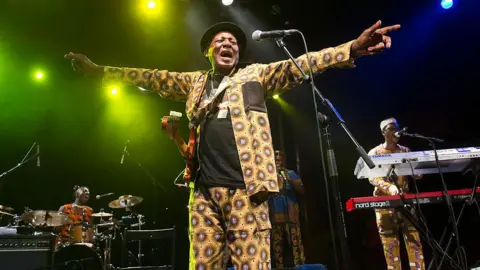
The sentiment was echoed by singer and rapper Black Sherif, who offered a heartfelt tribute: "We lost a legend whose contribution to music has created worldwide ripples. I take solace in the fact that I witnessed greatness in Uncle Ebo Taylor’s art form. Rest In Power!"
Across Ghana and the broader African diaspora, Ebo Taylor is universally recognized as a foundational artist whose work masterfully bridged traditional musical sensibilities with modern innovation. By deeply grounding his creative exploration in the continuity of his cultural heritage, he crafted a body of work that continues to inform contemporary musical styles, including the global phenomenon of afrobeats. His music remains an indispensable chapter in the vibrant and ever-evolving narrative of African popular music, a legacy that will undoubtedly endure for generations to come.




 Roy Suryo
 Nakalama John
 atisusanti
 Ramos Leo