
 George Anjay
Japan’s Prime Minister Sanae Takaichi is poised for a significant landslide victory in Sunday’s snap general election, a triumph that would solidify her leadership and potentially usher in a new era of assertive policy-making for the nation. Exit polls released by public broadcaster NHK indicate that the coalition led by Takaichi’s Liberal Democratic Party (LDP) is on track to secure a commanding two-thirds majority in the powerful House of Representatives. The LDP itself is projected to win a substantial majority of seats, a testament to Takaichi’s personal popularity and her successful gambit in calling an early election just four months after assuming the party leadership.
This projected electoral success stands in stark contrast to the fortunes of her immediate predecessors, both of whom saw the LDP’s parliamentary majority erode significantly amidst damaging corruption scandals and growing public discontent over rising costs of living. Takaichi, who had publicly stated her intention to step down should the LDP fail to achieve a majority, had faced considerable scrutiny and speculation regarding the strategic wisdom of calling this snap election. The LDP had previously suffered the ignominy of losing its majority in both houses of parliament in 2024, and the long-standing coalition with the Komeito party had fractured. However, Takaichi’s personal appeal, often characterized by her direct communication style and nationalist rhetoric, appears to have resonated deeply with the electorate, with approval ratings for her government consistently hovering above a remarkable 70%.
According to NHK’s projections, as vote counting continues, the LDP and its current coalition partner, the Japan Innovation Party, could collectively secure as many as 366 of the 465 seats available in the House of Representatives. This overwhelming mandate has already drawn international attention. U.S. Treasury Secretary Scott Bessent lauded the outcome as a "big victory" for Takaichi, emphasizing that "when Japan is strong, the US is strong in Asia." Similarly, Indian Prime Minister Narendra Modi extended congratulations for the "landmark" result, expressing confidence in the ability to elevate the bilateral friendship between India and Japan to "greater heights."
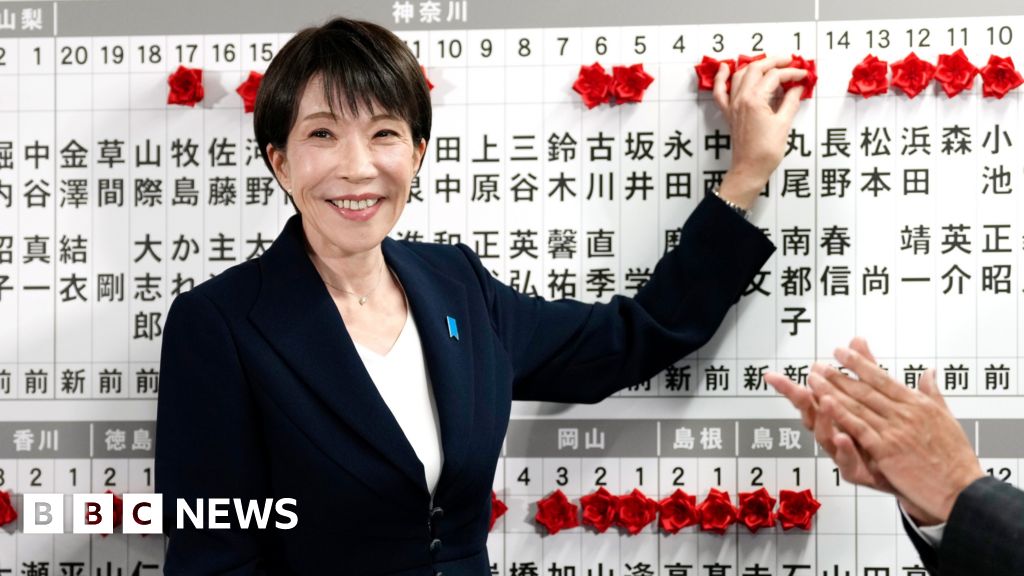
The election saw citizens across Japan braving unseasonably cold weather and rare snowfall in Tokyo to cast their ballots, marking the country’s first mid-winter poll in 36 years. The challenging weather conditions led to disruptions in transportation, with the Ministry of Transport reporting the closure of 37 train lines, 58 ferry routes, and the cancellation of 54 flights by Sunday morning. Despite these obstacles, voter turnout remained robust, reflecting the significance of the electoral choice.
"People want their lives to be better and more comfortable because we are so accustomed to not having inflation [costs rising]… so people are very worried. I think we need a long-term solution rather than short-term fixes," shared Ritsuko Ninomiya, a Tokyo resident, with the BBC, articulating a sentiment of concern about economic stability that likely informed many voters’ decisions. Takaichi’s energetic campaign, coupled with her promises of populist spending and a firm nationalist stance, appears to have successfully galvanized a broad swathe of the electorate. Her active presence on social media, where she regularly shares glimpses of her daily life and political engagements, has also garnered a significant following, particularly among younger voters. A viral video of her playing the drums alongside South Korean President Lee Jae Myung exemplifies her ability to connect with a modern, digitally-engaged audience.
"I think this election is more important for the younger generation, people like us," commented Daniel Hayama, highlighting the perceived stake younger demographics have in the outcome. He added that the frigid weather was not a deterrent for young people eager to exercise their right to vote.
This election also saw a more unified opposition challenging the LDP than in previous contests. Notably, Komeito, a former LDP coalition partner, has joined forces with the Constitutional Democratic Party of Japan, forming what is now the largest opposition bloc in the lower house. Despite this consolidated opposition, Takaichi’s platform has evidently captured the public imagination.
Takaichi’s policy agenda has been marked by a strong emphasis on national security and economic revitalization. She has advocated for a toughening of the immigration system, a review of regulations governing foreign ownership of Japanese land, and a more stringent approach to tax and health insurance non-payments by foreign nationals. However, these proposals have drawn criticism, with some accusing her of fostering anxiety and division in a country where foreign nationals constitute a mere 3% of the population. Critics, including figures within the business community, have also expressed skepticism regarding the feasibility of her pledges to boost spending and cut taxes as a means to revive the sluggish Japanese economy, particularly given the nation’s already substantial government debt, one of the highest among developed countries.
Furthermore, Takaichi’s assertive foreign policy stance has introduced a layer of complexity to Japan’s international relations. Her suggestion last November that Japan could intervene militarily if China were to invade Taiwan has strained ties with China, Japan’s largest trading partner. With a potential two-thirds majority, Takaichi would be in a formidable position to pursue her long-held ambition of amending Japan’s post-war pacifist constitution, a move that would signify a significant shift in the nation’s geopolitical orientation.
Her alignment with former U.S. President Donald Trump, who has publicly endorsed her – an unusual gesture from an American president – further underscores her focus on defense spending. Both leaders appear to share a common view that Japan should increase its investment in national defense. This evolving relationship and its implications for regional security were clearly on the minds of some voters as they headed to the polls.
"I am concerned with what President Trump is doing as well as the national defence issues. I am not sure where the money is coming from to cover that. So balancing budget spending between defence and people’s life is a major concern for me," expressed Yuko Sakai, reflecting a common voter concern about the delicate balance between defense expenditure and social welfare, and the potential economic ramifications of increased military spending.

The landslide victory predicted for Prime Minister Sanae Takaichi and the LDP signals a decisive public endorsement of her leadership and policy direction. As the vote count concludes, the nation anticipates the full implications of this electoral triumph, which could reshape Japan’s domestic agenda and its role on the global stage for years to come. The robust voter turnout, even in challenging weather conditions, underscores the engagement of the Japanese public and their clear mandate for the leadership that Takaichi represents.
Additional reporting by Kelly Ng and Chika Nakayama.




 Roy Suryo

 Nakalama John
 atisusanti
 Ramos Leo
