
 atisusanti
London, UK – The dawn of autonomous urban transport in the United Kingdom appears to be on the horizon, with Waymo, the pioneering US driverless car firm, expressing its ambition to launch a fully operational robotaxi service in London as early as September this year. This ambitious timeline, however, hinges on regulatory advancements, as the UK government has indicated plans to overhaul legislation in the latter half of 2026 to pave the way for driverless taxis in the capital, though a definitive date remains unconfirmed.
In anticipation of these legislative shifts, Waymo announced that a pilot service is slated for an April debut. This phased approach will allow for further testing and public familiarisation. Lilian Greenwood, the Local Transport Minister, has publicly affirmed the government’s commitment to this evolving sector, stating, "We’re supporting Waymo and other operators through our passenger pilots, and pro-innovation regulations to make self-driving cars a reality on British roads." This backing signifies a strategic move by the UK to position itself as a leader in the burgeoning autonomous vehicle industry.
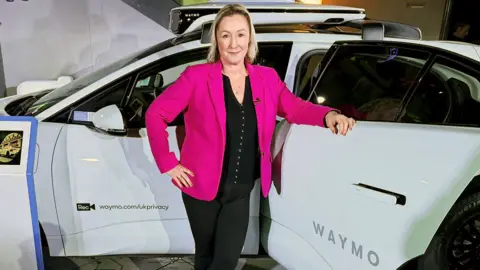
The technological powerhouse behind Waymo, Google-parent Alphabet, recently showcased a fleet of its advanced vehicles at London’s prestigious Transport Museum. These vehicles, currently undergoing extensive street mapping with safety drivers at the helm, represent the cutting edge of autonomous technology. Once the service officially opens to paying passengers, the distinctive feature will be the complete absence of a human driver, marking a significant departure from traditional taxi services.

Minister Greenwood, who was present at the Waymo unveiling, articulated a clear vision for the impact of autonomous vehicles on urban mobility. She expressed confidence that driverless technology would contribute to enhanced road safety in city environments. "We know that unlike human drivers, automated vehicles don’t get tired, don’t get distracted and don’t drive under the influence," Greenwood remarked, highlighting the inherent advantages of machines over human operators in specific driving contexts.
However, the path to widespread adoption is not without its stringent prerequisites. Greenwood was quick to emphasize that autonomous vehicles must meet exceptionally high safety standards before being granted access to UK roads. A critical aspect of these standards includes robust protection against hacking and cyber threats, acknowledging the vulnerabilities inherent in interconnected digital systems. This underscores the government’s priority in ensuring public safety and data integrity in this new era of transportation.
The economic implications of this technological shift are also substantial. The UK government has projected that the autonomous vehicle industry could inject a staggering £42 billion into the national economy by 2035, while simultaneously fostering the creation of nearly 40,000 new employment opportunities. This forecast positions autonomous vehicles not just as a convenience but as a significant driver of economic growth and innovation.
For Londoners, the prospect of hailing a Waymo robotaxi will become a reality through a user-friendly mobile application, once regulatory hurdles are cleared. The initial service is expected to focus on intra-city travel, with airport drop-offs not included in the early stages of operation. This targeted approach allows for a more controlled and manageable rollout, enabling the company and regulators to refine the service based on real-world usage.
The sophistication of Waymo’s vehicles lies in their intricate sensor systems, which work in concert to create a comprehensive understanding of the surrounding environment. These systems include lidar, vision cameras, radar, and microphones, providing a 360-degree awareness of the vehicle’s surroundings. Waymo claims these sensors grant its cars the ability to perceive objects and events up to three football fields away, even in adverse weather conditions. This advanced sensory perception is crucial for safe navigation in complex urban settings.
The data gathered by these sensors is fed into a powerful onboard computer, ingeniously housed in the vehicle’s boot. This central processing unit analyzes the vast streams of information in real-time, making critical decisions about acceleration, braking, steering, and hazard avoidance. This complex interplay between sensors and processing power is the heart of Waymo’s autonomous driving capability.
Regarding pricing, a Waymo spokesperson indicated that fares would be positioned as "competitive" yet "premium," with dynamic pricing expected during periods of high demand. This strategy aims to balance accessibility with profitability, reflecting the advanced nature and convenience of the service.
Waymo is not the sole contender poised to enter the UK market. Rival ride-hailing giants Uber and Lyft are also reportedly ready to deploy their own robotaxi services as soon as regulatory frameworks permit. This impending competition promises to accelerate innovation and potentially drive down costs for consumers.
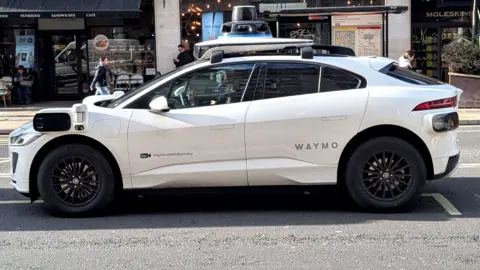
Interestingly, the partnerships forged by these companies reveal differing technological alliances. Waymo has chosen to integrate its autonomous technology into Jaguar vehicles, a move that signals a preference for established automotive manufacturers. In contrast, both Uber and Lyft have reportedly aligned with the Chinese technology firm Baidu for their autonomous taxi ventures.
Waymo’s operational experience is extensive, with its vehicles having accumulated a remarkable 173 million miles of fully autonomous driving, primarily within the United States. The company boasts a significant fleet size, with 1,000 robotaxis operating in San Francisco and 700 in Los Angeles, providing a wealth of real-world data and operational insights.
While the promise of driverless taxis is compelling, it’s important to acknowledge that the technology is still evolving. Reports have surfaced regarding occasional malfunctions with autonomous vehicles, including instances where passengers have found themselves temporarily stranded. These challenges highlight the ongoing need for rigorous testing, continuous improvement, and robust contingency plans to ensure the safety and reliability of these advanced transportation systems as they prepare for widespread deployment in the UK. The September launch, if realized, will mark a significant milestone in the nation’s adoption of futuristic mobility solutions.




 George Anjay
 Nakalama John
 Ramos Leo
 Roy Suryo
 Nana Banana