
 George Anjay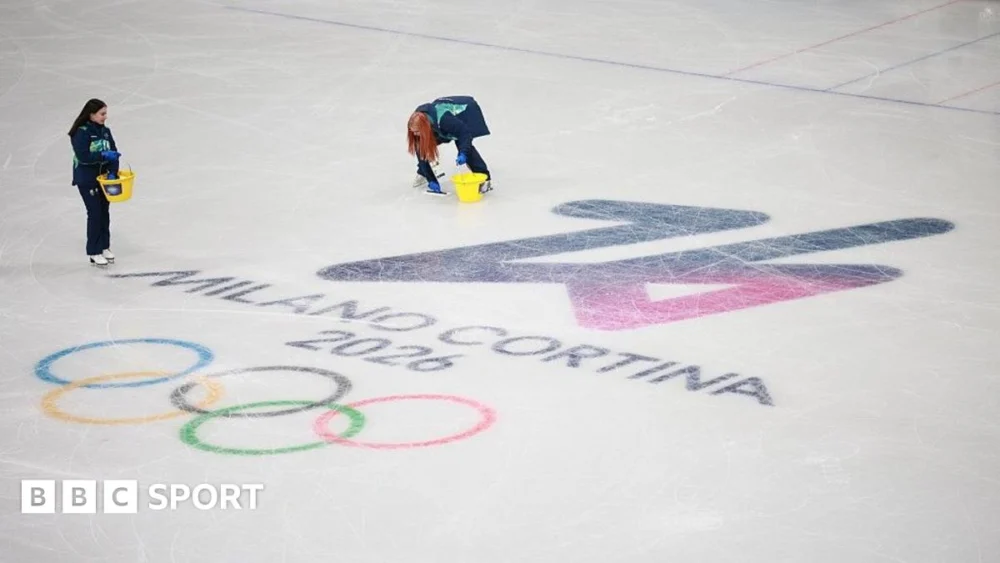
Olympic ice is a highly specialized, meticulously engineered surface designed to meet the stringent demands of international competitive events, most notably the Winter Olympic Games. This uniform ice surface is the result of the expertise and dedication of skilled technicians, often referred to as ‘ice masters,’ whose primary responsibility is to create and maintain conditions that are optimal for athletes across a spectrum of disciplines, including curling, ice skating, and ice hockey. The forthcoming Milan-Cortina 2026 Winter Olympics will once again showcase this incredible feat of engineering, though the context of its preparation is as unique as the ice itself. The ice hockey arena in Milan-Cortina, for instance, was constructed from the ground up specifically for the men’s and women’s matches, a process that, as reported, was not without its own set of challenges, including delays, concerns, and last-minute building works.
The creation of an Olympic ice rink is a multi-stage, technically demanding process that begins long before the first skate touches the surface. It all starts with the foundation: five centimeters of high-grade insulation laid directly onto the concrete floor. This foundational layer is crucial for preventing heat transfer and maintaining the precise temperature required for the ice. On top of this insulation, a vapor barrier is meticulously placed. This barrier serves to prevent moisture from migrating from the concrete and insulation into the ice-making layers, which could compromise the integrity and uniformity of the ice surface. Following the vapor barrier, engineers install specialized mats containing a circulating glycol solution. This network of pipes actively pumps chilled glycol, the lifeblood of the ice-making process, ensuring a consistently cold environment from the very base of the rink.
Once the refrigeration system is in place, the perimeter of the rink is secured with robust boards and protective glass walls, standard features designed for athlete safety and spectator viewing. It is at this stage that the initial layer of water is introduced. Approximately two inches of water are carefully added on top of the glycol mats. This initial inundation is the genesis of the ice sheet. As this water freezes, it forms the fundamental layer of the playing surface. Following this, the ice sheet undergoes a critical cosmetic and functional treatment: it is painted white and then sealed. The white paint not only enhances visibility for athletes and spectators but also helps to reflect light and heat, contributing to temperature stability. Subsequently, specific markings, such as those for ice hockey games, and official logos are meticulously applied and sealed into the ice.
The final, and perhaps most critical, layer of water is then added, typically three to four centimeters in depth. This top layer forms the actual playing field upon which the athletes will compete. The temperature of the ice is maintained within a remarkably narrow and precise range, generally between -5 and -4 degrees Celsius. This specific temperature is crucial for achieving the desired hardness and consistency, balancing the needs of different sports. To maintain this pristine surface throughout the competition, specialized resurfacing machines, colloquially and affectionately known as Zambonis, are deployed regularly. These machines perform a vital function: they shave away a thin layer of the existing ice, smoothing out any imperfections and forming a fresh, perfectly level layer. This process is essential for ensuring a consistent and fair playing field for all competitors.
The challenges and complexities of Olympic ice-making are further highlighted by the experiences of those involved. Mark Messer, an ice master overseeing the long track speed skating for the Milan-Cortina Games, articulated the inherent difficulties, stating that the hardest part is "working with a new system for such a high profile event, with little time for preparation." He acknowledged that while ice has been made on temporary setups before, the scale and context of an Olympic Games present an unparalleled level of pressure and demand. Milan-Cortina is notable for being the first time a temporary venue will be utilized for long track speed skating at a Winter Games, adding another layer of logistical complexity.
A fundamental principle of Olympic ice is that there is no single, universal format. Each sport demands a unique ice composition, tailored to the specific biomechanics and performance requirements of the athletes. This means that the ice can vary significantly in hardness, softness, and even temperature depending on whether it is being used for curling, figure skating, ice hockey, or speed skating. As Messer explained, "People may not realize how many different kinds of ice there are for the different sports. Each sport has its own demands and conditions."
For curling, the ice sheets require a distinctive pebbled texture. This is achieved by spraying fine droplets of water onto the surface, which then freeze to create a series of small bumps or ‘pebbles.’ These pebbles are essential for the stones to glide and curl effectively. Ice hockey, on the other hand, necessitates a harder, more durable surface. This hardness is critical for allowing athletes to execute sharp turns and sudden stops without the ice breaking up or becoming uneven, which could lead to injuries or unfair play.
Long track speed skating demands an exceptionally thin and hard surface of ice. This type of ice is typically the coldest among all Olympic ice sports, optimized for minimal friction and maximum speed. The pursuit of pure velocity on skates hinges on this meticulously prepared, ultra-smooth, and extremely cold surface.
The Milan-Cortina Games will present a particularly intricate challenge for the ice technicians due to the shared venue for figure skating and short track speed skating. This necessitates the remarkable ability to transition the ice surface between vastly different specifications. The process of altering the ice from one sport’s requirements to another can take up to three hours. For figure skating, the ice must be warmer and possess a softer surface. This provides a crucial cushioning effect for landings, absorbing the impact of jumps and spins. If the ice were too cold and hard for figure skating, it could shatter upon impact, posing a significant risk to the athletes. Conversely, short track speed skating requires a thinner and colder ice surface to facilitate the rapid, agile movements and tight turns characteristic of the sport.
The commitment to excellence in Olympic ice-making is underscored by the understanding that these are the best athletes in the world, and therefore, "everything has to be the best," as articulated by one of the technicians. This dedication to achieving the pinnacle of performance extends to every facet of the competition, with the ice surface being a silent yet indispensable partner in the athletes’ pursuit of glory. The intricate process, from the initial insulation to the final Zamboni pass, is a testament to the precision, science, and artistry involved in creating the perfect stage for the world’s most elite winter athletes.




 Roy Suryo

 Nakalama John
 atisusanti
 Ramos Leo
