
 George Anjay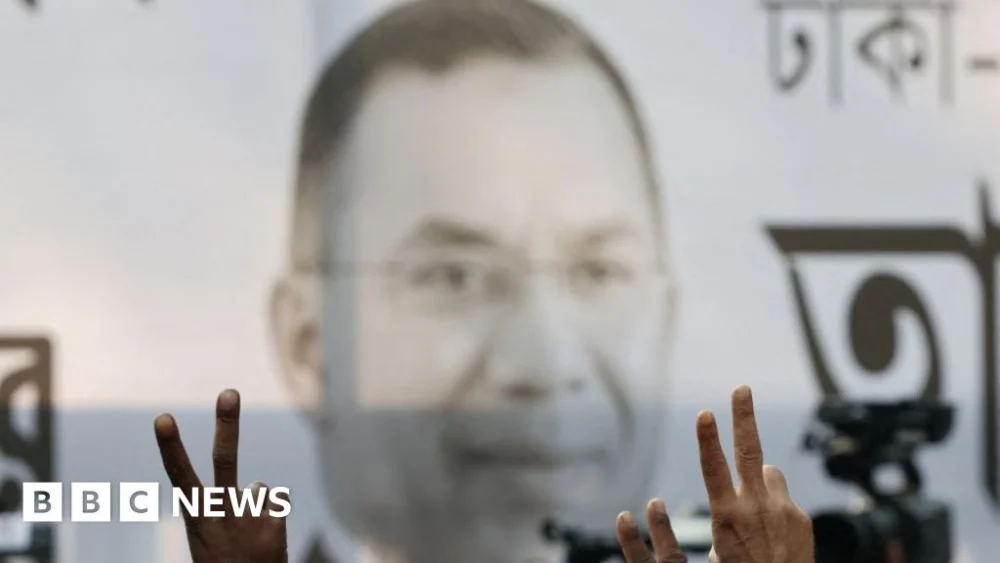
The centre-right Bangladesh Nationalist Party (BNP) has secured a stunning landslide majority in parliament, marking a seismic shift in the country’s political landscape just 18 months after mass youth-led protests forced the ousting of Prime Minister Sheikh Hasina, the nation’s longest-serving leader. The historic general election saw the BNP, in alliance with its traditional partners, clinch an overwhelming two-thirds of the seats, a resounding mandate that signals a new era for Bangladesh. Trailing significantly behind was Jamaat-e-Islami, the country’s largest Islamist party, which secured the second-highest number of seats. Notably, Sheikh Hasina’s Awami League, a dominant force for over a decade, was barred from participating in this pivotal electoral contest, a decision that reshaped the dynamics of the vote.
BNP leader Tarique Rahman is now poised to assume the role of Prime Minister, inheriting a nation grappling with immense challenges. His immediate priorities will be to steer the beleaguered economy back onto a stable footing and to navigate the complex path of restoring democratic institutions after what many observers describe as 15 years of increasingly authoritarian rule under Sheikh Hasina. Adding to the transformative nature of this election, voters overwhelmingly backed sweeping democratic reforms in a referendum held concurrently, underscoring a deep public desire for systemic change and greater political freedoms.
Addressing a jubilant crowd of well-wishers in Dhaka following Friday prayers, Tarique Rahman expressed his profound gratitude for the public’s support. "I am grateful for the love you have shown me," he stated, his voice resonating with the weight of his newfound mandate. In a move that highlighted the party’s commitment to a more measured transition, the BNP announced that there would be no victory procession, opting instead for a more subdued and reflective celebration. Rahman himself was elected to parliament for the first time, standing as one of 212 successful BNP candidates, a testament to his re-emergence as a central figure in Bangladeshi politics. The Election Commission reported a voter turnout of 59.44%, indicating significant public engagement despite the political complexities.
This electoral triumph represents a dramatic reversal of fortune for Tarique Rahman, a figure who spent 17 years in self-imposed exile in London, largely away from the direct political fray. He assumed leadership of the BNP following the passing of his mother, former Prime Minister Khaleda Zia, in December, inheriting a party that had been largely sidelined during the Awami League’s extended period in power. Throughout his campaign, Rahman consistently pledged a return to democratic principles and a restoration of the freedoms that many felt had been eroded.
The path ahead for the new government is fraught with formidable economic hurdles. Revitalizing Bangladesh’s economy, curbing soaring food prices that have placed immense pressure on households, and generating sufficient employment opportunities for the nation’s vast and youthful population are among the most pressing concerns. The demographic dividend of a young populace, while a potential asset, requires significant investment in education, skills development, and job creation to prevent it from becoming a source of social unrest.
Furthermore, mending and strengthening strained diplomatic ties with India, Bangladesh’s influential giant neighbour, is a high-priority item on the new administration’s agenda. The relationship between the two nations is multifaceted, encompassing economic interdependence, shared cultural heritage, and intricate security concerns. A constructive and cooperative relationship with India is vital for regional stability and Bangladesh’s own economic and strategic interests.
Within hours of the election results solidifying the BNP’s victory, Prime Minister Narendra Modi of India extended his congratulations to Tarique Rahman. In a call that underscored the importance of the bilateral relationship, Modi lauded Rahman’s "remarkable victory." Reflecting on the enduring bonds between the two nations, Modi conveyed on X, "As two close neighbours with deep-rooted historical and cultural ties, I reaffirmed India’s continued commitment to the peace, progress, and prosperity of both our peoples." This immediate outreach signals India’s intention to engage constructively with the new government.
Despite the promises of transformative change championed by the BNP, the party is not without its historical baggage. During its previous tenure in government in the early 2000s, the BNP faced significant criticism for alleged corruption and accusations of human rights violations. As Tarique Rahman prepares to lead the nation, he will undoubtedly be under intense scrutiny to demonstrate a clear break from past controversies and to govern with transparency and accountability.
Thursday’s democratic exercise represents a moment of profound potential and inherent risk for Bangladesh. The decisive victory of one of its two principal political forces presents an opportunity for decisive policy implementation and systemic reform. However, it also raises questions about the long-term health of democratic pluralism and the inclusivity of the political system.
The constitutional reforms envisioned by the BNP and endorsed by the referendum are ambitious and far-reaching. These include the reintroduction of prime ministerial term limits, a move designed to prevent the concentration of power in the hands of a single individual or party over extended periods. The proposal for a directly elected upper house of parliament aims to enhance legislative oversight and provide a more representative forum for national debate. Strengthening presidential powers, within a balanced constitutional framework, and bolstering judicial independence are also key components of the reform agenda, intended to create a more robust system of checks and balances.
A significant focus of the proposed reforms is on increasing the representation of women in parliament. This commitment addresses a persistent gender disparity in Bangladeshi politics, where women have historically been underrepresented in legislative bodies. However, the stark reality of the election results, with a notably low number of successful female candidates, highlights the considerable challenges that lie ahead in achieving meaningful gender equality in political participation. The journey towards greater female representation will require concerted efforts in candidate selection, voter education, and the dismantling of societal barriers.
Tarique Rahman will find himself under immense pressure to deliver on the aspirations of a predominantly youthful electorate that has demonstrated a powerful hunger for change. Many of these young voters were at the forefront of the student-led protests that ultimately led to Sheikh Hasina’s downfall, creating the political space for the February 12 election. Their energy, idealism, and demand for a more just and equitable society will be a defining force shaping Rahman’s premiership. The success of his government will hinge on its ability to translate this popular mandate into tangible improvements in the lives of ordinary Bangladeshis, fostering economic opportunity, upholding human rights, and strengthening the foundations of democracy for generations to come. The election marks not an end, but a crucial beginning in Bangladesh’s ongoing democratic journey.




 Roy Suryo

 Nakalama John
 atisusanti
 Ramos Leo
